Category Archives: Videos

As Relevant as Ever

I am headed to New Zealand to present at an International Peace Conference and have been thinking of resistance so needed today. Music, poetry, and art play a significant role in resisting violence, including that imposed by governments and other institutions that are supposed to protect.

One of the first albums I bought was The Freewheelin’ Bob Dylan. I was about 16-years old and I still have the album. It is iconic with songs like Blowin’ In the Wind (melody based on a spiritual called No More Auction Block), Masters of War, A Hard Rain’s a-Gonna Fall, Oxford Town about resistance to desegregation in the American South, and Talkin’ World War III Blues. Dylan covered Lead Belly’s version of I Shall Be Free.

Talkin’ World War III Blues is my favourite song on the album. Dylan was at his best in the spontaneity of the song and it fits with the talking blues genre. In I Shall Be Free, he sings about making love to Elizabeth Taylor. Even in the early 60’s a was a way to avoid the reality that hung over the world was to turn to popular culture as a distraction from the threats of nuclear war.

About the same time, I wrote a poem in school. I know Mr. P. writes poetry is hard to imagine for my students. The poem was about the tragedy of war and it stole lives in absolute ways whether through death or through the physical and psychic damage done to those who were forced into service in a war they did not understand. Many of those who died or were left deeply scarred with the trauma of war were from the African American population, which was about 12% of the American population at the time. Their deaths alone represented about 25% of the casualties, so statistically overrepresented. The personal narratives within their families and communities can not be quantified.

The poem I wrote as a teenager is below.

Win or Lose: What Difference Does it Make?

A game–

Darwin misunderstood,

No great thing to win.

War and it language!

Bells ringing hollow,

Men, women, children gone!

Woe! vanquished losers and winners;

Humans, vanquished in every sense–

Thriving on dividing.

Resenting conquerors,

Rebuilding ruins–

On countless graves.

Morally rudderless,

Blaming the fallen,

Beggaring humans.

Homes on streets,

Hollowing souls–

What war brings?

Innocence dying–

Prryhric victories,

What war brings?

Comrades fallen,

Enemies vanquished–

Proving nothing.

Will we learn?

I pray

For human survival.
Prayer of St. Francis

Today is our wedding anniversary. The Prayer of St. Francis has a special place in our family. We read it at our wedding and used it at celebrations of life. As well, I refer to it in my academic writing and how it guides my life and teaching.

I remember our wedding day clearly. We had interesting happenings. A friend got off the bus in a town an hour from where we the wedding. Kathy drove to get him. My mother kept telling us we couldn’t see each other on our wedding day. It is supposed to be bad luck. The luck has been good as we are together and enjoy each other’s company. I told my mom we had to talk to figure out who was driving to pick up our friend.

Sitting in the front pew of the church, I heard the organ play the wedding song and rose, shaking like a leaf. When I turned to look at Kathy and her dad, the trembling stopped and I understood this was the right person for me.

Lord make me an instrument of your peace,
Where there is hatred let me sow love.
Where there is injury, pardon.
Where there is doubt, faith.
Where there is despair, hope.
Where there is darkness, light.
And where there is sadness, joy.

O divine master grant that I may
Not so much seek to be consoled as to console;
To be understood as to understand;
To be loved as to love
For it is in giving that we receive-
And it’s in pardoning that we are pardoned.
And it’s in dying that we are born to eternal life.
Amen.

Kathy and I enjoy music. Over the years, we attended numerous concerts. Our tastes are eclectic, covering a broad range of genres. We saw John Prine before he passed away. He was a singer you could not put in a box with his blend of quirkiness and socially relevant songs. One song we enjoy is this tongue-in-cheek duet performed with Iris Dement. The night we saw him he performed both male and female parts of the song, adding to the tongue-in-check nature. I don’t take the song to seriously. It is meant to be fun-filled.

In spite of ourselves, we can find life-long happiness and love.

Christmas Spirit Each Day

Theologian and civil rights activist, Howard Thurman shared the following poem in a sermon reminding me Christmas is not a one day event. It is part of the daily ceremony and ritual I should undertake. It reminds me some usurp Christmas as a neo-liberal, market agenda that changes a deeply spiritual event into profiteering.

“Where refugees seek deliverance that never comes,
And the heart consumes itself, if it would live,
Where little children age before their time,
And life wears down the edges of mind,
Where the old person sits with mind grown cold,
While bones and sinew, blood and cell, go slowly down to death,
Where fear companions each day’s life,
And Perfect Love seems long delayed.
CHRISTMAS IS WAITING TO BE BORN;
In you, in me, in all humankind.”

Jesus and his family were humble refugees from humble backgrounds. Regardless of material wealth, we each come from and return to humble backgrounds. In between, I can seek deliverance, age with grace, and retain a daily Christmas spirit. Without it, hearts harden, minds ossify, fear is a constant companion, and there is a lack courage (in French, coeur is part of the etymology of courage) to act and speak out against those who treat humans as chattel dealt with as objects. With a daily Christmas spirit, I engage in I-Thou relationships, without judging, qualifying, objectifying the other. Martin Buber proposed the key to creating society that is nourishing, empowering and healing for everyone lies in how we relate to one another.” 

It takes considerable effort to overcome the divisiveness we currently live with and listen, with open hearts, to others who share views of the world different than ours. In On the Brink of Everything, Parker Palmer describes how he felt anger towards others who voted differently than he did. By the time the book was published, he described how it was important to understand that people did so because they felt left behind in various ways.

Here is Healing Time by gospel and blues singer Ruthie Foster, which seems appropriate in today’s day and age. How do we heal and make whole?

Christmas 2024

This is the time of the year to have dreams of a more just and humane world. Dreams are the land of hope and Christmas is the perfect time to be a dreamer. This brings to my mind the lines from Imagine by John Lennon:

You may say I’m a dreamer
But I’m not the only one
I hope someday you’ll join us
And the world will be as one

Several years ago, I read an essay by Parker Palmer reminding me of the miracle of Christmas. As a child growing up in Northern Alberta, Christmas was a time of wonder. Christmas was not the neoliberal, market-driven affair of today. It was a time to re-member the deepest messages of the time of year.

Parker posted on Facebook about an experience in Nogales Mexico at a refuge for asylum seekers and pointed out Jesus was likely a person of colour born into the Jewish faith. In this sense, I understand Jesus’ birth as one transcending one particular faith.

Part of my academic journey this year was writing a potential chapter on nonviolent education. I read The Raft is Not the Shore, which was a conversation between Thich Nhat Hanh and Daniel Berrigan. They described how They, the Buddhist monk, engaged in communion and how the Jesuit priest reveled in learning more about Buddhism. In our polarized and divided world, this type ecumenism and communion (entering into intimate relationship with each other) with each other has fallen by the wayside.

I wrote the following poem several years ago and am drawn back to it. I hope it captures Christmas in a way that reaches out and touches what we share in common with each other: our humanness and journey seeking refuge at various times

Carpenter guiding,

Expectant mother riding,

Backs straight; heads high–

Donkey serving as regal carriage.

Seeking refuge in the night–

Giving birth in a stable,

Swathed and cradled in a manger,

Beasts welcoming the child.

Showering gifts upon us–

Returning each year,

Lighting the way–

Only asking, “Can you open your hearts?”

Source of strength and courage,

Our turn to humbly receive gifts,

Restocking spirits,

Rejuvenating souls.

For several years, Kathy and I attended concerts by Canadian singer and actor Tom Jackson. The proceeds went to support local food banks and we took something extra with us to share.

He sings a beautiful version of Huron Carole, which points to the ecumenical and communal nature of Christmas. It echoes Parker’s re-membering “the story, the music, the candlelight, the scent of pine, the silent night, the warm presence of family and friends.”

For me, Christmas is sharing time with family, friends, and expressing kindness to those who we don’t know. It is a 365 day process as opposed to a run up to a one day event.

Prayer of St. Francis

Kathy and I celebrate our anniversary today and this was a reading at our wedding. When I heard the organ, I stood, literally shaking I was so nervous. I turned, looked at Kathy and her Dad, and stopped shaking. What was meant to be was meant to be.

Regardless of one’s relationship with others, intimate or distant, these words guide how we accept the Other, as Emmanuel Levinas said. This way lifts the Other to a human subject in an I-Thou relationship, rather than as an object and it. I hope they continue to guide me as we move forward.

Lord make me an instrument of your peace,
Where there is hatred let me sow love.
Where there is injury, pardon.
Where there is doubt, faith.
Where there is despair, hope.
Where there is darkness, light.
And where there is sadness, joy.

O divine master grant that I may
Not so much seek to be consoled as to console;
To be understood as to understand;
To be loved as to love
For it is in giving that we receive-
And it’s in pardoning that we are pardoned.
And it’s in dying that we are born to eternal life.
Amen.

This is a You Tube video by Sarah McLachlan of the song.

Looking Back; Looking Forward with Hope and In Peace

It was a busy and eventful year. Retirement is thought of as a time to step back and slow down. I remain busy and choose to do so, as health permits. I had pieces published and presented at two conferences. If anyone wishes to read or browse the book chapter, two articles, and a draft, I uploaded them to Academia. A by-product of one presentation, Re imagining Teacher Education An Andragogy of Hope, was an interview with the Fig Tree Online Magazine, published in October.

The emerging themes are pedagogies and andragogies of hope and peace. Teachers are vital to opening spaces of hope and peace. For various reasons e.g. time, education, assignments, top-down authoritarian dictates, etc., teachers struggle to infuse pedagogies of hope and peace into their teaching. In a role as a field instructor for student-teachers, I observe teachers and student-teachers who lack the education, confidence, and support in these areas. Furthermore, there is interference from outside the classroom as to what can be taught and there is a risk someone complains if a teacher teaches something someone is unhappy with. In Alberta, the government changed rules about complaints going to school and district administration to a committee of largely non-educators and complaints increased noticeably .

In a world where civil discourse is at a premium and we often equate rhetoric to its colloquial meaning of bombast, we need faculties of education to educate and teachers to continue their education in ways that support pedagogies of hope and peace. Dialogue and the proper use of rhetoric, as eloquent speech and deep listening, are essential to make headway to deal with issues that polarize people into competing ideological camps.

Currently, I am preparing for a conference about teacher education as an andragogy of hope, peace, and non-violence. As well, I submitted a proposal to present at a holistic education conference where I hope to show how hope, peace, and non-violence tap into the spiritual domain often overlooked in teaching and learning. What is essential is to focus on what we can change and how we can each make a difference in our small corners of the world. Prudence can make small differences adding up to larger differences.

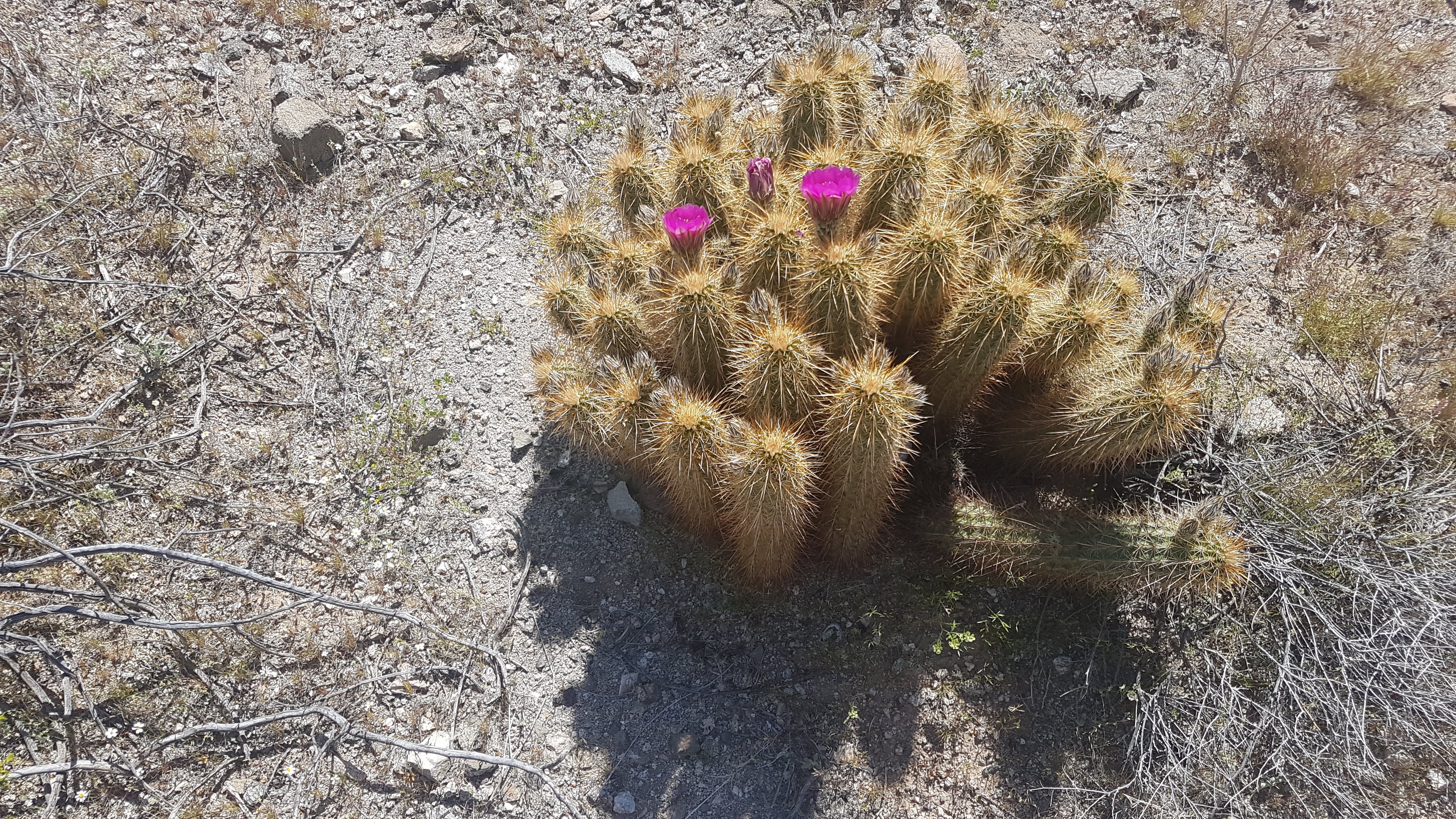
Several years ago, we were in Arizona and hiked in a regional park on an every other day basis. During our hikes, I took pictures of cacti that were blooming. Nature demonstrates hope even in challenging ecological settings. The contrast of the pink with a dull green and brown background serves as a beautiful reminder of hope in challenging times.

I share the Prayer of St. Francis as it has deep meaning in our family and it often referred to as the Peace Prayer. The word peace appears once and is the overarching message. Hope is an integral part of achieving peace.

Here is Sarah McLachlan‘s video of the Peace Prayer.

Have a Dream-Filled Christmas

It has been awhile since I posted.

This is the time of the year to have dreams of a more just and humane world. Dreams are the land of hope and Christmas is the perfect time to be a dreamer. This brings to my mind the lines from Imagine by John Lennon:

You may say I’m a dreamer
But I’m not the only one
I hope someday you’ll join us
And the world will be as one

Several years ago, I read an essay by Parker Palmer reminding me the miracle of Christmas. As a child growing up in Northern Alberta, Christmas was a time of wonder.

Parker posted on Facebook about an experience in Nogales Mexico at a refuge for asylum seekers and pointed out Jesus was likely a person of colour born into the Jewish faith. For me, Jesus’ birth is an ecumenical event.

I wrote the following poem several years ago and am drawn back to it. I hope it captures Christmas in a way that reaches out and touches what we share in common with each other: our humanness and journey seeking refuge at various times

Carpenter guiding,

Expectant mother riding,

Backs straight; heads held high–

Donkey serving as regal carriage.

Seeking refuge in the night–

Giving birth in a stable,

Swathed and cradled in a manger,

Beasts welcoming the child.

Showering gifts upon us–

Returning each year,

Lighting each way–

Only asking, “Can you open your hearts?”

Source of strength,

Our turn to humbly receive gifts,

Restocking spirits,

Rejuvenating souls.

For several years, Kathy and I attended concerts by Canadian singer and actor Tom Jackson. The proceeds went to support local food banks and we took something extra with us to share.

He sings a beautiful version of Huron Carole, which points to the ecumenical nature of Christmas, Christ’s Mass, echoing Parker’s (re)membering “the story, the music, the candlelight, the scent of pine, the silent night, the warm presence of family and friends.”

For me, it is food and opening a present on Christmas Eve. Food included French-Canadian tourtière (meat pie), which Kathy and I continue to share with our children and grandchildren.

Merry Christmas

It has been awhile since I posted.

The other day someone told me I was an idealist. I think they meant as a put down. I took it as a compliment. After all, many schools of philosophy and their philosophers are dreamers.

Somehow, having dreams of a more just and humane world is not realistic. It reminded me of what Christmas might mean to someone who is a dreamer and lines from Imagine by John Lennon:

You may say I’m a dreamer
But I’m not the only one
I hope someday you’ll join us
And the world will be as one

Several year ago, I read an essay by Parker Palmer that reminds me the miracle of Christmas. It reminded me how, as a child growing up in Northern Alberta, Christmas was a time of wonder I could not explain and try not to as an adult.

Parker posted on Facebook about an experience in Nogales Mexico at a refuge for asylum seekers. Asylum is another word for seeking refuge. He pointed out Jesus was likely a person of colour born into the Jewish faith. For me, his birth is an ecumenical event.

I wrote the following poem several years ago and am drawn back to it each year. I hope it captures Christmas in a way that reaches out and touches each of what we have in common: our humanness and we are a journey seeking refuge at various times

Carpenter guiding,

Expectant mother riding,

Backs straight; heads held high–

Donkey serving as regal carriage.

Seeking refuge in the night–

Giving birth in a stable,

Swathed and cradled in a manger,

Beasts welcoming the child.

Showering gifts upon us–

Returning each year,

Lighting each way–

Only asking, “Can you open your hearts?”

Source of strength,

Our turn to humbly receive gifts,

Restocking spirits,

Rejuvenating souls.

For several years, Kathy and I enjoyed Canadian singer and actor Tom Jackson.

He does a lovely rendition of Huron Carole, which I share below. Again, this points to an ecumenical nature of Christmas, Christ’s Mass, echoing Parker’s (re)membering “the story, the music, the candlelight, the scent of pine, the silent night, the warm presence of family and friends.”

For me, it is also food and opening a present on Christmas Eve. The food included traditional French-Canadian tourtière (meat pie), which Kathy and I continue to share with our children and grandchildren.

World’s first emergency number — sloppybuddhist

According to Buddha Be patient. You’ll know when it’s time for you to wake up and move ahead. i fell backi lost my trackas my chin sagsand my eyes go blacki want all my senses back *** a day or so ago South Thompson River Valley, July 2021

World’s first emergency number — sloppybuddhist

I have followed Hedy for some time, enjoying her quotes from The Buddha and accompanying photography and poetry. She playfully entitled her about page Nearly Me and describes what it means to be a Sloppy Buddhist. We are always becoming, partially able to follow Buddhist precepts in the process of becoming, and incomplete in how we are to be defined.

The post reminded me of poem, Imperfection by Elizabeth Carlson, in Teaching with Fire (Edited by Sam Intrator and Megan Scribner). The poem was written as Elizabeth Carlson who died at a young age. Perhaps it was that experience, which allowed her to grow to love her imperfections. Despite the sadness, there is a playfulness in the poem e.g., learning to purr as she lays under her cat.

I am falling in love
      with my imperfections
The way I never get the sink really clean,
forget to check my oil,
lose my car in parking lots,
miss appointments I have written down,
am just a little late.

I am learning to love
      the small bumps on my face
      the big bump of my nose,
      my hairless scalp,
chipped nail polish,
toes that overlap.
Learning to love
      the open-ended mystery
            of not knowing why

I am learning to fail
      to make lists,
      use my time wisely,
      read the books I should.

Instead I practice inconsistency,
      irrationality, forgetfulness.

Probably I should
hang my clothes neatly in the closet
all the shirts together, then the pants,
send Christmas cards, or better yet
a letter telling of
      my perfect family.

But I’d rather waste time
listening to the rain,
or lying underneath my cat
     learning to purr.

I used to fill every moment
     with something I could
          cross off later.

Perfect was
     the laundry done and folded
     all my papers graded
     the whole truth and nothing      but

Now the empty mind is what I seek
      the formless shape
      the strange      off center
      sometimes fictional
                                 me.

The quote Hedy used was one about being patient and realizing we will each understand when it is time to wake up and move ahead. She shared some images from nature and they reminded me of the passage from Mattew 6:28-29: “Consider the lilies of the field, how they grow, they neither toil nor spin, yet I tell you even Solomon in all his glory was not arrayed like one of these.” Nature understands the process of patience and just being, waiting to awaken and move forward at the right time. Too often, we do not show ourselves the patience we need to grow and be ready to move forward.

I leave you with the following video by Seasick Steve. That is his his stage name and that and the song share a sense of playfulness in them, too.

Deep

When I saw this post several weeks ago, Mary Oliver’s name got my attention. I have followed Bela for several years and her poetry reminds me of Mary Oliver and her poetry.

Nature surrounds us, engufls us, yet many humans act as if we are separate from Nature and have command over it. What the last few years should show us is we do not control Nature. As I watch the increase in catastrophic weather events and the pandemic we are in midst of, I better understand how taking care of nature takes care of the human family.

The line that stood out for me in Bela’s poem was “human encroachment into nesting areas, refusual to admit error in bulldozing sacred spaces for profit.” Not only did the poem remind me of Mary Oliver and her poetry, it reminded me of John Prine and his song Paradise.

As Mary Oliver says in the following poem and Bela signals in her poem, humans have a place in the family of things. To think otherwise is foolhardy.

You do not have to be good.
You do not have to walk on your knees
For a hundred miles through the desert, repenting.
You only have to let the soft animal of your body
love what it loves.
Tell me about your despair, yours, and I will tell you mine.
Meanwhile the world goes on.
Meanwhile the sun and the clear pebbles of the rain
are moving across the landscapes,
over the prairies and the deep trees,
the mountains and the rivers.
Meanwhile the wild geese, high in the clean blue air,
are heading home again.
Whoever you are, no matter how lonely,
the world offers itself to your imagination,
calls to you like the wild geese, harsh and exciting —
over and over announcing your place
in the family of things.

I leave you with John Prine’s words about bulldozing mountain tops to find those last seams of coal, all for profit.