Tag Archives: photography

Wildness

via Wildness

Michele‘s post reminded me of poems by two of my favourite poets.

Environmentalists refer to Wendell Berry and Mary Oliver‘s poems. An educated guess is that Henry David Thoreau, who Michele quotes, informed their writing.

Wendell Berry wrote in moments of despair he “comes into the peace of wild things who do not tax their lives with forethought.”

Mary Oliver ends Summer Day with the following question: “Tell me, what is it you plan to do/ with your one wild and precious life?” Paradoxically, the question is an answer to her eloquent questions about who created nature.

Nature has a way of being and providing us with lessons for life. It is in meditative moments, when we just are, we grow to understand what that can mean. We grow and value what is essential not to us, but to those who come after us.

“We do not inherit the world from our ancestors, but borrow it from our children.”

Fairmont Hot Springs

When we visited Fairmont Hot Springs, I walked each morning and we went below the hot springs one evening for a short hike. On the walks and hikes, I took pictures.

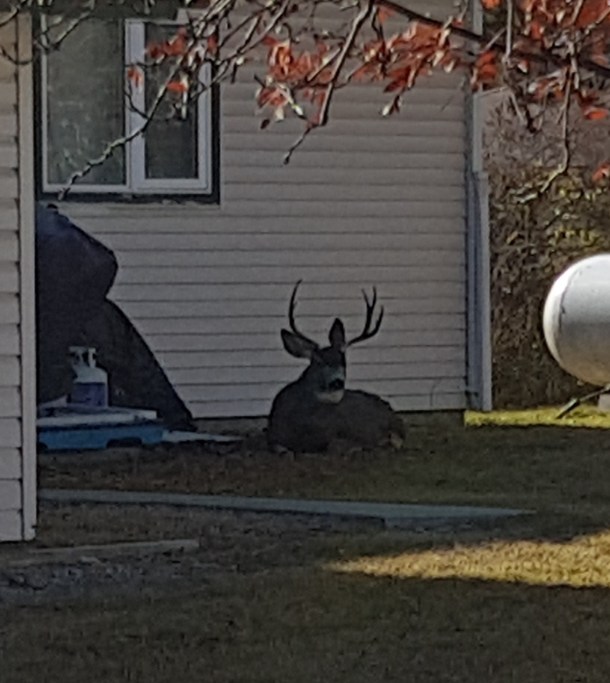
On Sunday, we went to church. As we came out, this buck posed for pictures. He was in the shade so I cropped the picture and, as a result, it is a bit blurry.

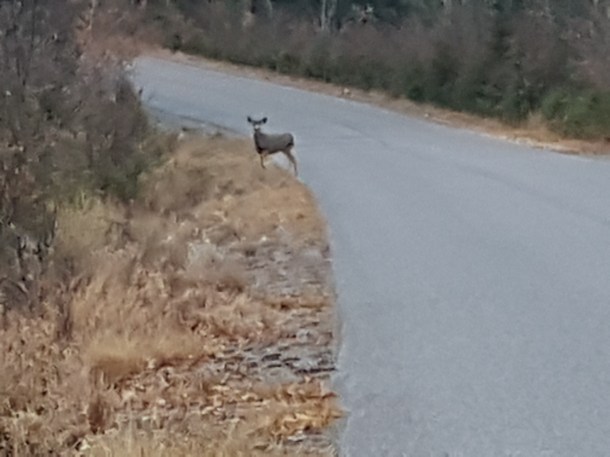
I walked each morning and afternoon. This doe crossed the road about the time the sun was coming up each morning. She kept an eye on me, just to make sure.

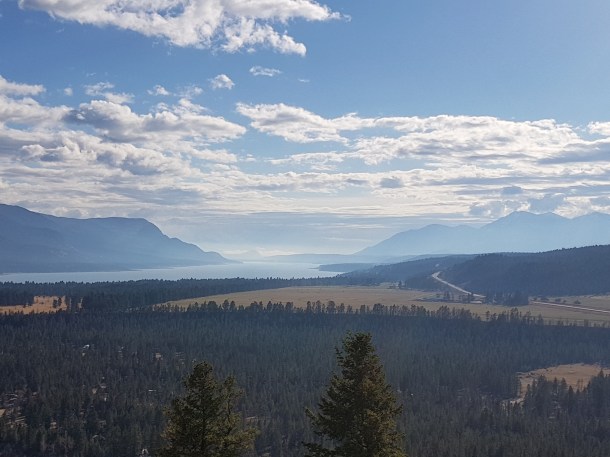
Just outside Fairmont is Columbia Lake, which is the head waters of the Columbia River. The lake appears to have a mist over it most of the time.

When I walked in the morning, I took this picture as it was becoming daylight. The mist was much heavier at this time of the day than it was during the day.

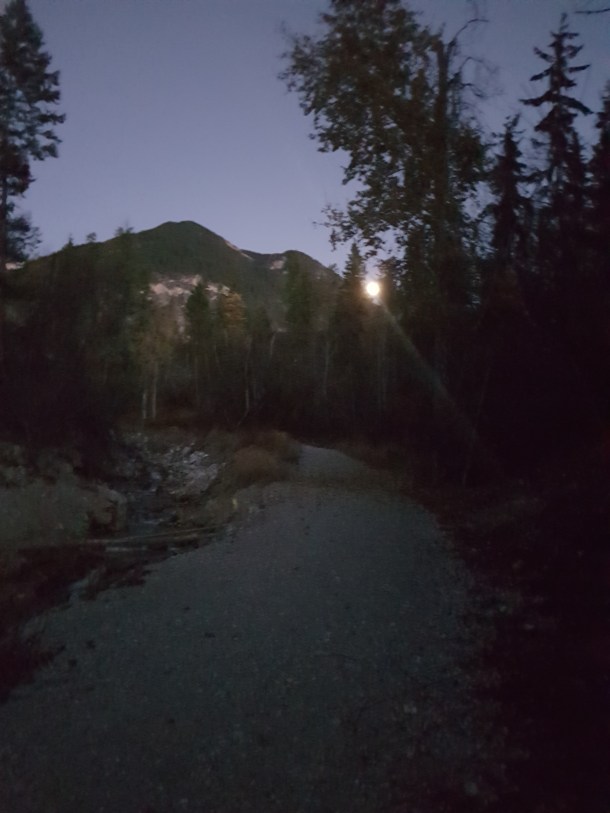
Several evenings we went to the hot springs. On one of the evenings, we walked below the springs and found a path to a small creek. The moon was just rising from behind the mountains.

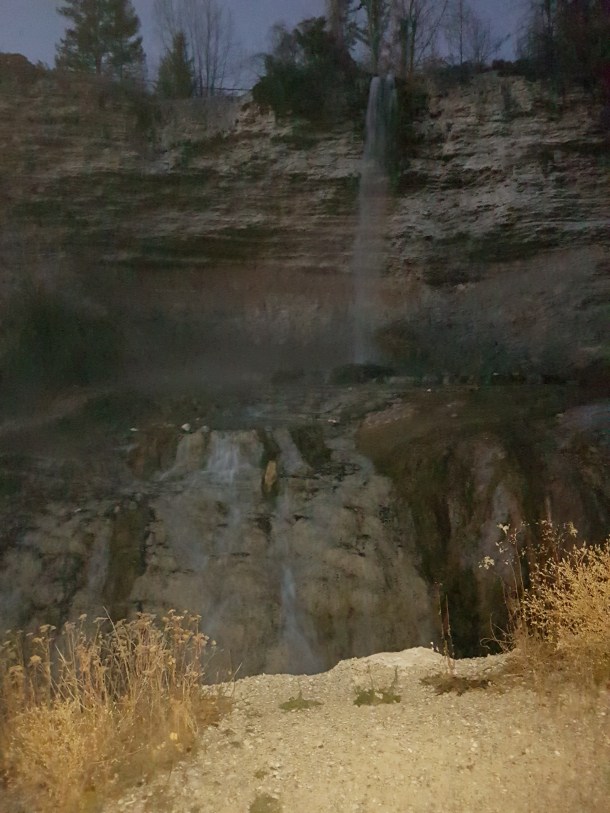
A small water fall flows into the creek. The volume increases when they release water from the swimming pool to clean it. I took the picture without any flash. I don’t know if it is the rocks, the time of day, or some other reason that allowed the picture to appear so well-lit.

Mountains and Water

I was on the road today, driving through part of Alberta I do not spend much time. I drove to Fairmont Hot Springs, which is in British Columbia. To get there, we came via Banff National Park. The normal route west usually takes me through south of Banff and Jasper National Park.

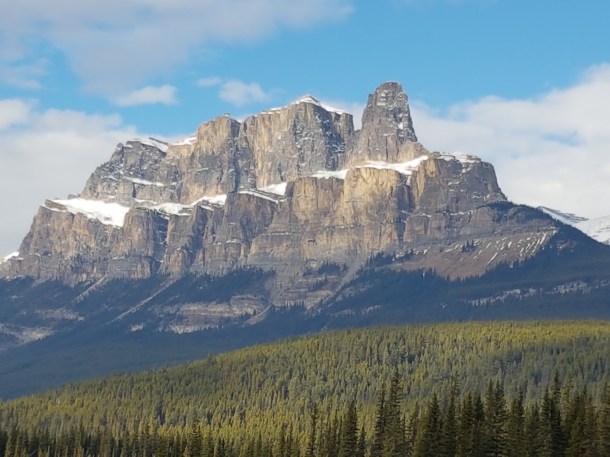
It was a beautiful day and two mountains stood out against the sky with clouds in behind them. I am not sure of their names, because of a lack of knowledge of the area. It was in the Mount Norquay area, but I thought Norquay was further to the north.

This might be Mount Norquay. It seemed to be the mountain that stood out and was the focus of the pullouts, but I don’t know the area well enough to be certain.

These palisades are just off to the side of the mountain above.

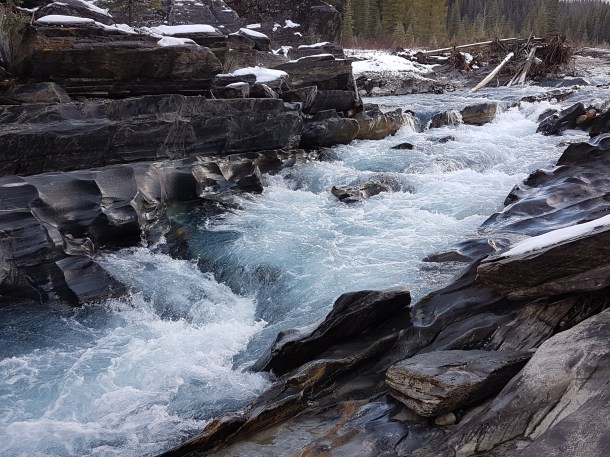
This is just above Numa Falls in Kootenay National Park in British Columbia. The mountain parks on the British Columbia side are not as well-developed as the ones on the Alberta side. I use the word developed in a relative way, as none of the parks have significant commercial development. We were not able to get any closer to the falls as the bridge is out and the gorge has no direct access.

Below, is a video of the falls from YouTube. I don’t see a bridge in the video, but the gorge is inaccessible.


To Read a Poem…To Write a Poem

This poem rattled around in my mind and body for the last few days. I did not write it out in rough form, so this is it.

To read a poem;

That is to breath in the world,

Meditating on that world

(Re)membering a fleeting moment–

A moment my whole body experienced;

The smell of pine forest

The distant white-topped mountain

Rocks disturbing a river’s flows

The touch of a gentle breeze,

Cooling a sun-burnt face.

To write a poem;

Breathing out,

A lived-experience,

Giving words to a fleeting moment–

Flowers gesturing towards mountains,

Trees caressed by mountain wind,

Nature’s fragrances arise from the valley

A silence encroaching upon my mediation.


Searching For Home

Today, is a cold and miserable day. It actually began yesterday, which is ironic. It was the first day after summer solstice. Summer does not feel like it is here. It has been a bumpy spring with warm and cooler days mixed together.

It has been a few days since I wrote a poem, so I wrote based on today’s non-seasonal weather. It is like the weather is looking for a home and cannot figure out where it is.

Summer fights to arrive,

A day after the solstice,

Winds feel glacial,

Marching coldly down upon us.

The wind wails her sad song,

A lost banshee,

Keening as she searches,

Not feeling at home in early summer.

Although this picture is a few weeks old, the day it was taken it was cold, windy, and rainy. It feels much like that again. The steel-grey skies in the background are like what we have today.


The Real Work

I was laid up for the last few days. I have allergies and this time of the year is always a challenge. I think I picked up a bug to give me a double-whammy. I slept a good part of Friday and Saturday and, on Sunday, was upright for most of the day.

I am not sure if I will post later. While sitting upright and not doing much else on Sunday, this Wendell Berry poem kept poking at me.

Living is paradoxical. Parker Palmer described how this creates tension in living. Just as we think everything is as it should be, something pokes at us and unsettles us, calling on us to begin our real work and commencing the real journey. Being mindful and attentive remind us to be still and look below the surface of what is happening.

It may be that when we no longer know what to do
we have come our real work,

and that when we no longer know which way to go
we have come to our real journey.

The mind that is not baffled is not employed.

The impeded stream is the one that sings.

This is Athabasca Falls. The river upstream is quite wide and as it comes around the corner suddenly narrows. In Wendell Berry’s poem, it is impeded and creates a great force that carves out solid granite.

Silence of Poetry

Current shares the same etymological roots as curriculum: currere.

How we make meaning of living is like the spaces between words in a poem. It is in silence that meaning emerges. It flows between the words and stanzas.

We need silence in our lives to find meaning. It is standing on the edge of a mountain lake without others. There is a peace there.

“We are all visitors to this time, this place. We are just passing through. Our purpose here is to observe, to learn, to grow, to love… and then we return home.” Aboriginal Proverb

Living is a text,

Traveling through time and space,

Leaving others to ponder meaning;

A meaning that is never whole.

Engulfed in silence,

Emerging from a peace(ful) moment,

One’s inner voice speaks;

As if an other speaks.

Wrapped in meditative moments

When silence is a poem,

Bringing the text to life;

Sending it on its way again.


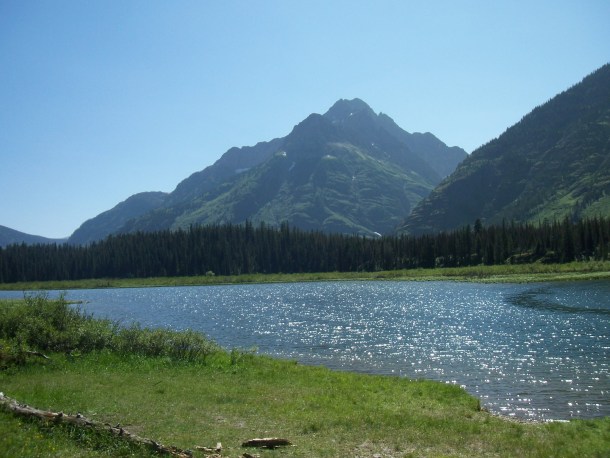
This is a small lake we walked to in Glacier National Park.

Driftwood

I am back. The retreat was enjoyable and tiring. Although it was called a retreat, it was different in the sense that it involved research, writing, and lots of conversation. I find retreats invigorating. They are not sit, listen, and try taking notes as a speaker blasts through their presentation.

Retreats have a conversational part. Parker Palmer counsels people at his retreats not to take notes. Instead, we spend time writing and conversing how we feel about various prompts. That was a purpose of this retreat. It is the Currere Exchange.

Currere is the etymological root of curriculum, meaning to run the course of one’s life. It is a subjective way of interpreting a planned curriculum in a school. Whether teachers understand it or not, they are doing this continuously. As one of my co-researchers told me we make decisions about what to teach and leave things out we really like.

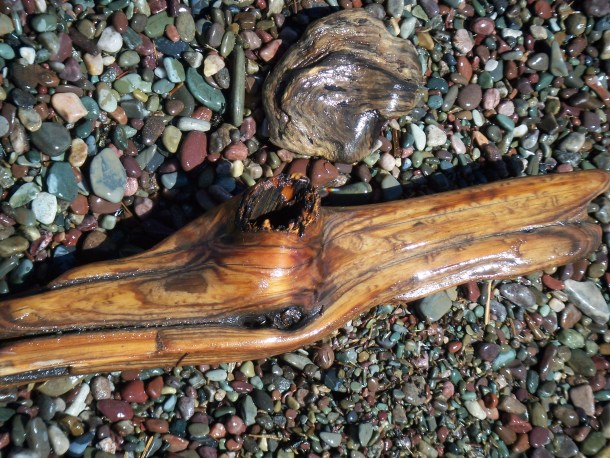
In a sense, currere is polishing a planned curriculum. It is a multi-faceted and complicated conversation between a person (re)membering their lived-experiences, aspire to a particular way of teaching in the future, and synthesize those two moments into the present. Each moment acts as a curriculum to inform the other, complicating one’s teaching in a dialogic way. Others enter the classroom and add to the complicated nature of the conversation, each adding their curriculum to the dialogue. It is like a piece of driftwood, being polished by the forces it comes in contact with.

My story being polished,

I (re)member and imagine;

Washed up on a new shore,

Who I am reflected anew.

I am a character in my story,

I pause a moment,

Noting lustre and matte,

Interpreting new meanings.

Soaking in the contours of living,

Experiencing new awakenings,

Running the course of my life,

Each new moment polishing me afresh.

Kathy took this picture in Waterton Lakes National Park.


Silver Star

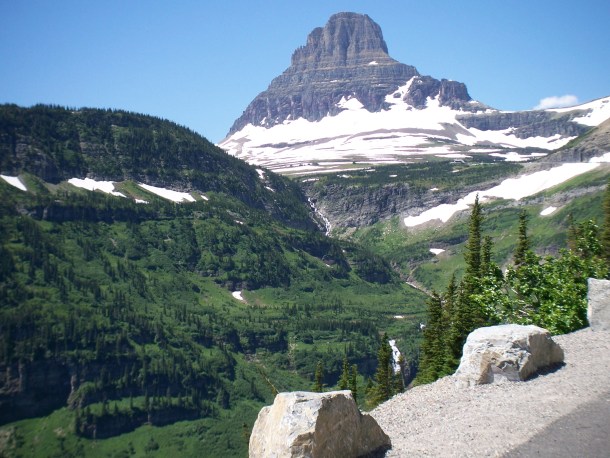
When I looked for a poem, this one by William Stafford found me. Mountains appear to be immovable and unchangeable, yet as people do they do so without immediate notice. Yet, when we revisit them, we realize the changes that occurred.

In the case of teachers, Parker Palmer speaks about asking the question “who is the self who teaches?” We are each teachers in our own particular ways, so asking this question is essential. We often overlook this question in pursuit of easier to answer questions about the what, when, where, why, and how.

When we ask who we are, we explore the values that anchor us in living life. In times of crisis, those values guide us and help us through those tough times. Attending to them in mindful ways each day as a gardener would her/his garden grounds us in them in times of real need. They have spiritual meaning that come to life in living and expressing them daily through who we are as a human being.

If we serve our values well, “we will hear the world say, ‘Well done.'” The patience of living a good life, which in Aristotle‘s terms, is indefinable will be the reward. Like a mountain guiding us on our journey, the values we live and express guide us and others on a shared journey.

To be a mountain you have to climb alone

and accept all that rain and snow. You have to look

far away, when evening comes. If a forest

grows, you care; you stand there leaning against

the wind, waiting for someone with faith enough

to ask you to move. Great stones will tumble

against each other and gouge your sides. A storm

will live somewhere in your canyons hoarding its lightning.

If you are lucky, people will give you a dignified

name and bring crowds to admire how sturdy you are,

how long you can hold still for the camera. And some time,

they say, if you last long enough you will hear God;

a voice will roll down from the sky and all your patience

will be rewarded. The whole world will hear it: “Well done.”
From “The Rock Will Wear Away”

Today on the way home, we stopped the Okotoks Erratic or Big Rock. In the Blackfoot language, it is Okotok, which means rock. It weighs about 16, 500 tonnes (18, 000 tons), is about 41 by 18 metres (135 by 60) feet wide, and is about 9 metres high (30 feet).

During the Pleistocene Era between 12, 000 and 17, ooo years, a glacier dropped the big rock in what is now prairie just below the foothills and Rocky Mountains. There are two rocks and on the flat of the prairie they seem erratic and out-of-place. The size of the rocks speaks to the power of nature.

I have a question about this rock. How big was it when the glacier dropped it in its place?

Holly Near is a singer-songwriter. The following is a short excerpt from one of her songs. As she proposes, the rock appears stronger than water. But, is it?

Humans and water are resilient, they come back time and again. Our fragility makes us vulnerable, but, at the same time, provides durability. Like water slowly eroding a large rock down into smaller and smaller bits, humans, through their mindful and collective efforts, can bring about dramatic change to the world.

Can we be like drops of water falling on the stone

Splashing, breaking, disbursing in air

Weaker than the stone by far but be aware

That as time goes by the rock will wear away

And the water comes again