Tag Archives: poetry

Happy Haiku

As part of my PhD, the university required I take two ethics courses. In 2012, I took an ethics class. A central theme in the course was the role eudaimonia plays in one’s life. We often translate eudaimonia as being happiness. It is more than being happy in the moment, as that is fleeting. Instead, Aristotle expanded on it to mean human flourishing and even blessedness, which occurs even in moments of distress.

When we think of eudaimonia in that way, it opens up opportunites to reflect on how we experience flourishing. In my case, it is the human relationships, a love of sports, hockey specifically, and writing, particularly poetry. I began to write poetry again, not because I felt at ease with the world, rather because I was unhappy at the time. It was opening up my heart in ways to allow this unhappiness to be dealt with one in ways to help me flourish.

Writing haiku is one poetic form I enjoy. Part of writing them is fun I had teaching how to write them. Students challenged me to write a haiku on the spot. I always began with an idea usually, but not allows, about nature. I got three lines down and then went back to select better words and focus on the syllables.

Students seemed to engage differently as they saw me enjoying writing haiku. Adults sometimes complained. For example parents and administrators questioned teaching poetry. I responded with it is good to write poetry as we learn how to select and use language in precise ways, plus it is fun. They did not always get it. Students did.

Here are a couple of examples that come to mind. It is not that we write as much as it is a process of writing and being written.

coursing cool current

tearing over life’s rocks

crossing to healing

Language and words bridge one’s private struggles and and make it visible and public. I strugled with these haiku. I think I need more practice. I hope they make sense.

Wearing down rough edges

Bridging life’s busyness

Pausing to flourish.

.

Butterfly

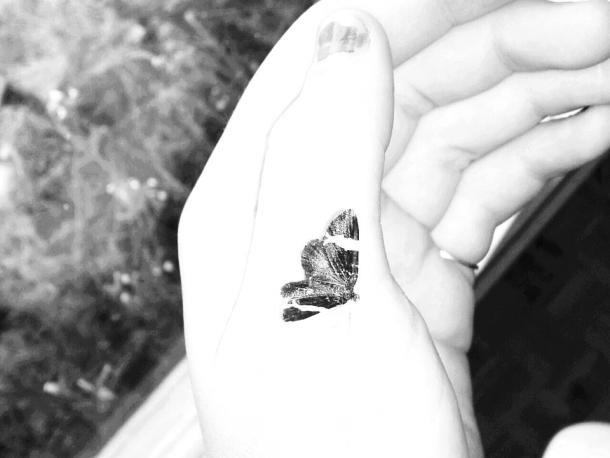
Several years ago, a student took these pictures. It is a beautiful example of how we are part of Nature and have to learn our role within as we unify with it. In becoming one with Nature, we experience Nature as a vital piece belonging to a larger fabric of community. We move into a role of stewards, rather than a user and discarder.

In these unifying moments, we experience Nature’s richness and transform. With increasing awarenss and mindfulness, we can experience belonging to, in, and with Nature, rather than outsiders who exploit, use, and discard. The butterfly and each of us become intimate partners in Nature’s dance.

A result of these pictures is the accompanying haiku.

Resting on journeys

Alighting in this moment

Sharing time and space as one.

The student took a second picture from a different angle and in black and white. This led me to a second haiku.

kissing tenderly

stopping to rest on your way

A sensuous miracle.

Have a wonderful Earth Day 2020.

Nature and Progress

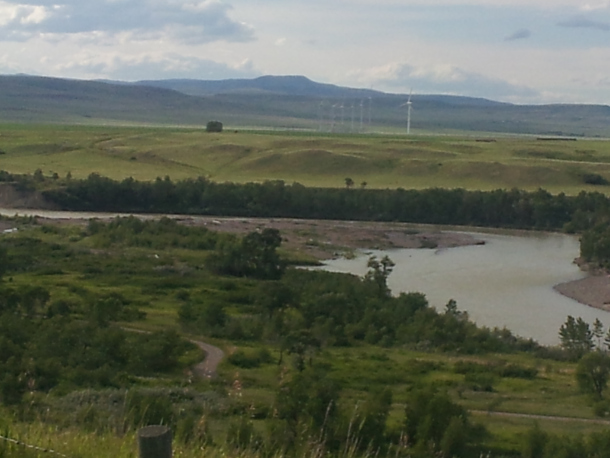
Several years ago, Kathy and I drove through the Crowsnest Pass to Spokane. I stopped at an overlook in Brocket. The Pikani Nation (Aapátohsipikáni, Piikáni, and Pekuni) people live there. The sight was awe-inspiring with a contrast between Nature and a wind power farm designed with precision suggesting humans control the environment. How different this idea is from farming in tradtional ways. Nature humbles me when I pause to understand and be grateful for my place and role in it, not as an outsider colonizing and domesticating.

Progress creates an illusion we control Nature. It humbles me when it reminds me that is not a true picture. It is humbling when I pause to understand what a small place I hold in its complete picture, a picture too large to be fully grasped by individuals and collectives.

It is times such as these, not limited to the pandemic, Nature holds the upper hand. It is a Creator, which can be understood in religious terms and in spiritual terms.

Acting as backdrop;

Mountains, sky, clouds,

Providing depth and breadth,

Contrasting our progress.

Human products,

Made by mortal hands,

Marching winged machines,

Small, almost indistinct on this canvas.

Without pattern, yet poetic

River meandering a perfect line,

Finding its way,

Unseen hands guiding,

Winding its way home.

Brocket 1

“Will you teach your children what we have taught our children? That the earth is our mother? What befalls the earth befalls all the sons of the earth. This we know: the earth does not belong to man, man belongs to the earth. All things are connected like the blood that unites us all. Man did not weave the web of life, he is merely a strand in it. Whatever he does to the web, he does to himself. One thing we know: our god is also your god. The earth is precious to him and to harm the earth is to heap contempt on its creator.” Chief Seattle

Nature’s Palette

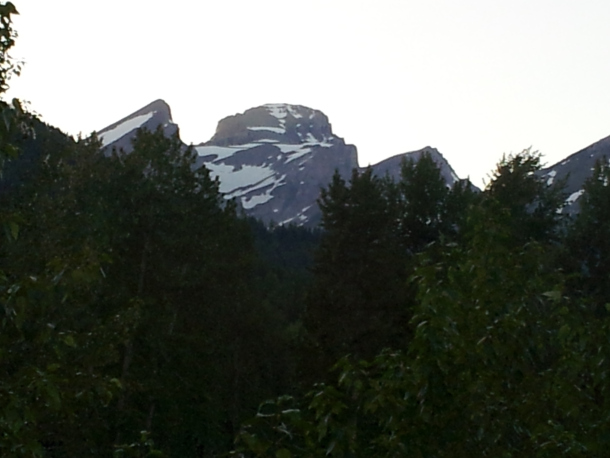
Regardless of where we travel, we are always in a different ecology. In the mountains, I see how they reach into the sky and how they impact the sky my view. Quite often, I see this change as it is different than what I see at home. Change happens regardless and, when I am out of what I understand as “normal,” change appears different. For me, this is noticeable as the sun sets

Fingers reach the sky

Colours mingle with others

Day merges into night.

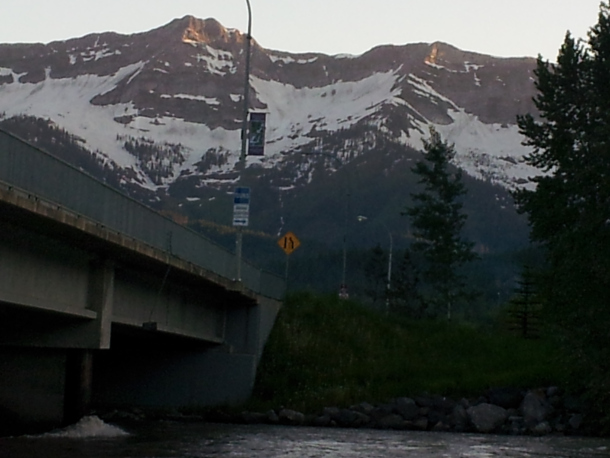
I took this picture several years ago on our way to Spokane. As we walked by the river, the sun set. It was a bit overcast and gray, so the colours blended together more than I am used to.

We walked and came around a back street getting another view of the mountains.

last colours dancing

this day slipping away

dark curtain sliding in place.

Rich palette in hand

Desert sky as a canvas

Nature painting masterpieces.

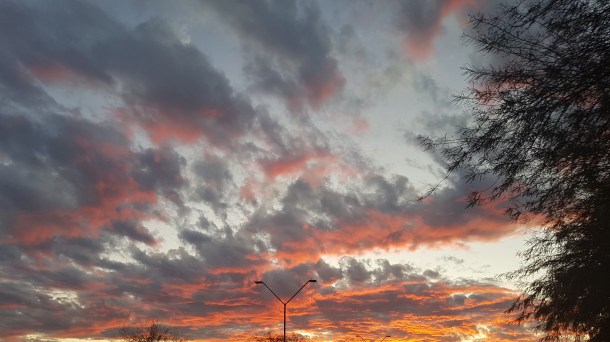
In early March, Kathy and I were in Phoenix. I walk every day and this was my last walk of the day. As I walked, I walked into the sunset and the sky lit up with vivid colours. I suspect being in a desert setting had something to do with it. It is hard to believe we were in a large urban setting.

I always try to remember Nature is all around me. Take care and stay well.

Companion

Etymologically, companion is breaking and sharing bread (panis, pa, and pain) with one another as we come together (com). It is associated with being on a journey, meeting others on the path, and stopping to eat with one another.

Companion lends itself towards metaphor, taking us beyond the literal. Faith and cultural traditions have stories related to helping one another, showing compassion and companionship to others. The word compassion means to share the joys and sorrows fo one’s life with others. When we do this, we do so because we can relate to what someone else is experiencing e.g. the loss of loved one.

On this quest we call life, we can questioning what it means to live this life. How do I share it? I am reading Parker Palmer‘s On the Brink of Everything. Parker repeats this need to understand and share in, sometimes, unexpected ways. It is not a calculated process, which humans often can fall into. After all, to be human is to fall short. It is to do the proper thing and bring out the better angels in ourselves and others.

I tend to think a lot, but this is a time where I am thinking even more. What forms of leadership do we want moving forward? How do we bring some harmony to a world often divided? How do we engage in meaningful dialogue to listen with open hearts to others who have much different experiences?

Arise,

This morning.

Tentatively step into the unknowable,

Discerning one’s voice afresh,

Discovering one’s purpose anew.

Asking,

What nourishes, waters, and heals one’s soul?

Who walks with us?

Who joins us?

Who shares the journey?

Who breaks bread with us?

How do we find refuge in one another?

As we pause and share the path,

Never quite able to step into the other’s steps.

Take care,

In one’s questing,

Speak mindfully, heartfully, graciously

Hear mindfully, heartfully, graciously

Your self and others encountered.

I took this picture in Waterton Lakes National Park. When I hike, nature reminds me to sense how much is closer at hand than I realize. What don’t I see? What don’t I hear? The coronovirus gives me time to reflect and question my priorities. What do I value? Am I true to my values? There are things and people who remain invisible and unheard, yet may be closer at hand than I realize. How do I become a companion and share in their journey without imposing?

Set the Backpack Down

Several years ago, I was in the midst of professional struggles and wrote this poem while attending a retreat based on Parker Palmer‘s work. At the time, I was reading his book, The Heart of Democracy. In the book, I came across the following quote:

“Suffering breaks our hearts, but the heart [that is] supple … breaks open, not apart, [and] can grow into greater capacity for the many forms of love. Only the supple heart can hold suffering in a way that opens to new life.”

Joanna Macy has a similar quote: “The heart that breaks open can contain the whole universe.” If my memory is accurate it is this quote that informed Parker’s writing at the time. It is about hopefulness. Hopefulness is not going it alone. It is walking up the mountain together, with those who we can share the burdens of our mutual journey together. Companionship is about sharing bread along the journey, not hoarding it. This is an apt metaphor. What does bread mean in our daily lives?

Parker reminded me passion is not just about love that comes easily. Passion is love has moments of suffering, sometimes long moments. We can each grow through these moments or wallow in self-pity. The other part of suffering is I was not in it alone. Whether it was a colleague who listened, parents who came to check in with me every few days, or Kathy giving me space to make career decisions, I was not in these moments alone.

At the time, I was writing poetry for the first time in years and it was a healing space; a space where I tried to become whole. An essential part of becoming whole is speaking from the heart, which may not mean speaking out loud. In speaking to one another this way, I must listen more closely.

Weighing us down;

We set backpacks down,

Without companions,

The path terrifying,

The mountain is high,

Its peak obscured.

Sharing one’s load;

Trusting,

Settng one’s course right,

Being true to one’s heart,

Only other hearts hear,

Will others hear?

Speaking one’s truth;

Inviting,

Sharing

Lightening loads;

Strengthening our resolve,

Straighening backs,

Squaring shoulders,

Holding heads high.

Will we walk together?

Will we share our loads?

Will we lighten the journey?

I leave you with a wonderful short video from a Canadian performer, David Francey called Morning Train.


The Simple Life

I began looking through some poetry I have written over the years and the first one I came across was this one called The Simple Life. I am going through the poetry, as I think with the time provided, I might look to put them into a coherent form and publish a book of poetry. I promised myself I would do this and have been given the time to work on project.

I enjoy solitude. For me, it is time to recharge batteries. Even on holidays, I spend time with Kathy and not many others. We visit family and friends, and hike. On the trail, we meet people to see plants and animals of the area.

It is good to be alone at times,

Sheltered by comforting trees,

The wind singing its song,

Here, I experience freedom and peace,

For the moment, worries set aside.

Minnows dart at the water’s edge,

Dancing between light and shadows,

Seemingly, without a care,

There, they experience home’s safety;

Its primal call.

Here, this is me,

I exist within a simple space;

An unseen hand beckons me,

I wave to this life,

Enjoying it each time I return;

Nature’s beauty gradually revealed.

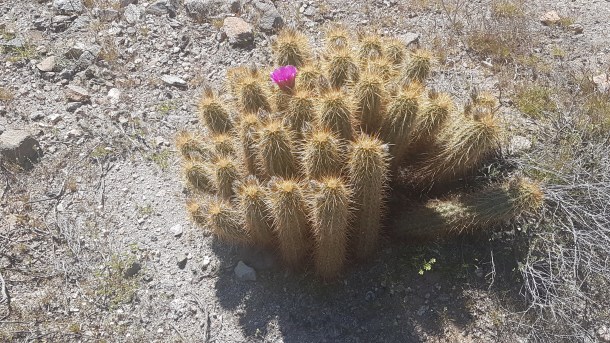
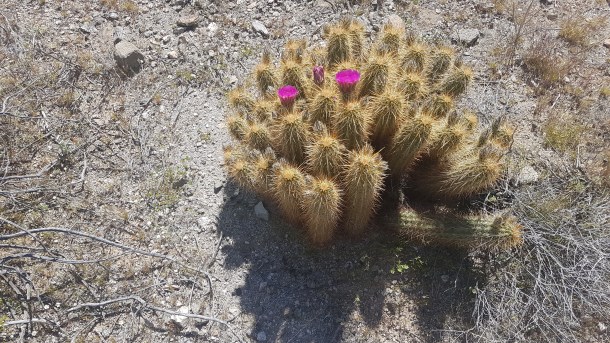
I wrote the poem after spending the day hiking in Waterton Lake National. The one reference is to standing by the lake and watching minnows dart in and out of the sun and shadows. In Arizona, we hiked in an area of Buckeye called Skyline Regional Park.

I took the pictures below over five or six days as the cactus blossomed. As a result, we walked the same path with some variations over that time. We got to see nature’s beauty gradually being revealed.

A Grateful Haiku

via A Grateful Haiku

What are each grateful for at this time? We live in unusual times. As I go through my daily routine, I read articles and posts about how this is a time to rethink what we value and what we are each grateful for in our lives.

Tanya wrote a haiku about the symbiotic relationship between a monarch butterfly in its larval stage and milkweed. I often overlook how nature provides a sense of harmony I have to look deeper to see. When I look past the monarch butterfly’s beauty to its larval form I understand it exists by taking bites out of the milkweed flower’s beauty.

In that vein, when I read the comments, I realized it was “dueling haiku” between Tanya and Stephen. I appreciated what lay beneath the surface of the post and was grateful for their poetry skills. After all it is National Poetry Month.

Thich Nhat Hanh reminds me to find the extraordinary, I look past and beneath the surface of the visible to uncover hidden beauty. Yesterday, it snowed and was cold, below 0 Fahrenheit (about 20 degrees Celsius), and there was beauty. I took this picture of a tree in our front yard with the clear sky in the background. If it had been January, not the end of March, it might have been easier to see beauty. I remind myself we need this snow to melt and add to a needed water table so we might grow and harvest later in the year.

Front Yard with Fresh Snow March 31, 2020

I recently wrote about challenges of being unable to teach in a university setting. At my age, the doors appear closed. As I reflected and wrote, I realized my days, as a teacher in some formal way, might be over. Quite frankly, we do not value the wisdom elders have to offer. Emerging from this sense of frustration and despair was a sense something else was calling me: to write in various ways. This is a form of teaching perhaps and a gift I had not been grateful enough to have.

Yesterday, a colleague and I were advised we were accepted to write a peer-reviewed article for a special edition of a journal. This is asecond peer-reviewed article in several months that has been accepted. For that, I am grateful. In being grateful, I need to look past how things appear superficially and re-cogize there is more I am becoming.

I leave you with this beautiful video from the late Israel Kamakawiwo`Ole or IZ as he was known.

Bodhisattva Prayer for Humanity

In my post one step, then another, I concluded with The Prayer of St. Francis, which is a significant part of my life and of my family.

Recently, I came across this prayer and understand the Dalai Lama recites it daily. I found several links between the two prayers. I serve as a guide, bridge between the our lives and those in need. There are many metaphors in this prayer for me to take the shape of as I move through the world. Even if I cannot reach others physically, perhaps I can be a lamp from a distance as to help guide them in a moment of darkness.

Perhaps it is only in a kind word and acknowledging of the other who is present as we pass each other in a store. Kindness can be in short supply and in moments such as the one we are presently in a smile and greeting may make all the difference.

As I watched the news last night, they interviewed people who were setting up local help initiatives for seniors, donating food that might go to waste from a restaurant, and setting up a small food bank on the walk in front of their house. It is in moments such as this we become a lamp in darkness, a vase of plenty, and a tree of miracles.

Too often, we think (over-think) that miracles happen out there with some divine impulse. Maybe it is in the ordinary we discover the extraordinary.

“May I be a guard for those who need protection
A guide for those on the path
A boat, a raft, a bridge for those who wish to cross the flood
May I be a lamp in the darkness
A resting place for the weary
A healing medicine for all who are sick
A vase of plenty, a tree of miracles
And for the boundless multitudes of living beings
May I bring sustenance and awakening
Enduring like the earth and sky
Until all beings are freed from sorrow
And all are awakened.”

The other day, I heard Lean on Me by Bill Withers. It has this prayer’s message. Withers wrote the song as a call to others to lean on one another during challenging times. This form of love is agape, a love of one another as human beings, as opposed to a romantic love per se. But, romantic love that survives to become a pragmatic love (from the Greek pragma) takes on the agape more than romantic with time and seasoning.

On Langston Hughes – Black History Month Tribute to a Great Poet

via On Langston Hughes – Black History Month Tribute to a Great Poet

Melba posted a wonderful poem, Mother to Son, written by legendary African-American poet, Langston Hughes.

I used Langston Hughes’s poetry in our poetry unit each year. The metaphor of life as a staircase, sometimes smooth and other times unevern, seemed to fit junior high students. My students responded to it well.

Another aspect of including his work and Maya Angelou‘s poetry was around the issue of civil rights. In Grade 7, we read the book The Cay, by Theodore Taylor who dedicated it to Martin Luther King shortly after he was assassinated, about the relationship of a young white boy and an elderly black man to discuss what being well-educated meant. I included my mother’s line, which was “who would you rather be lost in the wilderness, someone who read about it or an indigenous person, with no schooling, who lived it?”

In Grade 8, we exoplored civil rights through the lens of heros. I let students choose, but some struggled with this choice. Knowing my students well, I introduced them to Jackie Robinson, Willie O’Ree, and Wilma Rudolph, if they were interested in sports. Others, who came from religious families, I encouraged them to consider Martin Luther King  and Mother Teresa. If they were interested in people who stood for the rights of the oppressed, but might not be considered a religious person we talked about Nelson Mandela and Mahatama Gandhi. Regardless, I found, when I tapped into who each student was, colour, ethnicity, and gender dissolved and wonderful projects emerged.

Another Hughes’s poem we read was Dream Deferred, is sprinked with questions from beginning to end:

What happens to a dream deferred?
Does it dry up
Like a raisin in the sun?
Or fester like a sore–
And then run?
Does it stink like rotten meat?
Or crust and sugar over–
like a syrupy sweet?
Maybe it just sags
like a heavy load.
Or does it explode?

Here, is a video of the poem read by the poet.