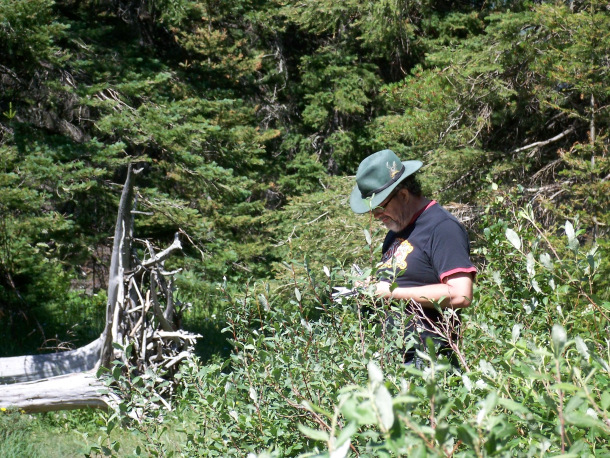
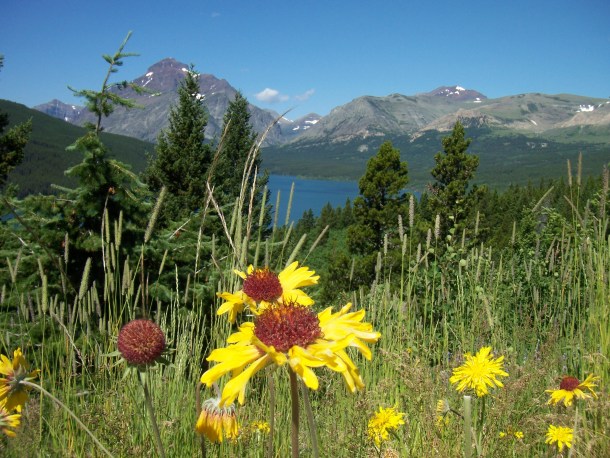
For me, creativity and energy emerge in quiet moments. Kathy took this picture in Glacier National Park. I paused to scribble. We only saw a handful of people on the walk in and out. For me, Nature gives me room breath and refresh.
Pausing, reflecting
Fortifying one’s spirit
Soaking in Nature.
Even though I enjoy quiet and solitude in Nature, I am drawn to its loudness. I love waterfalls, their power and what is not readily visible remind how much of life is a mystery. Whenever we travel, we stop and hike into various waterfalls. What is ironic is I have a fear of heights, which limits my ability to get close. On the other hand, Kathy is part mountain goat, so we get wonderful pictures.
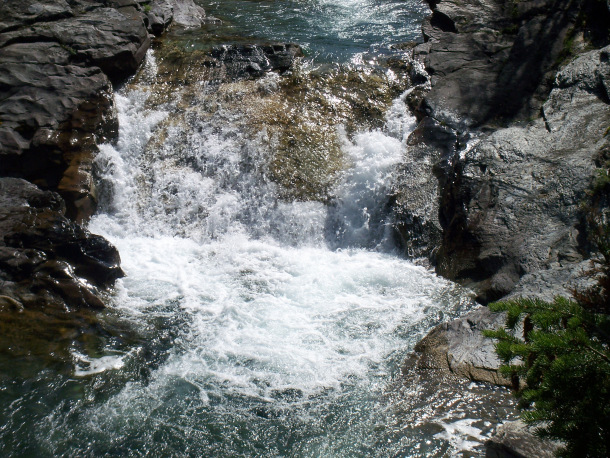
Now and then, I get a chance to get closer and, on this trip, Cameron Falls offered me an opportunity to do just that.
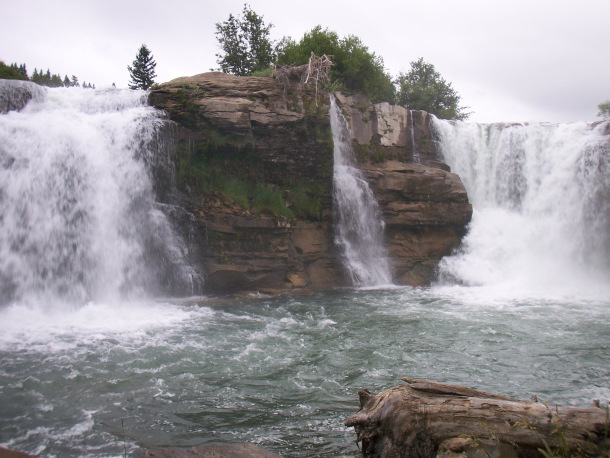
In Waterton Lakes National Parks, I had to keep my distance as the drop off on the overview was too much for me. The result is an overload that drains me of energy. This is a view of Blakiston Falls, which are bridal falls. In case there is any doubt, Kathy took the picture. Below, I express gratitude to see through another’s eyes.
Humans often set the sacred in opposition to the profane and mundane. In what we might consider of as less sophisticated or mystical traditions, the distinctions are less in evidence. The sacred and profane blend together and are readily experienced in the traditions and daily lives of people. Sophisticated has to do with wisdom (sophia, so who am I to judge what is wisdom in a world I am an outsider to? This stands out to me when I visit Indigenous sites in Alberta and beyond. In ways they are stewards of Nature in ways I cannot be as I do not understand my relationship to Nature in a proper way.
Archaeologists discovered evidence the site was on a migratory path for indigenous people, primarily the Niitsítapi (Blackfoot Confederacy), who used innovative ways to hunt plains bison at least 5500 years ago. A jump or ‘pishkun’ in Niitsítapi used drive lanes marked by rock cairns. The buffalo ran between the cairns and the last part of the drive lane sloped up, making the jump unnoticeable. The process required perfect human timing and was extremely dangerous.
Legend has it the name comes from an unfortunate incident when a young man wanted a closer view of the action. He waited at the base of the cliff. The hunt was successful and, when he was found, he sustained a broken skull and died.
Head-Smashed-In Buffalo Jump is at the confluence of three geological formations. The Rocky Mountains and Great Plains are well-known. The picture below shows the rise into the Porcupine Hills. Young Niitsítapi men transitioned to manhood through a vision quest and went to the hill in the foreground. The hill, with spiritual meaning to the Niitsítapi, does not have public access.
Journeying alone
Enter spiritual space
Questing for adulthood.
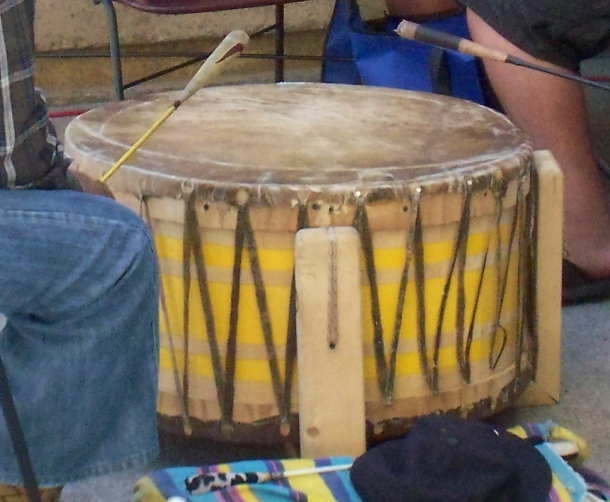
At Smashed-In-Buffalo-Jump’s interpreprative centre, we watched traditional dancing and heard traditional drumming and singing. The drum symbolizes Mother Earth’s heartbeat in Niitsítapi and other indigenous traditions.
Beating hearts gather
Singing, dancing, encircling
Joining as one with Her.
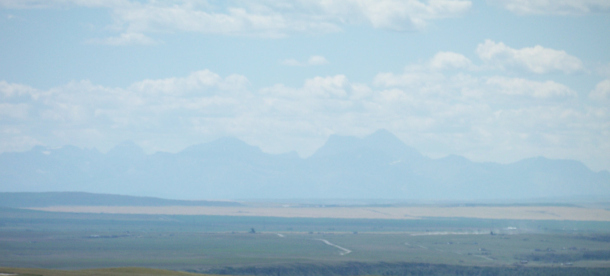
I took this picture as we turned towards Waterton. It was a hot, hazy day, blocking a view of the mountains.
The Niitsítapi meaning ‘original people,’ had their tradtional homes here. The Piikáni (North Piegan), a member of the confederacy, traveled to Waterton’s Blakiston Valley and gathered at Akaitapi (good campsite), providing food, water, and shelter. The area was also used by the Ktunaxa (Kootenay or Kootenai) who traveled from the west, through what is now the Crowsnest Pass.
hot, hazy beauty
shimmering above prairies
block distant bastions.
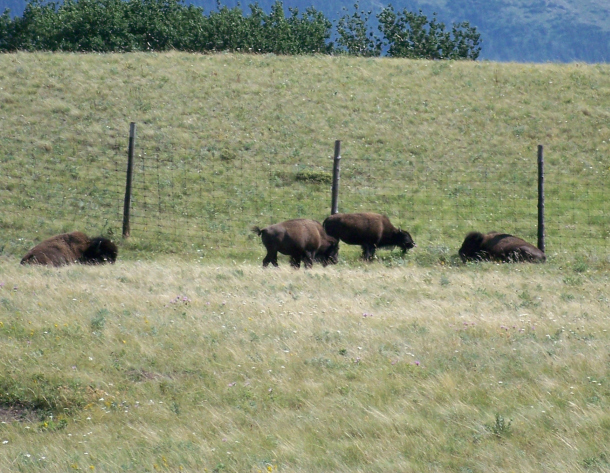
A small herd of bison live in a paddock at Waterton. At one time bison covered the Great Plains of North America. This was literal. People heard them long before they came into view and, when they were visible, it was a mass of brown and black that covered the prairies. Indigenous people used this animals as a ‘walking supermarket’ as almost all its body parts were harvested and usable.
Proud people’s icon
Plains symbol of abundance
Today’s sad sideshow.
We have attended a number of concerts with John Wort Hannam performing. He is from the part of Alberta I highlighted and has a beautiful song about the hills around the area. Enjoy.
Here is another post with photos and poems based on travels through of the natural beauty of Waterton Lakes National Park and Glacier National Park. Parks Canada describes the former as where the prairies and mountains meet. The latter is known as the crown of the continent.
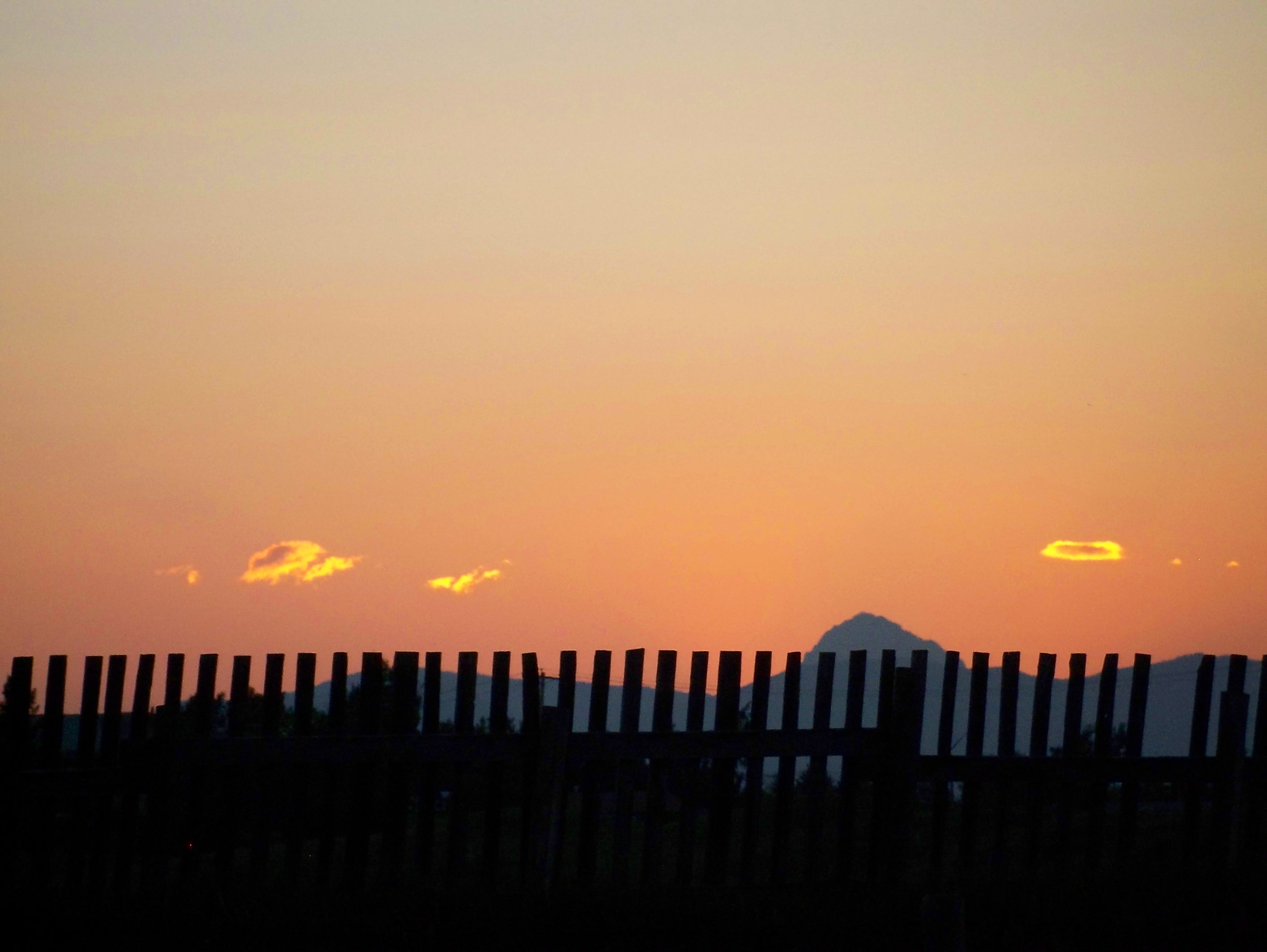
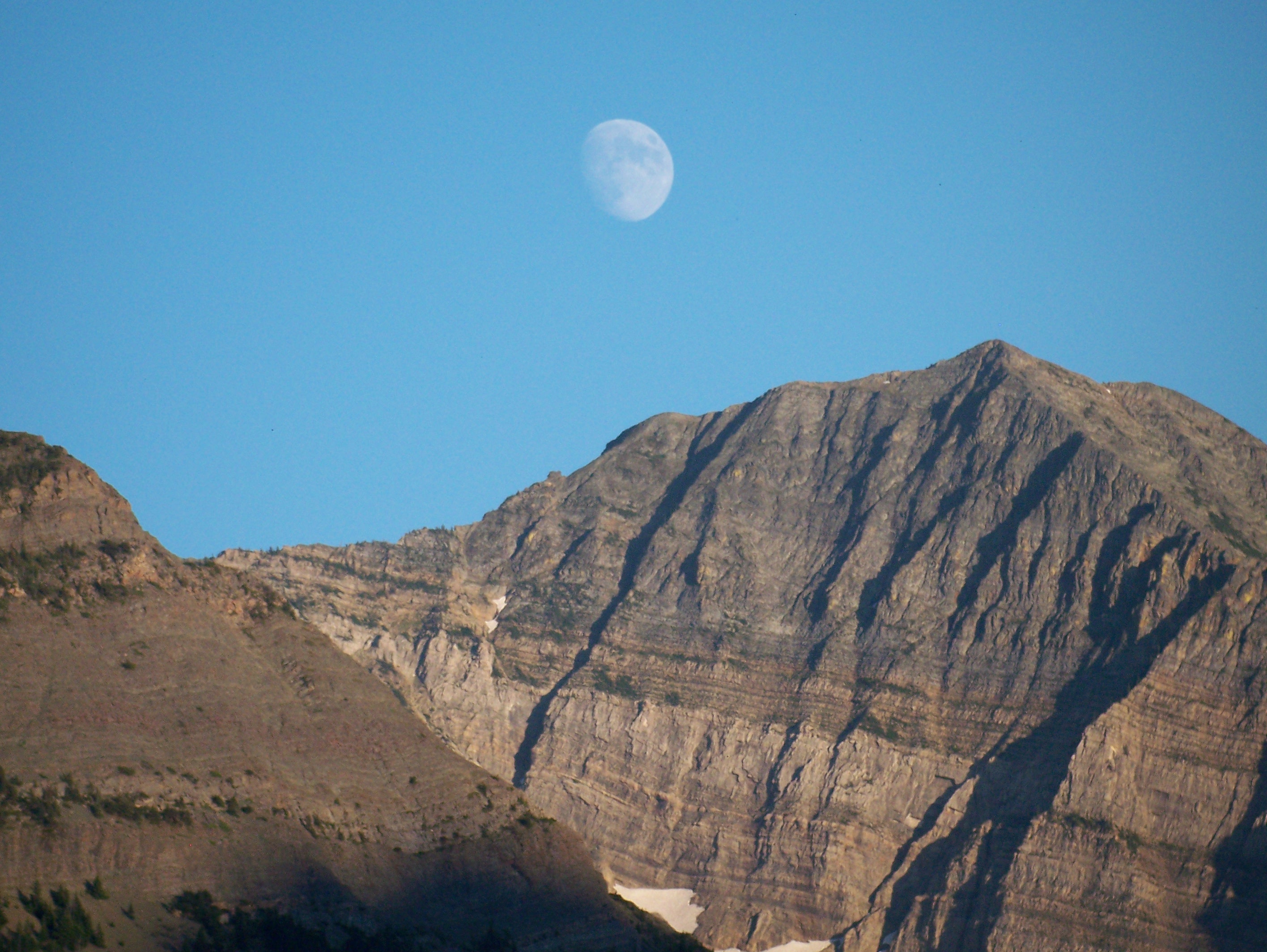
As we drive along Highway 22, we get this view of the mountains in Waterton. The sign says, “Where prairie meets the mountains” and they do. We saw this view later in the day.
This is what a few minutes does in this part of the world.
Embracing mountains
Emerging peaceful fury
Signaling day’s end.
Can you imagine waking up to the view below each day? It is intense. The Canadian census indicates 88 permanent residents of Waterton town site experience this. This is Mount Vimy viewed from the townsite across the big lake.
We traveled down the big lake crossing the Alberta-Montana border about half-way down. We cleared customs with our passports and hiked on the Montana side. At the end of our hike we arrived at to Kootenai. The scenery is spectacular.
Soaring ramparts,
Sheltering nature’s bounty.
In their shadows, safe.
At the end of a dayn hiking we saw this across the lake looking at Mount Vimy again.
Fair maiden rising,
Watchful eye surveys Nature,
Keeping safe til morn.
I know I shared this video a couple of weeks ago. It is my favourite John Prine song and reminds us Paradise is within reach. The challenge is to protect what we have.
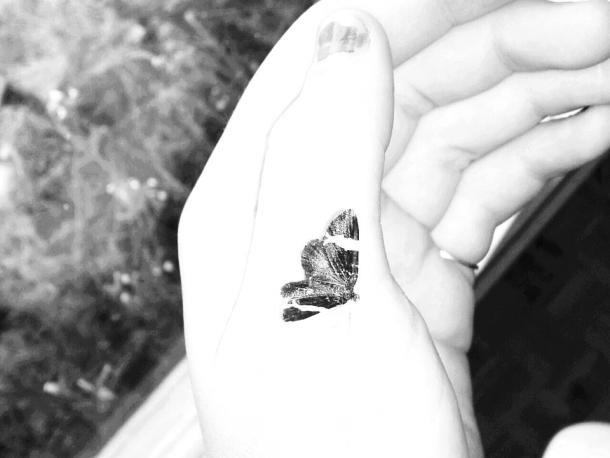
Several years ago, a student took these pictures. It is a beautiful example of how we are part of Nature and have to learn our role within as we unify with it. In becoming one with Nature, we experience Nature as a vital piece belonging to a larger fabric of community. We move into a role of stewards, rather than a user and discarder.
In these unifying moments, we experience Nature’s richness and transform. With increasing awarenss and mindfulness, we can experience belonging to, in, and with Nature, rather than outsiders who exploit, use, and discard. The butterfly and each of us become intimate partners in Nature’s dance.
A result of these pictures is the accompanying haiku.
Resting on journeys
Alighting in this moment
Sharing time and space as one.
The student took a second picture from a different angle and in black and white. This led me to a second haiku.
I began looking through some poetry I have written over the years and the first one I came across was this one called The Simple Life. I am going through the poetry, as I think with the time provided, I might look to put them into a coherent form and publish a book of poetry. I promised myself I would do this and have been given the time to work on project.
I enjoy solitude. For me, it is time to recharge batteries. Even on holidays, I spend time with Kathy and not many others. We visit family and friends, and hike. On the trail, we meet people to see plants and animals of the area.
It is good to be alone at times,
Sheltered by comforting trees,
The wind singing its song,
Here, I experience freedom and peace,
For the moment, worries set aside.
Minnows dart at the water’s edge,
Dancing between light and shadows,
Seemingly, without a care,
There, they experience home’s safety;
Its primal call.
Here, this is me,
I exist within a simple space;
An unseen hand beckons me,
I wave to this life,
Enjoying it each time I return;
Nature’s beauty gradually revealed.
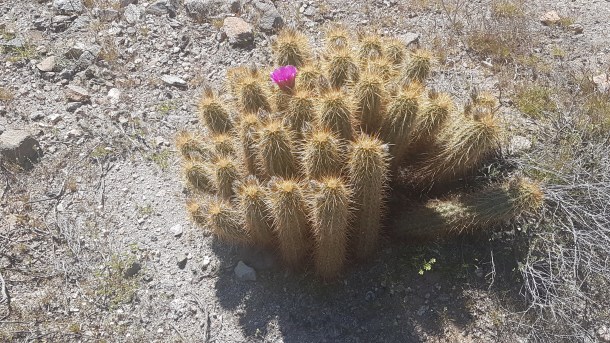
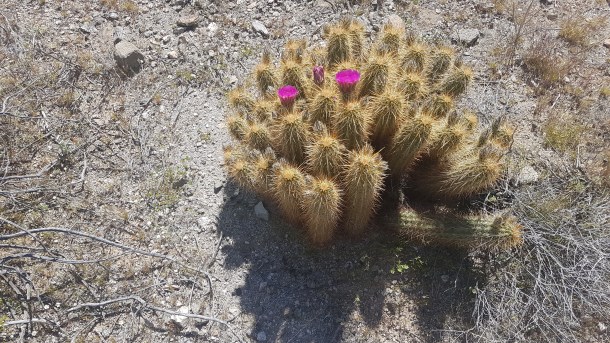
I wrote the poem after spending the day hiking in Waterton Lake National. The one reference is to standing by the lake and watching minnows dart in and out of the sun and shadows. In Arizona, we hiked in an area of Buckeye called Skyline Regional Park.
I took the pictures below over five or six days as the cactus blossomed. As a result, we walked the same path with some variations over that time. We got to see nature’s beauty gradually being revealed.
Regardless of where I am, I am in relationship with other humans and the world we share. It is easy to take these relationships for granted. Over the years, I discovered, children and youth embrace differences more readily than adults.
Through the use of satire, made up words, and unusual characters, Theodor Geisel, better known to us as Dr. Seuss, took a stand against bullies, hypocrites, and demagogues. In this way, I think his characters depict pluralism we live in. Yes, there is no Lorax, Yertle the Turtle, or Cat in the Hat, but we can learn to appreciate and defer to their beautiful differences. Even within differences, I find more similarities and common ground with others, a sense of community of humans.
We need this in the world we co-inhabit with other sentient and non-sentient beings. Too often, people who masquerade as leaders tell us to see difference as a problem, to exploit Nature, and to separate ourselves from our better angels. Perhaps our better angels are Thing 1 and Thing 2.
I retrieved the Thing 1 and Thing 2 image from Clip Art Mag.
I took this picture Sunday at the Japanese Friendship Garden. Even in the midst of an urban setting, like Phoenix, we discover spots where nature and humans co-exist in almost perfect harmony. In truth, we are never separate from nature and humans. It is only in our thoughts we are separate, somehow superior. When we are present and mindful, we recognize there are no boundaries.
Here are four of my favourite Dr. Seuss quotes:
Today you are You, that is truer than true.
There is no one alive who is Youer than You.
Don’t cry because it’s over. Smile because it happened.
Unless someone like you cares a whole awful lot, nothing is going to get better. It’s not.
So be sure when you step, step with care and great tact.
And remember that life’s A Great Balancing Act.
Mary Oliver wrote the beautiful poem The Summer Day. She ended the poem with a question: “what is it you plan to do with your one wild and precious life?” Actually, she included several questions, which are not answerable in any certain way. Life is unpredictable, but what we want to do with it echoes Hans-Georg Gadamer who wrote “desire beyond wanting.” To me, this suggests we each aspire, perhaps can aspire, to something beyond simply knowing and planning. There is more to life than we can plan and predict, yet we can hope.
I think, as important, the question is about vocation and what calls us forward and animates each of our spirits. Thomas Merton and Parker Palmer write about how vocation and voice relate to one another and are how we express who we are in life. Merton goes so far as to say some of us are perhaps destined to search without discovering what calls us.
I wonder, “have we lost this sense of spiritual purpose in the early part of the 21st Century?” We look out there, read the newspapers, follow 24/7 news, etc. and feel deep despair and hopelessness, perhaps even disinterest to follow what beckons. I don’t say this lightly. Two incidents led me to wonder about this. First, at a recent community engagement conference, I was struck by how much despair filled the room. Second, in a private conversation with a parent, they commented how a child was struggling with what exists beyond our individual life. The child is experiencing a sense of despair over this. In part, this is exacerbated because the parents are atheists and feel unable to give guidance in a spiritual way. Finding our voice and who we are is more than an instrumental process of work. It goes beyond to the spiritual essence of who each are and how that brings meaning to our lives and the world.
In the latter setting, I emphasized the idea that we conflate religion and spirituality. One can be deeply spiritual and non-religious and non-theist. One can be religious and theist without being spiritual. The essence of spirituality is to find what calls to me and respond with the qualities of life I want to find in the world. I don’t think those in short supply, but, if we listen to the media, we come away with a different view. At the heart of this, might be the great existential questions poets, like Mary Oliver, ask us.
Who made the world?
Who made the swan, and the black bear?
Who made the grasshopper?
This grasshopper, I mean-
the one who has flung herself out of the grass,
the one who is eating sugar out of my hand,
who is moving her jaws back and forth instead of up and down-
who is gazing around with her enormous and complicated eyes.
Now she lifts her pale forearms and thoroughly washes her face.
Now she snaps her wings open, and floats away.
I don’t know exactly what a prayer is.
I do know how to pay attention, how to fall down
into the grass, how to kneel down in the grass,
how to be idle and blessed, how to stroll through the fields,
which is what I have been doing all day.
Tell me, what else should I have done?
Doesn’t everything die at last, and too soon?
Tell me, what is it you plan to do
with your one wild and precious life?
I include a lovely reading by Mary Oliver of this poem.
Bruce posts wonderful text, accompanied by exceptional images. This post caught my eye as I looked through Bruce’s blog. It is about Thomas Merton and his enduring work as a pacifist, activist and support of inter-faith dialogue.
I read Merton and book about his writings frequently. I grew up in the shadow of Vatican II, which promoted inter-faith dialogue and Merton, Brother David Steindel-Rast, Karen Armstrong, Thich Nhat Hanh, etc. attract me to their work.
I find them to be prophetic and mystical, often signaling challenges we will face long before they are evident to most of us. For example, Bruce included a wonderful quote from a letter Merton wrote to Rachel Carson after reading Silent Spring. Both offered prophetic views, as mystics, of a world to come and challenges we faced in the 1950’s.
I leave you with this quote from Thomas Merton and wish each of you the best. However, we each celebrate we need to share our love for each other and the world we share with each other.
The beginning of love
is the will to let those we love
be perfectly themselves,
the resolution not to twist them
to fit our own image.”
~Thomas Merton
I share this image often. Kathy took it in Glacier National Park. She shared it with me out of love and I share it with my love for the people who will see it and nature we are stewards of, echoing Wendell Berry when we say: We Do Not Inherit the Earth from Our Ancestors; We Borrow It from Our Children
In my recent reading, I came across this poem by Mary Oliver. I had not read it before, but found it spoke to me in deep ways.
The other day, on Facebook, I came across a Welsh saying: “Dwi wedi dod yn ôl at fy nghoed.” It means returning to my senses/regaining mental equilibrium or more literally I returnto my trees. I understand this as coming back to my roots and being mindful and present for each sentient and non-sentient being I encounter. The word Druid means oak-knower and the Druids lived in harmony and oneness in nature.
Where do I feel most comfortable? The word comfort comes from com meaning surround and fort meaning strength. In other words, living mindfully in the world has ethical implications. In Greek, ethos means character and also how music influences morals, emotions, and behavior.
As I listen to each of the other kingdoms, what music do I hear? How does the music influence and inform who I am, what I say, and what I do? How am I aware of the music and sounds I hear in these kingdoms?
Consider the other kingdoms. The
trees, for example, with their mellow-sounding
titles: oak, aspen, willow.
Or the snow, for which the peoples of the north
have dozens of words to describe its
different arrivals. Or the creatures, with their
thick fur, their shy and wordless gaze. Their
infallible sense of what their lives
are meant to be. Thus the world
grows rich, grows wild, and you too,
grow rich, grow sweetly wild, as you too
were born to be.
I took this picture several years in Jasper National Park. Kathy and I had gone for an early drive and hike. We parked and took pictures. As I turned, I thought I saw something move and walked towards the movement. The cow elk sat and chewed her cud. She was aware of us and, as I approached, I heard the soft sounds she made in completing the digestive process.
We pointed her out to others and cautioned them to be careful and quiet as they approached her. After all, we are strangers in those other kingdoms.
I have been offline for the past week, as we moved into our new house, which is located on the same lot we lived on before. We still do not have Internet, so I go to a local coffee shop once a day and sometimes every other day to catch up. Purple Rays provided a wonderful post to get back in the groove.
When we bought our house 40 years ago, it came with two relatively large spruce trees in the front. Those remain in place as proud sentinels and, as Mary Oliver describes trees in to the new houses we build on the same lot, one for Kathy and I and the other our youngest son built.
We chose to stay and build for several reasons. First and foremost, it gave our son a chance to have his own house. Second, we enjoy the community we live in and have been part of the fabric of it for 40 plus years. It is an area of Edmonton that has tremendous stablity despite the rapid growth of the metro area. We have neighbours who have lived in this community longer than we have.
The house on the left is our house and the one on the right is our son’s house as the trees stand guard.











 ivonprefontaine
 Teacher as Transformer
