Category Archives: Education

OUR ONLY WORLD

I came across this post by Bruce on Earth Day, but have been busy attending and presenting at two conferences and completing work with student teachers. My delay provided me with room to reflect on what Earth Day means, raising questions for me about its meaning. Quite often, we relegate one day a year to celebrate a particular event and, once done, we relegate it do a shelf for another year. I think Earth Day is treated that way.

What Bruce’s reminds me of is the daily wonders I experience when I consider Earth Day an ongoing event. In this particular post, he draws on Wendell Berry who is an elegant voice on the concept of caring for the nest we share with each other. In his writing, Wendell Berry reminds me ecology and economy come from the Greek oikos, meaning household. My mother used to say “Even pigs do not poop where they live, eat, and sleep?”

Humans are not separate from nature. We are an integral part of nature and how we treat nature, including one another, speaks to who we are as part of nature. Do we exploit nature for 364 days without any consideration for tomorrow? Or, do we conserve its beauty and while over its worth and common good? I think a word that is often overlooked is prudent. Do we live within our means? Do we care for our household with prudence and care?

I understand the political notions of conversativism and progressivism as a false dichotomy. What does it mean to converse? What do we want to conserve? When we progress, what do we throw out? Both sides, if it can understood as sides, do little to conserve. In fact, I contend that, if we solved our environmental issues, the people who stand on opposite sides would be unhappy. They would be left with nothing to argue about and unable to point accusatory fingers at one another.

The post concludes with: “Only the present good is good. It is the presence of good – good work, good thoughts, good acts, good places – by which we know that the present does not have to be a nightmare of the future. ‘The kingdom of God is at hand’ because, if not at hand, it is nowhere.” In a Judeo-Christian biblical narrative and despite what many claim, we were left to be stewards of nature, to care for it, and allow it to flourish so we might flourish. This is not unique to the Judeo-Christian traditions. There are teachings attributed to The Buddha that speak to how we should treat animals. This includes their habitat, food source, water source, etc. and is not simply the treatment of pets and livestock. As well, Indigenous people share an understanding of the interconnectedness of nature and the universe.

I leave with you three quotes and I found many others.

Religion is what binds us together. It is not a set a beliefs, but faith in a community to do what is proper and share with one another.
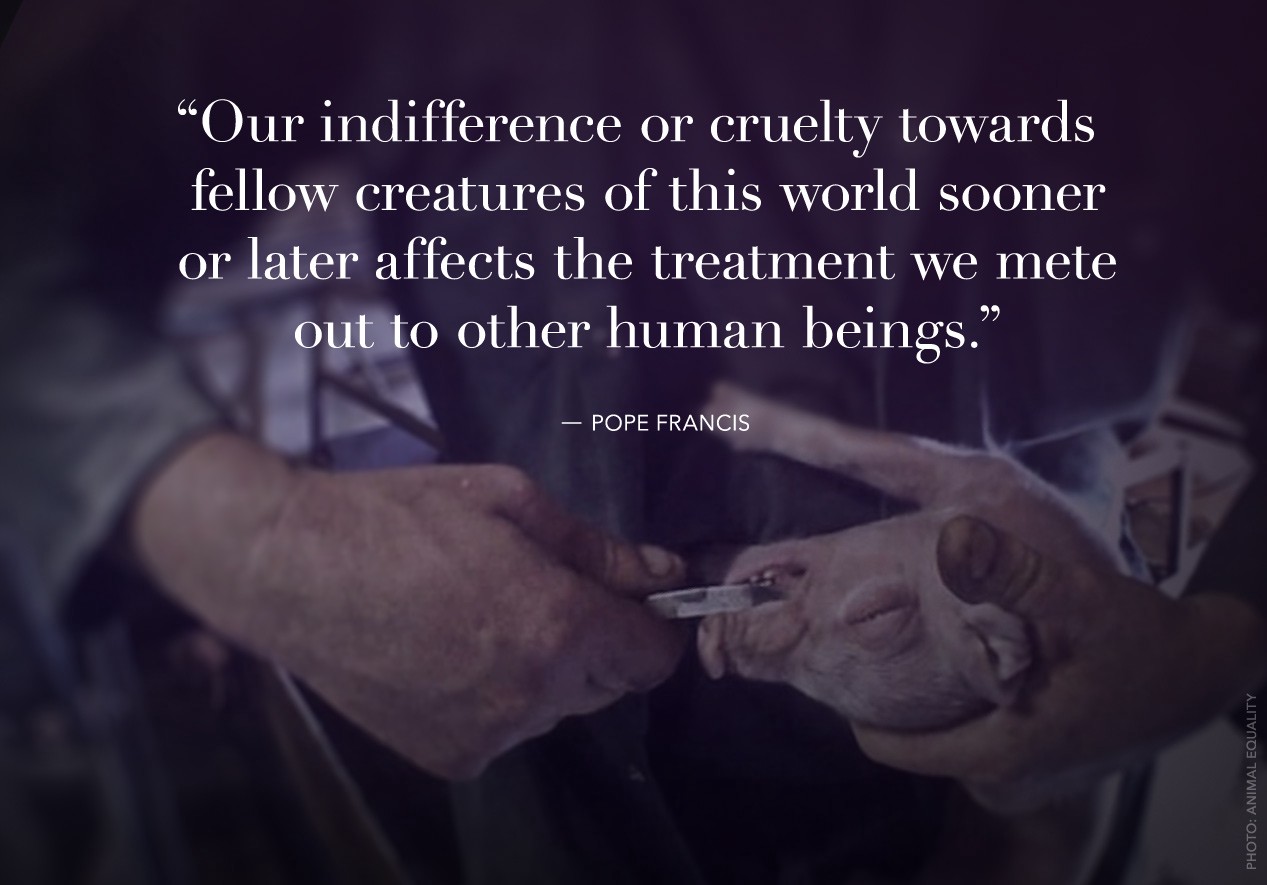
Indifference is the opposite of love.
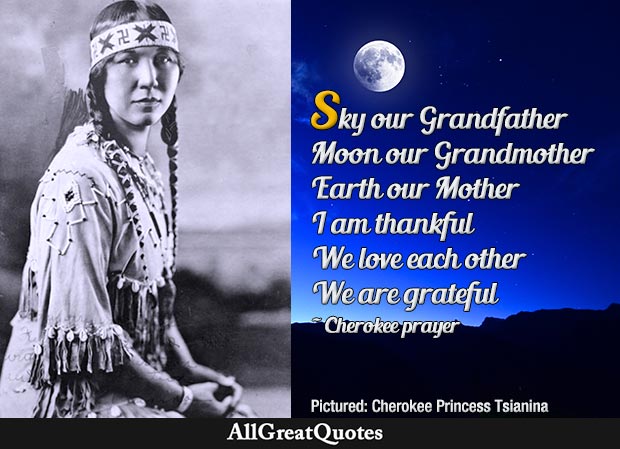
Share words and acts of grattitude and love for Nature.

#One-linerWednesday . . . the smile of innocence. — Purplerays

To me nothing in the world is as precious as a genuinesmile, especially from a child. ~ Rumi♡ Text and image source: Rumi https://www.facebook.com/107050231019471/posts/279057347152091/

#One-linerWednesday . . . the smile of innocence. — Purplerays

Purple Rays comes into my feed on a daily basis with wonderful quotes and pictures. One of my favourite sources is Rumi the 13th Century Persian Sufi poet and philosopher. This quote is no exception.

Children provide a genuine sense of hope with their innocence, love, and ability to live in the most immediate world. They can inspire each of us, as adults, with hope we may not feel in a particular moment.

Part of my current writing is about hope. In a book chapter that will published shortly, we each shared a remembrance of hope in our lives and how it comes to inform our pedagogy of hope as teachers. Mine included the line from The Prayer of St. Francis to offer hope where there is despair.

As educator and pedagogue, each adult who interacts with a child has an obligation and duty to offer hope for each child. When we look into the eyes of children and witness their smiles, we are called to be stewards and serve in unanticipated ways. I use the word steward through its etymological meaning, relating it to the Greek word oikos. Oikos means household and is related to economy and ecology, which also come from the same etymology.

The prudent educator and pedagogue might ask the following questions: “How do I leave my corner of the household a better place for the next generation? How do offer hope to each child of the ensuing ggeneration?”

The Panther

I learned new words today. I read an article by Judith Butler who used the word carceral, meaning “relating to prison.” It fits with systemic prejudices e.g., racism, where particular groups of people are imprisoned at a greater rate than their percentage of a society or country.

But, it includes how people are limited to a geographic space, so they do not come in contact with the elites. It extends injustice and oppression those groups and individuals experience. Paulo Freire argued this cuts across racial, gender, and linguistic lines and includes class distinction. People are trapped and imprisoned within a life that offers little hope for them and their children.

I am unsure Rainer Maria Rilke intended to make a political statement in The Panther, but it serves as an analogy to understand how another might experiences life in the midst of oppression. In not witness ing another’s disenfranchisement e.g., economic, political, educational, etc., I grow to think their plight is not real. But, bars, literal and figurative, become reality. As Rilke states “a great will stands stunned and numbed.”

The opposite of my indifference is love and serving, reaching out to give a hand to those who need help to cut the bars away that oppression has built around them. It is less about doing for them and more about valuing their lived-experiences in meaningful ways. Freire said to read the word, humans first read their world, bringing their understanding of living to formal education.

From seeing the bars, his seeing is so exhausted

that it no longer holds anything anymore.

To him the world is bars, a hundred thousand

bars, and behind the bars, nothing.

The lithe swinging of that rhythmical easy stride

which circles down to the tiniest hub

is like a dance of energy around a point

in which a great will stands stunned and numb.

Only at times the curtains of the pupil rise

without a second … then a shape enters,

slips through the tightened silence of the shoulders,

reaches the heart, and dies.

I love the blues. A sad thing about the genre is many women who were pioneers were not recorded as often as men. It is a treat to hear someone like Sister Rosetta Tharpe sing.

One Thread

I began to think about what I might post today and, as a good fortune would have it, Eddie’s post showed up and answered my question.

Eddie shares a lovely quote from Chief Seattle about humankind’s interconnectedness with the web of life. We have not woven the web, but a thread in it, binding and connecting us to one another and to the universe.

Hannah Arendt wrote about how our actions, including speech, transcend the time and space we currently inhabit. This is particularly the case for teachers. We are connected and bound to a future we cannot predict, that is far more complex and larger than the immediate environment we inhabit, which is incredibly complex and large.

A word spoken in haste to a student, a parent, a colleague has the potential to resonate in ways we cannot anticipate, regardless of profession or role in someone’s life. How we each treat our local environment has considerable impact on those downstream in terms of time and place. Cutting down old growth forests has more than an immediate impact. It resonates for generations. As humans, we have free will to act and speak in responsible ways. How we do these things has great meaning about who we each are as a human.

This video echoes Chief Seattle’s message of interconnectedness and how, in recognizing that point, we find our way to the peace train arriving from the darkness. Yussuf Islam (Cat Stevens) has received several awards for his work in the area of peace.

Rhythms of Living

In the poem, The Uses of Not, Lao Tzu reminds me there is often an empty space that completes something and, for that matter, someone. A wheel needs spokes, a clay pot the hole in the clay to hold things, and rooms need doors and windows.

In life, I find myself trying to fill gaps and holes. When I am mindful, I recall to make something (w)hole it has gaps and holes embedded in it. The gaps and holes serve as spaces for energy to enter and exit. Without energy exchanges, I can grow stagnant and stale.

This poem was about the busyness of life. At times it seemed to overwhelm me when I taught. I tried to do more, rather than stepping back and finding space that served to heal and make me whole again.

Filling holes–

Plugging gaps–

Digging holes in water–

Seeking to be whole;

In the end, futile.

Remaining indivisible–

Complementing one another–

Completing one another–

Beauty reflecting one another;

Emerging in paradox.

Inviting, calling–

Opening life’s arms–

In its embrace–

Discovering loving space;

Living in life’s healing rhythms.

I opted for this video, as, despite the fact they are struggling, Tommy and Gina have each other. It is what makes them whole; that and living on a prayer.

A Child Sits

Several years ago, during a family discussion about war, my mother asked me where I stood on war. I am opposed to war on the grounds: “Thou shall not kill!” This edict underpins Abrahamic traditions guiding Judeo-Christian and Islamic faiths. It is a central premise is central to the universal Golden Rule.  Who suffers? Inevitably, it is the weakest, the most vulnerable.

I used an activity with students to demonstrate the difference between cultures of war and peace. I asked for words to describe a culture of war. Usually, the list was short; maybe 10-12 words and phrases. When I asked for words to describe a culture of peace, the list was long and students did not struggle to find new words. The conversation often went for an hour or so.

Despite this, we struggle to find peace. In today’s high tech world, we no longer need to be physically present to attack. It can be done via computer commands ordering pilotless aircraft and rockets launched from distance.


Child sitting–

Unable to shed tears;

Shivering–

Cold, wet,

Fragile, weak;

Hungering for reprieve.

Despairing amidst carnage–

Seeking refuge;

Finding only chaos–

From distant places,

Raining down hell;

From heavens that should protect.

School yard bullies–

Feigning courage;

Kicking those already down–

Seeing no human face,

No suffering,

Lacking care, compassion.

Humans seeking true courage–

Begging, imploring;

Returning to good senses–

Leaving behind,

Wanton, senseless,

Violence, death!

I chose this video, because it shows the outcomes of zero-sum situations and how we fool ourselves there has to be winners and losers.

Gettin’ My Mojo Back

I looked at this poem a month ago and decided not to post it. As I listened to music today, a song came on called Getting My Mojo Back and felt it was time to post it.

I wrote this during a retreat on Bainsbridge Island based on the work of Parker Palmer. It was at a time I was wrestling with staying in teaching due to the politics. I felt I was not giving it my all and lacked confidence in my teaching.

During the retreat, I reflected and had candid conversations with others and concluded it was time to control what I could control. Interestingly, it was in the conversations with others that I had to choose to be all in really came to the forefront. I went back to my classroom, spent another 5 years teaching, and giving it my all.

I think, when we lose confidence, we do not realize it. It sneaks up on us, rather than being a cataclysmic shift. Recovering confidence is similar. It is done in small steps and realizing we are not alone in the moment.

I had to realize anger was born out of fear and loss. Once I acknowledged this, I was at ease with letting go and moving forward.

It just happens–

Letting go;

Speaking without anger–

Embracing one’s sadness;

For what is lost.

Staring into an abyss–

Sitting with unformed questions;

Terrifying darkness–

Sensing incompleteness,

Feeling uncertainty.

Taking stock–

Looking inwards;

Accepting extended hands–

Discarding baggage

Moving towards a place of light.

Mojo gaining momentum–

Emerging at its pace;

Creating healing space–

Living one’s own truth;

Living in each moment’s question.

I attended a John Lee Hooker concert in 1972 or 1973. I grew up listening to jazz, gospel, folk, and blues with traditional country, early rock and roll. I took it for granted that I attended a John Lee concert until an American, who shared a love for the blues, told me he never did. African-American performers toured in Canada on a regular basis at a time they did not have that same ease of movement in their own country.

When I used Langston Hughes’ poetry in my teaching, I remembered he wrote from a different understanding of what America was. This was an outgrowth of an awareness of my privilege as a white Canadian male.

From the Margins

When I traveled to attend events based on the writings of Parker Palmer, two gifts emerged. First, the settings chosen were beautiful and peaceful, with considerable access to being able to walk. Second, along with the time outside, there was considerable time to reflect in solitude and with those gathered. Part of the reflection, was to listen as one spoke and hear, as if for the first time, what one was/is saying.

I wrote the following poem after time reflecting on my pedagogic practices. I taught in a setting that required me to be present and I was falling short and, as a result, letting students, families, and myself down.

Over time and without realizing it, I had fallen into habits of just doing things the way I had before. I experienced a false sense of security in my teaching. This was something I promised I would not do when I entered teaching.

To teach, I felt I had be on the margins and be awake to each student and their particular needs, listening to what they and their families told me about them. The margins are what surround us. Too often, I wanted to be in the centre of things, where I was comfortable and the centre of things. I don’t learn much there.

sensing false security,

being the centre,

yet, margins surrounding–

paradox of one’s being.

standing out,

revealing blemishes,

making them obvious–

reveling in them.

finding comfort on the margins,

not hiding in the crowd,

reflecting one’s character–

stepping out and away with pride.

composing one’s humanness;

in deep concert with others,

sharing perfect imperfections–

enriching human moments.

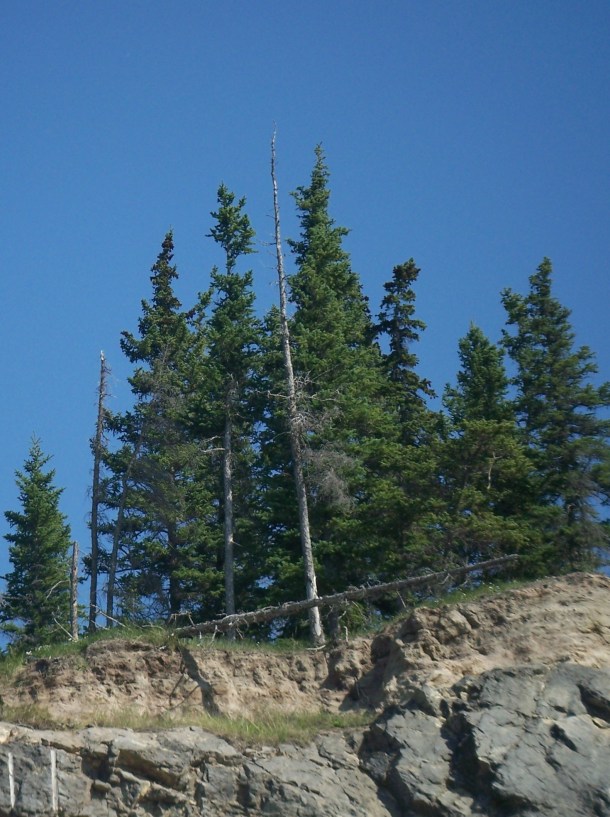
This took some doing to edit the final poem, but here it is. I chose the picture, as it is a reminder that nature does not provide perfection. It provides perfection in imperfect patterns that emerge.

In nature, trees like the ones in the picture find a way to survive. Despite their lack of size, these trees are at least 100 years old and have survived, one might say thrived, living on the margins. They have a wonderful view from a precarious vantage point.

Ongoing Quest

I wrote this during my last year teaching. It had been a particularly challenging day in the classroom and beyond. The students were full of energy and it was not always healthy. I grew frustrated and visibly annoyed part way through the afternoon. Part of it was a lack of a healthy relationship with the administration, which seeped into my teaching at times. It was challenging to set those frustrations aside, particularly with little support and how it impacted my teaching.

Having said thi, I chose to teach anothere year and wanted to teach those particular students. On myway home, I realized I need to establish a different, encouraging tone. In a sense, my ability to influence is my ability to recognize my reality and walk into the fire, the crucible, so to speak.In his teaching, Thich Nhat Hanh reminds me even weeds of a tough day serve a purpose. They fertilize and increase the yield of a crop: children’s learning and this could be lost on on me. For the remainder of the school year, some 7-8 months, I used this as my touchstone.

Sometimes, I allow myself to assume what is out there makes me who I am. If I let it, I succumb to those forces. On the other hand and stepping back from the brink, I reclaim my view and my callings in life. I do not let others and circumstances dictate who I am. I can choose how to respond. This is no mean feat as, in the heat of  the battle, it is hard to not be reactionary. The best I can do is be the best I can be in a moment, reflect later, and grow anew with fertilizer provided by tough moments.

transforming–

ongoing quest,

seeking vision,

unearthing a better, truer self–

digging deep,

resting in my heart.

transforming–

polishing the gems of self,

righting speech! righting action!

influencing others properly–

reclaiming my voice,

bringing forth my best.

Much to my mother’s chagrin, I got The Freewheelin’ Bob Dylan when I was in high school. I still have it and still spin the vinyl after all these years. Although it is now almost 60 years old, A Hard Rain’s A-Gonna Fall still rings true for me today. Dylan wrote this in the midst of the Cold War with nuclear threats all around. Today, we are in the midst of multiple crises: health, wealth distribution, inequities, etc. The question I should ask in difficult times, small and large, is how can I be the difference I want to see in the world to paraphrase Mahatma Gandhi? Even if it is difficult, it is noble, virtuous, and hopeful, in the face of great obstacles, to speak truth to power, (re)calling I can only make the difference I can make.

In Seeming Chaos, Hope

I gave a lot of thought today about hope and its lack of it. I do not confuse hope with positivity and positive mindset. Instead, I understand hope as grounded in reality. Emily Dickinson described it as “the thing with feathers,” suggesting we cannot fully describe it. Its ineffeable nature creates a metaphoric meaning for each of us. Without dreams and hope, Langston Hughes cautions “life is a broken-winged bird/that cannot fly.” With hope and dreams of previous enslaved generations, Maya Angelou repeats the title of her poem “I Rise” as a prayer and refrain against hopelessness.

Too often, people want to pigeon-hole others in binary and dichotomous ways e.g. conservative or progressive. It appears easier and less ambiguous if we can label someone, somehow providing a sense of stability about who this or that person is. What we mis-understand is “and” means something. It acknowledges how complex each human is. We are not usually one thing or the other. Instead, we are mingling of things, experiences informing how we live, and the context within which we live. I want to conserve things e.g. Nature and, at the same time, progress e.g. equity regardless of gender, race, sexual orientation, etc. Neither is premised on political or, in our case, reality TV, sloganeering.

Paulo Freire and bell hooks write about hope, unconditional love, and dialogue in educating children, youth, and adults. I think the critical theory is incorrect. What they propose is critical pedagogy/andragogy where I ground dialogue in listening with lovingkindness to those with different lived-experiences. In mindful, non-judgemental listening, I seek to open up space where the Other shares their reality and wisdom. In acknowledgeing the humanity of the Other and greeting them in dignified silence, I might offer the fragile hope so needed in today’s world. Imagine a world where we greeted one another with dignity, rather than making up slick political mottos and creating disparaging nicknames that assault others?

I wrote this poem after a long, hard day. I thumbed through some right-brain scribbles and this was the result.

Even in chaos, hope–

Faith springing forth,

Beloved Other sharing wisdom:

What do we hold in common.

Communal rhythm,

Symphonic voices arising–

Loving harmonies;

Binding and healing.

Listening,

Giving dignity–

Acknowledging shared ground.

Holding each Other gently,

Unsure together–

Breaking bread

Being safe in this space.

This was the first secular song I heard in church. It was the late 1960’s. Today, I think we do need mountains we have bulldozed, meadows we have paved over, and water we have contaminated. Having said this, we need love and hope equal measure to make those things happen.