Category Archives: Reflective Moments

Albert Einstein

via Albert Einstein

Mrs. Vee offers a quote from Einstein and a headshot. The quote suggests imagination, which is unbounded, is more important than knowledge, which is limited in scope.

Those who educate provide “images for [the] imagination and for forming…memory….to grasp the ‘circumstances’ [we live in] in their infinite variety.” I use the word educate purposely, as each of us learns in settings other than schools. Schools are formal places where a particular agenda is followed.

Over the last few months, I struggled as I transitioned from having taught and wanting to teach. I define myself as a teacher. I taught one term at a small, private, Christian-based university. I applied twice for a tenure track position and have been ignored both times. I think there are multiple things at play and will deal with three. First, others my age are ready to retire. They say things like “I worked to get to this stage.” I understand teaching as a calling, so never worked to get to this stage. Second, it turns out, in the eyes of some, I am the wrong kind of Christian. I am Catholic, yet I am probably, in the eyes of many Catholics, the wrong kind of Catholic. Third, I limited my imagination. I think this is natural. I have not been here before and have few images for imagination. I only knew myself as a teacher, limiting the possibilities of what I could do and who I was still becoming.

The last point is essential. I mentioned this in the last two posts. I have been writing and am invited by others in to collaborate. I can imagine myself as a writer. I don’t know what kind of writer and what other doors it will open up. But, I have been here before.

Kathy reminds me frequently that “when one door closes, another opens.” What I have to recall is I do not know what will happen as I walk through the new door. I can imagine it and, with imagining, new worlds open up and hope exists.
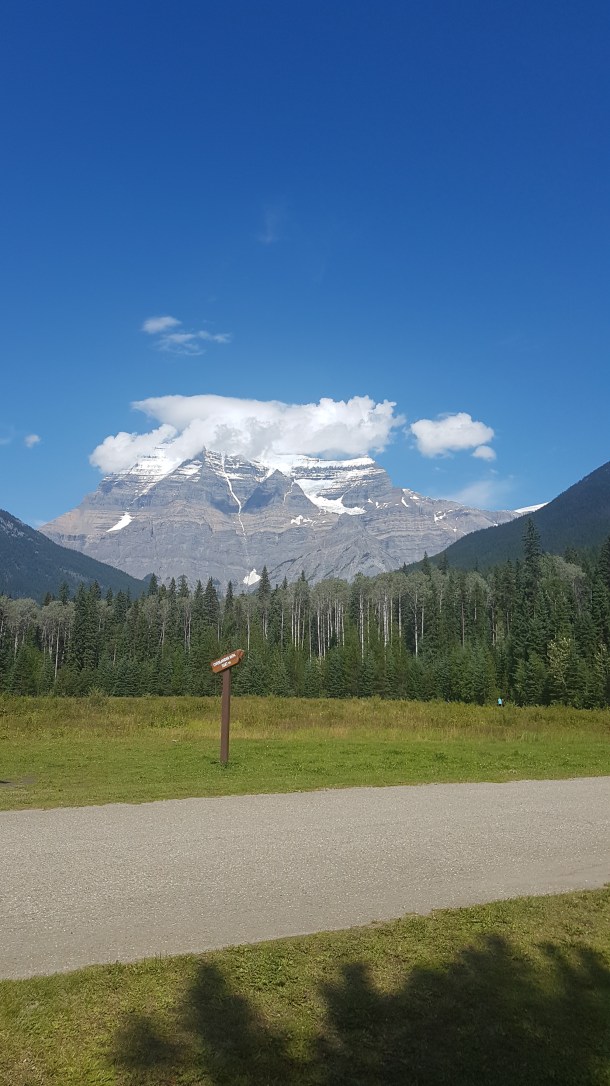
Mount Robson 1 August 2019

This is the front side of Mt. Robson. I have never seen the backside. I can imagine what it might look like based on what I see and what I have read about it. There is a glacier and lake on the mountain. Based on past experience (history), I can imagine sitting on the edge of the lake, like I can imagine sitting and writing the next poem, article, book chapter, a book about teaching in the best little school in the world, etc. I get to imagine my life, so I don’t have to be the right kind of anything for administrators who can only operate in binary terms.

Imperfection

In my last post, I wrote using a line from Mary Oliver: “what is it you plan to do with your one wild and precious life?” Today, I turn to a wonderful poem by Elizabeth Carlson, Imperfection. What does it mean to be imperfect as I explore what I will do with my one wild and precious life?

In pursusing what it means to live this one and wild precious life, one needs to fall “in love with [their] imperfections.” One of my imperfections might be I continuously and restlessly explore where my life is taking me. In a way, I find an echo of Thomas Merton in this, and I paraphrase, some pursue what calls us without finding it and that is our calling.

I am unsure it is that straightforward and I sense what I have done is ignored where I am at in life, ignoring what makes me who I am with each imperfection. One such imperfection might be I lock in on a particular quality and allow it to define me more broadly.

Instead of discerning what is in front of me, I focus on things I do not control. Henri Nouwen wrote a beautiful book, Discernment: Reading the Signs of Daily Life. In it, he suggests people, events, and signs are put in front of each of us to guide us in life. I defined myself as a teacher for most of my adult life and it was hard to set this aside.

I realize the likeliehood of returning to the classroom is remote. There are prevailing biases in play e.g. age . It appears few, if any, post-secondardy institutions want an aging male who does not fit their paradigm of a professor. Yet, the signs were there, despite my imperfections, something was calling. Over the past year, I co-authored a published paper and was invited to join in several other writing projects, joined a peer review journal board, and, most recently, was invited to submit proposals emerging from my dissertation.

The challenge is to get past an imperfection such as a single way of defining one’s self. Maybe someone will overlook age, gender, race, etc. and invite me to teach in their institution. I have to be awake to who appears and, at this time, it is people asking me to write and be part of those projects.

I am falling in love
with my imperfections
The way I never get the sink really clean,
forget to check my oil,
lose my car in parking lots,
miss appointments I have written down,
am just a little late.

I am learning to love
the small bumps on my face
the big bump of my nose,
my hairless scalp,
chipped nail polish,
toes that overlap.
Learning to love
the open-ended mystery
of not knowing why

I am learning to fail
to make lists,
use my time wisely,
read the books I should.

Instead I practice inconsistency,
irrationality, forgetfulness.

Probably I should
hang my clothes neatly in the closet
all the shirts together, then the pants,
send Christmas cards, or better yet
a letter telling of
my perfect family.

But I’d rather waste time
listening to the rain,
or lying underneath my cat
learning to purr.

I used to fill every moment
with something I could
cross off later.

Perfect was
the laundry done and folded
all my papers graded
the whole truth and nothing but

Now the empty mind is what I seek
the formless shape
the strange off center
sometimes fictional
me.

I leave you with a quote from Henri Nouwen and a picture.

“Where does my complete flowering as a human being connect with the needs of the world?”

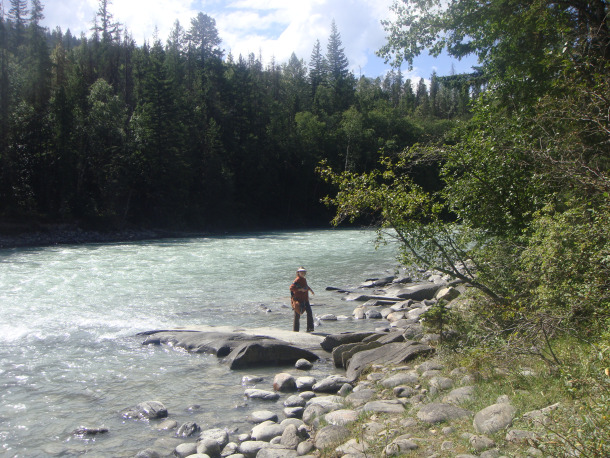
While I stand by the turbulent river, I take time to listen and observe carefully what moves me in this moment to make the world a better place.

Quote: I looked in temples, churches and mosques…-Rumi

via Quote: I looked in temples, churches and mosques…-Rumi

George is a prodigous blogger, sharing poetry, quotes like this one, and video clips of many of my favourite performers e.g. Leonard Cohen, Nina Simone, Neil Young, etc.

As Rumi suggests, we should look inwards to find the divine as we enter the New Year. Here are words from Mary Oliver to bid farewell to 2019 and usher in 2020:

This is, I think, what holiness is:

The natural world, where every moment is full of
the passion to keep moving

Inside every mind there’s a hermit’s cave full of light,
full of snow, full of concentration

I’ve knelt there, and so have you,
hanging on to what you love, to what is lovely.

Inside each of us there is “a hermit’s cave full of light” where we can be thankful for whato is in our lives and what they each bring into our lives. Take care, enjoy, and be safe as we continue the journey.

Fraser River Near Headwaters

I know I shared this picture previously, but it serves to remind me the most important person in my life and memories we share with each other.

A spiritual reflection on the Centenary of Thomas Merton – Part 1

via A spiritual reflection on the Centenary of Thomas Merton – Part 1

Bruce posts wonderful text, accompanied by exceptional images. This post caught my eye as I looked through Bruce’s blog. It is about Thomas Merton and his enduring work as a pacifist, activist and support of inter-faith dialogue.

I read Merton and book about his writings frequently. I grew up in the shadow of Vatican II, which promoted inter-faith dialogue and Merton, Brother David Steindel-Rast, Karen Armstrong, Thich Nhat Hanh, etc. attract me to their work.

I find them to be prophetic and mystical, often signaling challenges we will face long before they are evident to most of us. For example, Bruce included a wonderful quote from a letter Merton wrote to Rachel Carson after reading Silent Spring. Both offered prophetic views, as mystics, of a world to come and challenges we faced in the 1950’s.

I leave you with this quote from Thomas Merton and wish each of you the best. However, we each celebrate we need to share our love for each other and the world we share with each other.

The beginning of love
is the will to let those we love
be perfectly themselves,
the resolution not to twist them
to fit our own image.”
~Thomas Merton

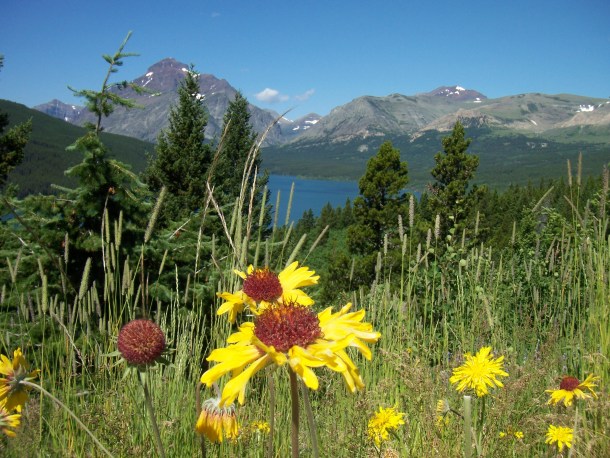
Daffodils, Lake, and Mountain in Glacier

I share this image often. Kathy took it in Glacier National Park. She shared it with me out of love and I share it with my love for the people who will see it and nature we are stewards of, echoing Wendell Berry when we say: We Do Not Inherit the Earth from Our Ancestors; We Borrow It from Our Children

Winter Nights

Despite the title, this is a Christmas poem. I wrote it several years ago about the joy and anticipation I felt, as a child, at this time of year. This was embedded in family and community rituals I experienced growing up. In a consumptive and materialistic world, some of this has been lost. What I do is hold onto the memories.

We lived in an old house and it was often very cold. In the evenings, my mother and three older brothers went across the street to the church for evening mass. This was part of the rite of passage for me. In junior high, I joined them.

Many evenings, I sat by the heavily frosted window to watch my mother and brothers return. Some of those evenings were clear, the sky filled with stars, and sometimes the Northern Lights were part of Nature’s light show.

Breathlessly awaiting,

Through frosted window peering

Small children–

Soaking it in.

Heavens rippling–

Lights undulating;

A celebratory fury

An indisputable guide.

An old house speaking;

Nature answering–

The heavens crackling

Sweet symphonic music.

Earth’s floor–

Blanketed in white

Celestial colours shimmering

Capturing young eyes.

A vivid winter scene,

A sensual, sensory palette,

Reminding–

Christ’s Mass draws near.

I took this picture at the farm this past weekend. The sun goes down early here at this time of the year. They had just had fresh snow, with about 8-10 inches falling in one day, so the scene was still quite untouched.

somehow at peace

via somehow at peace

Matthew writes beautiful poetry and this poem is not exception. Somehow, I find myself going against the grain and moving upstream, searching for and finding peace. Perhaps, it finds me.

Mary Oliver wrote a book, Upstream, speaking of the poet’s need to move against life’s currents to find words and express themeslves. I find questions in poetry, sometimes explicitly formed. Other times, they hide and wait to be lifted up as I imagine what the poet asks. Perhaps, a poet’s task is to guide me as I move upstream.

I wonder what would it be like to take the poet’s sensibility into the world? In a world filled with busyness and distractions, I find that challenging. Yet, I find poetry and poetry-like prose spaces where peace emerges through the poet’s words and expressions of the unexpressible. How can I imagine the words in concrete ways?


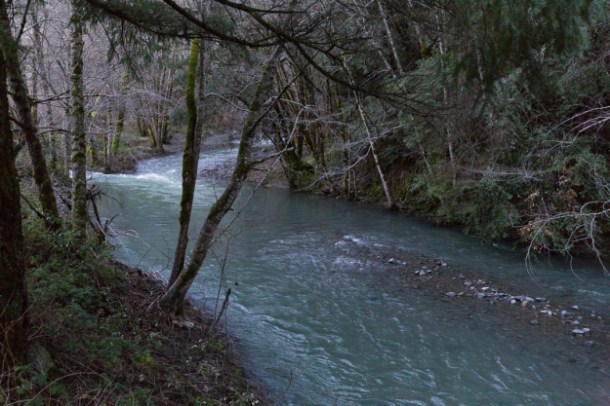
I took this picture as we travelled through the mountains about 1.5 years ago. The river is relatively calm and peaceful, but to move upstream against the current would be hard work, looking to be expressed. The word express means to force something out, usually against pressure.

The Other Kingdoms

In my recent reading, I came across this poem by Mary Oliver. I had not read it before, but found it spoke to me in deep ways.

The other day, on Facebook, I came across a Welsh saying: “Dwi wedi dod yn ôl at fy nghoed.” It means returning to my senses/regaining mental equilibrium or more literally I returnto my trees. I understand this as coming back to my roots and being mindful and present for each sentient and non-sentient being I encounter. The word Druid means oak-knower and the Druids lived in harmony and oneness in nature.

Where do I feel most comfortable? The word comfort comes from com meaning surround and fort meaning strength. In other words, living mindfully in the world has ethical implications. In Greek, ethos means character and also how music influences morals, emotions, and behavior.

As I listen to each of the other kingdoms, what music do I hear? How does the music influence and inform who I am, what I say, and what I do? How am I aware of the music and sounds I hear in these kingdoms?

Consider the other kingdoms.  The
trees, for example, with their mellow-sounding
titles: oak, aspen, willow.
Or the snow, for which the peoples of the north
have dozens of words to describe its
different arrivals.  Or the creatures, with their
thick fur, their shy and wordless gaze.  Their
infallible sense of what their lives
are meant to be.  Thus the world
grows rich, grows wild, and you too,
grow rich, grow sweetly wild, as you too
were born to be.

I took this picture several years in Jasper National Park. Kathy and I had gone for an early drive and hike. We parked and took pictures. As I turned, I thought I saw something move and walked towards the movement. The cow elk sat and chewed her cud. She was aware of us and, as I approached, I heard the soft sounds she made in completing the digestive process.

We pointed her out to others and cautioned them to be careful and quiet as they approached her.  After all, we are strangers in those other kingdoms.


Sunday Morning

via Sunday Morning

There has been a theme of Nature and trees in my recent presses. When David shared a portion of I Go Among Trees and Sit Still by Wendell Berry, it was an opportunity to continue the theme.

Wherever we find them, Nature and trees offer shelter. Nature is not merely out there. It is close at hand and surrounds us. Sitting in an urban park, feeding squirrels and pigeons we are in Nature as much as as walking on a secluded path in the back and beyond.

When I walk, I hear more than I see, sometimes it is the silence that is most noticeable. What hides from sight can easily be heard and not found. The same is true of life. We each experience much more than we can process, absorb, and recall, yet there are moments, when I am still, I recall a moment that had slipped away. I recall it imperfectly, but it is there.

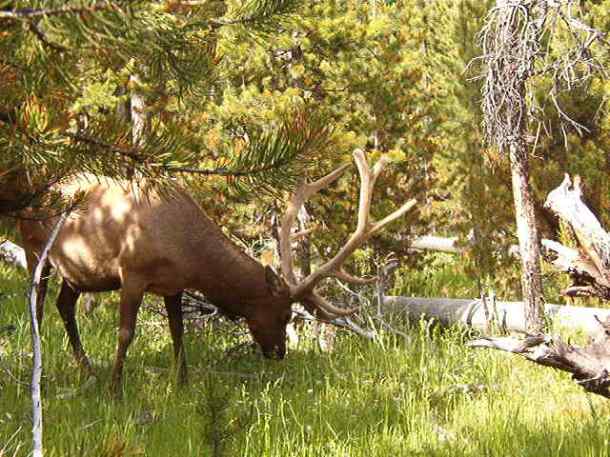
Yellowstone Elk

I took this picture several years ago in Yellowstone. I got to within 20 or so feet of this elk. He knew I was there and looked at me. Trees sheltered him and me from each other, reducing the threat. As well, I moved quietly to get into position to take the picture, making little noise and posing minimal threat (I hoped).

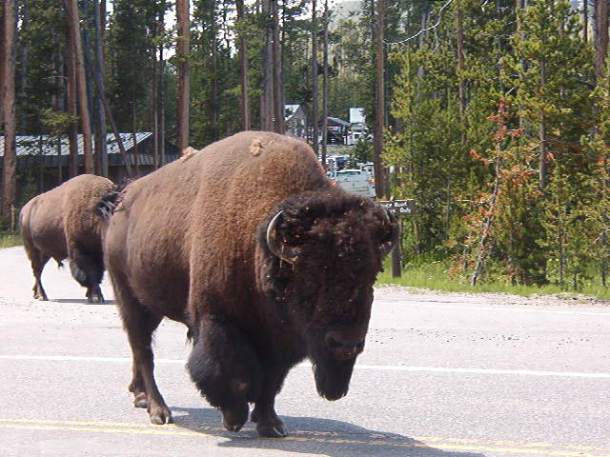
Just after this picture, I took a one of a bison about ten feet away. I positioned myself between the van and animal, who was less happy with me than the elk and kept the side door open.

A key for me is to remember where I am and that those animals are wild. Even in an urban setting, a wild animal would be unpredictable. Stillness is important in their presence,

IM001130


Welcoming Arms

via Welcoming Arms

Eddie provides a quote from Khalil Gibran reminding me how Nature welcomes me with beauty and silence, adding to a post from the other day. Where do we each find peace?

There is an echo from Thomas Merton who warned us about the busyness of the modern world, writing in the middle of the 20th Century. With a little effort, we find nature and silence in urban settings, renewing the spirit and the body.

In nature, we have opportunities to hold the wolf of busyness at bay as we experience solitude and peace, which provide moments for deep reflection and introspection.

Path 1

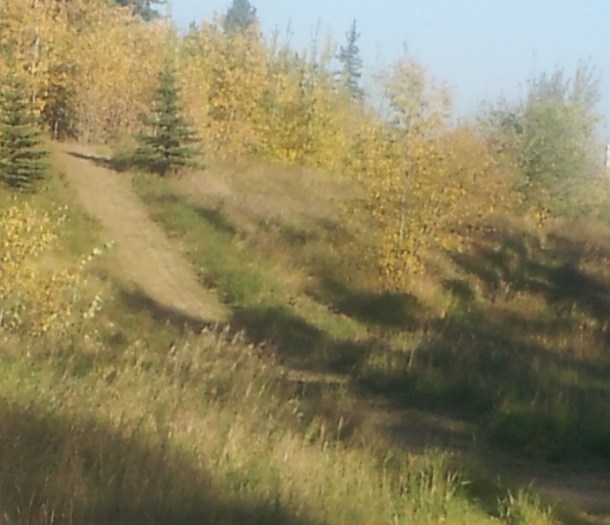
I took this picture of a path that climbs out of the river valley and back into the edge of downtown Edmonton. For me, it is easy to walk these paths and find moments of peace and solitude in the shadow of a large urban setting

Look, the trees…..

via Look, the trees…..

I have been offline for the past week, as we moved into our new house, which is located on the same lot we lived on before. We still do not have Internet, so I go to a local coffee shop once a day and sometimes every other day to catch up. Purple Rays provided a wonderful post to get back in the groove.

When we bought our house 40 years ago, it came with two relatively large spruce trees in the front. Those remain in place as proud sentinels and, as Mary Oliver describes trees in to the new houses we build on the same lot, one for Kathy and I and the other our youngest son built.

We chose to stay and build for several reasons. First and foremost, it gave our son a chance to have his own house. Second, we enjoy the community we live in and have been part of the fabric of it for 40 plus years. It is an area of Edmonton that has tremendous stablity despite the rapid growth of the metro area. We have neighbours who have lived in this community longer than we have.

The house on the left is our house and the one on the right is our son’s house as the trees stand guard.