Tag Archives: relationships

Guardians

via Guardians

I was going to post another of my poems and Balroop’s poem came through my reader. It fits with my recent thinking about the role of elders as guardians of what is to be passed on. Take a few minutes to read her wonderful poetry posted at her blog.

Hans-Georg Gadamer wrote “youth demands images for its imagination and for forming its memory.” I extended this, in my dissertation, to elders offering those images. Without the stories elders provide, youth are left without any sense of where humans have been and the accumulated wisdom. As well, this demand is a question for our youth to offer them something tangible.

Balroop captures this sentiment in the following stanza from Guardians:

Ask the village elders
Their valor shines in their faces
They earned your freedom
They exemplify human values.

Like mountains act as guardians in nature, elders act as guardians through stories shared with youth to pass on wisdom, not information.

I took this picture of Mount Kerkeslin standing guard over the Icefields Parkway between Sunwapta Falls and Athabasca Falls in Jasper National Park.

Transforming

Several years ago, I arrived home, after spending time in Spokane. I struggled in the first few days back and reflected on what was happening. Quite often, I resist routine and find it is hard work.

Rarely, are we alone in our travails. It is universal Real change, transformation is slow, purposeful, and patient process. Upon looking at pictures we took on our travels and for all of nature’s ability to sometimes erupt and change rapidly, most change is slow and transformational. For the most part, deep change, transforming, in nature is a great model to observe.

I wrote the following poem in response to those reflections.

Waiting,

Impatient–

Desiring more

Leaning into headwinds,

Transforming–

Slow, patient, with purpose

Lacking blueprint.

Journeying,

With one’s self–

With companions,

Breaking bread,.

Trusting–

Devoting,

Changing together.

Embracing,

No explaining,

Words unnecessary–

Smiling assurances.

Looking back,

Revealing worn paths–

Sharing,

Sheltering one another

Pressing ahead–

Certain in uncertainty.

I took the picture on the way to Kootenai Lake in Glacier National Park. Even on a well worn path, there is a limited view of what is behind and ahead. As well, there are many things hidden along the path, there and invisible. There is always a trust in other people and in the path as I move ahead with purpose. Paradox exists in the feeling of certainty in an always uncertain world.

Prayer of St. Francis

I did post this March 19, 2020 at One Step, Then Another, but it is special. Kathy and I celebrate our anniversary today and this was a reading at our wedding. Initially, the priest was reluctant. I think he saw the disappointment and let us use it.

When I heard the organ, I stood, literally shaking I was so nervous. I turned, looked at Kathy and her Dad, and stopped shaking. What was meant to be was meant to be.

Regardless of one’s relationship with others, intimate or distant, these are words to guide how we accept the Other, as Emmanuel Levinas said. This way lifts the Other to a human subject in an I-Thou relationship, rather than as an object and it.

Lord make me an instrument of your peace,
Where there is hatred let me sow love.
Where there is injury, pardon.
Where there is doubt, faith.
Where there is despair, hope.
Where there is darkness, light.
And where there is sadness, joy.
O divine master grant that I may
Not so much seek to be consoled as to console;
To be understood as to understand;
To be loved as to love
For it is in giving that we receive-
And it’s in pardoning that we are pardoned.
And it’s in dying that we are born to eternal life.
Amen.
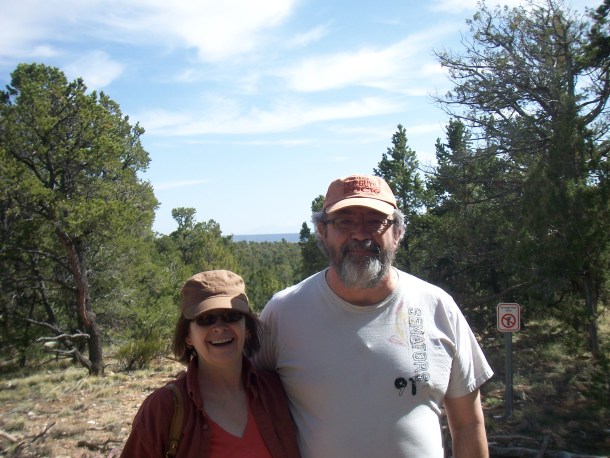
We took this at the Grand Canyon several years ago.

Driftwood’s Wisdom

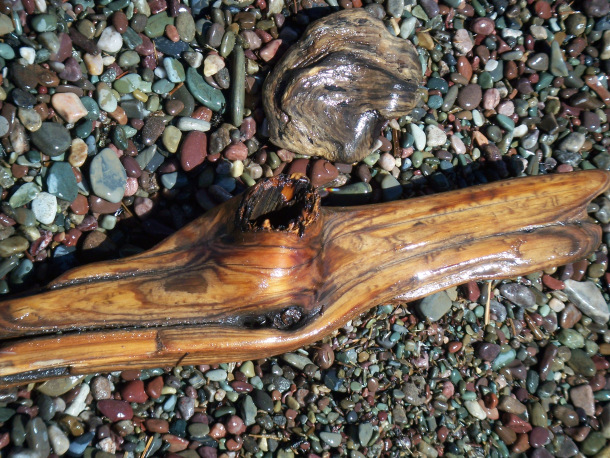
Kathy took this picture as we walked along Waterton Lake. She thought it might inspire. That evening, I scribbled ideas into my journal about wisdom and its sources. I enjoyed listening to stories told by our parents, grandparents, and other elders I come in contact with. Now, the shoe is on the other foot and I am the elder.

Washed up flotsam,

Polished to glassy sheen

Revealed beauty.

If I apply this natural process, to humans, we gradually polish ourselves and soften the rough edges. At least, we can hope.

Polishing waves hone

Glimmering wisdom emerges

Softening rough edges.

Pensive Pirate

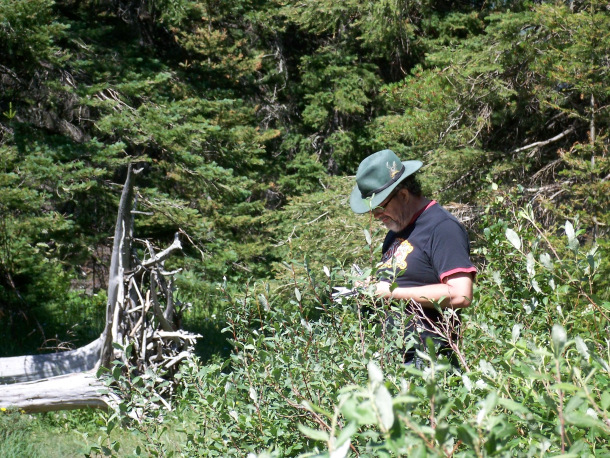
For me, creativity and energy emerge in quiet moments. Kathy took this picture in Glacier National Park. I paused to scribble. We only saw a handful of people on the walk in and out.  For me, Nature gives me room breath and refresh.

Pausing, reflecting

Fortifying one’s spirit

Soaking in Nature.

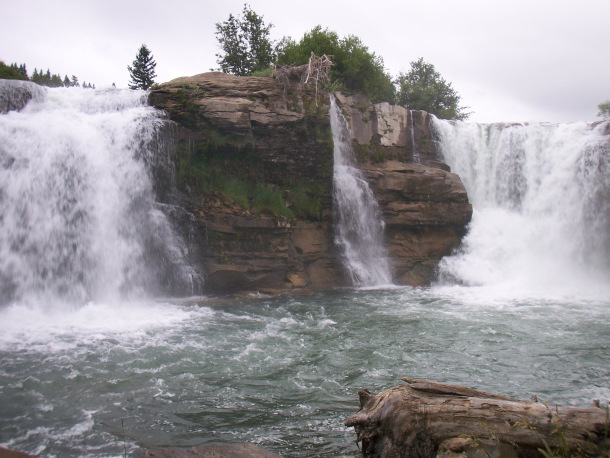
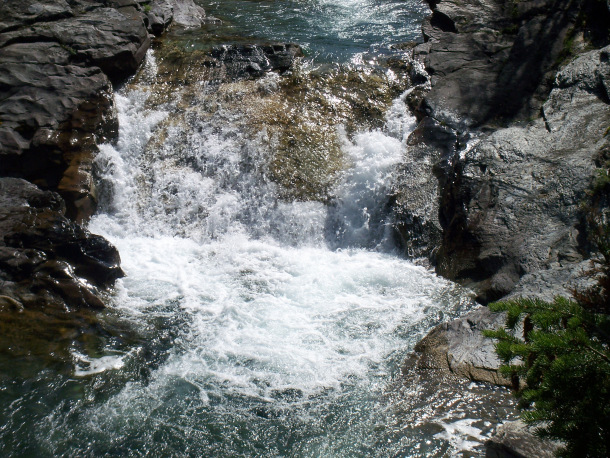
Even though I enjoy quiet and solitude in Nature, I am drawn to its loudness. I love waterfalls, their power and what is not readily visible remind how much of life is a mystery. Whenever we travel, we stop and hike into various waterfalls. What is ironic is I have a fear of heights, which limits my ability to get close. On the other hand, Kathy is part mountain goat, so we get wonderful pictures.

Now and then, I get a chance to get closer and, on this trip, Cameron Falls offered me an opportunity to do just that.

In Waterton Lakes National Parks, I had to keep my distance as the drop off on the overview was too much for me. The result is an overload that drains me of energy. This is a view of Blakiston Falls, which are bridal falls. In case there is any doubt, Kathy took the picture. Below, I express gratitude to see through another’s eyes.

Revealing beauty

Viewing through another’s eyes

Nature’s abundance.

Neighbours

Here is a wonderful quote from Abraham Joshua Heschel on how we should live life and, I think, view our neighbours in all their forms:

“Our goal should be to live life in radical amazemement [to] get up in the morning and look at the world in a way that takes nothing for granted. Everything is phenomenal; everything is incredible; never treat life casually. To be spiritual is to be amazed.”

I dip into my photographic archives and poems I wrote around them. Again, this is a trip to Waterton Lakes National Park. It is closed right now. It is interesting to revisit the images and remembrances they stir. It is a reminder of living life in radical amazement, taking nothing for granted.

During the trip, we hiked in an area where there were signs about the possible presence of grizzly bear. Its Latin name is Ursus arctos horribilis. The horrible is an apt description if you end up on the wrong side of one.

When I hike, I wonder what hides from my sight and is quiet as I pass. The dense underbrush path hides things from me, giving them a sense of security. The signs reminded me I am not alone, and our neighbours are not always human.

As luck had it, we saw bear that day. At first glance, this one had the right colouring for grizzly. A closer examination indicated it was missing the tell-tale hump on its back and the wider forehead of a grizzly and was a brown coloured black bear. Behaviour wise it was too close to humans, as it was right next to the road and a hotel. Grizzly are pretty reclusive neighbours.

This one was a black bear for sure. Its colour did not make identifying it a problem. As well, it was smaller. That suggests it was younger, probably born a year before we were there.

Even black bear are dangerous. I tell hockey players I coach about the bear rule to decide on what is appropriate language. I tell them, even with our friends, we don’t know what might trigger a negative (horrible) response. Bear attack about 1 out of 10 times they make contact with humans. We just don’t know which of the 10 times.

Hiking someone’s home

Treading warily, softly

Horribilis‘ habitat.

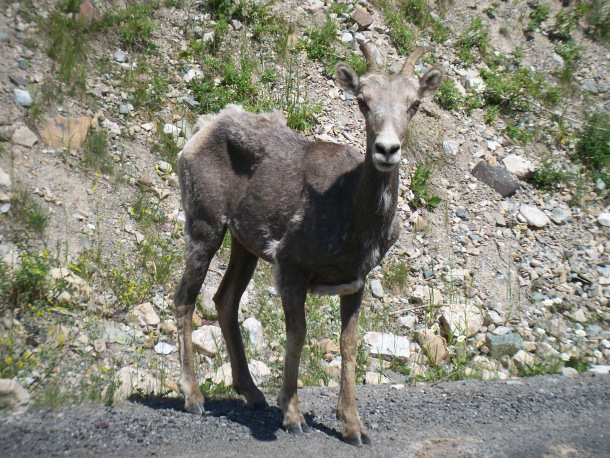
Not all our neighbours are fearsome. This mountain sheep posed for his picture.
I leave you with this poem about neighbours of various forms.

Neighbours near,

Some visible;

Ducks laugh and swim

Distract us, grouse–

Protect family and spouse

Woodpecker’s hunting lunch–

Delectable larvae, I’m sure.

Others less in evidence;

A fish plays–

Loon here and gone

Games of hide and seek.

A moose–

Signs they have been,

Tracks and droppings.

Insects whirring in the stillness’

Butterflies flitting and feeding

Moving seeds from place to place.

Phantom breeze brushing the floor,

Up high, solitary leaf responding

Waving

Trees sighing.

What watches me?

Neighbours present,

Unseen community–

Nature piecing its puzzles,

Seamless, yet not form fitting.

International Peace Park

I love to go to Waterton National Park and, by extension, to Glacier National Park. They border each other on the Alberta-Montana border and form what is known as an International Peace Park.

When I go to Spokane, I drive past the turnoff to Waterton and it brings back by fond memories each time. Kathy and I spent part of our honeymoon, roughing it in a tent, in Waterton. The scenery is beyond spectacular and, when we are in settings like this, the poet in is spoken to.

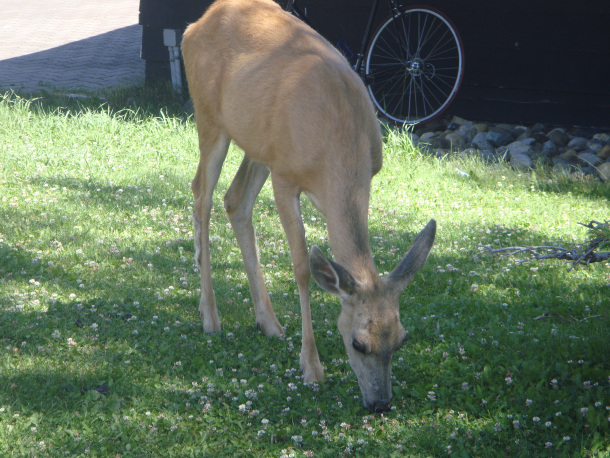
The first day we were there in 2012 this deer was in the townsite unconcerned about human presence.

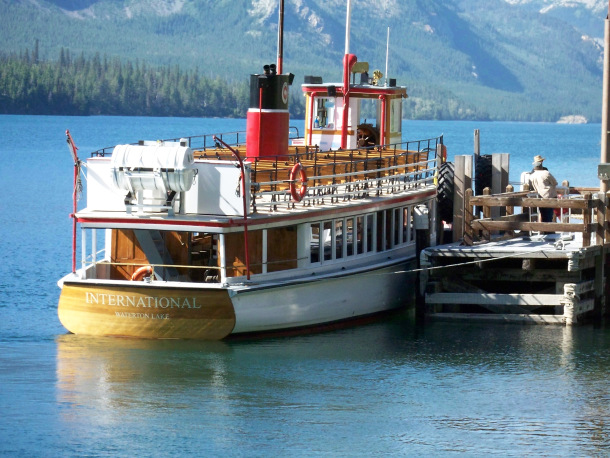
We traveled down the big lake and crossed the Canada-US border. This was the boat we took. Despite appearances, the boat is over 90 years old and was refurbished.

Joining us together

Offering a hopeful message

Carrying peace each day.

Once we got to the American side of the border, we stayed and hiked into Kootenai Lake. We had our passports, cleared customs, and were able to take a later boat. Along the way, I saw some great sights. Having said this, the brush along the trail was so heavy we could not get off of it and I wondered what we missed.

Nature’s cathedral

Dancing lights mingle with shadows

Peace’s benediction.

Happy Haiku

As part of my PhD, the university required I take two ethics courses. In 2012, I took an ethics class. A central theme in the course was the role eudaimonia plays in one’s life. We often translate eudaimonia as being happiness. It is more than being happy in the moment, as that is fleeting. Instead, Aristotle expanded on it to mean human flourishing and even blessedness, which occurs even in moments of distress.

When we think of eudaimonia in that way, it opens up opportunites to reflect on how we experience flourishing. In my case, it is the human relationships, a love of sports, hockey specifically, and writing, particularly poetry. I began to write poetry again, not because I felt at ease with the world, rather because I was unhappy at the time. It was opening up my heart in ways to allow this unhappiness to be dealt with one in ways to help me flourish.

Writing haiku is one poetic form I enjoy. Part of writing them is fun I had teaching how to write them. Students challenged me to write a haiku on the spot. I always began with an idea usually, but not allows, about nature. I got three lines down and then went back to select better words and focus on the syllables.

Students seemed to engage differently as they saw me enjoying writing haiku. Adults sometimes complained. For example parents and administrators questioned teaching poetry. I responded with it is good to write poetry as we learn how to select and use language in precise ways, plus it is fun. They did not always get it. Students did.

Here are a couple of examples that come to mind. It is not that we write as much as it is a process of writing and being written.

coursing cool current

tearing over life’s rocks

crossing to healing

Language and words bridge one’s private struggles and and make it visible and public. I strugled with these haiku. I think I need more practice. I hope they make sense.

Wearing down rough edges

Bridging life’s busyness

Pausing to flourish.

.

Butterfly

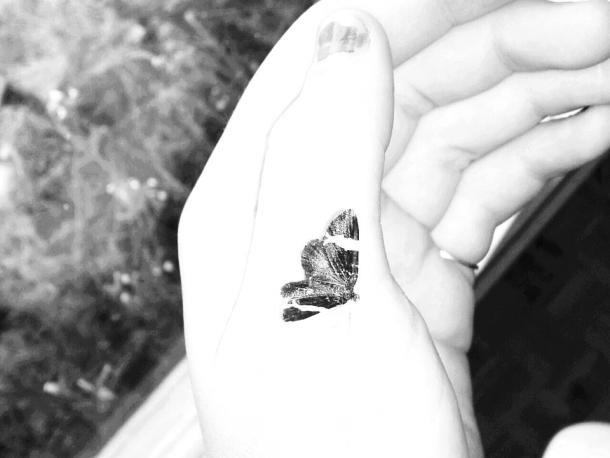
Several years ago, a student took these pictures. It is a beautiful example of how we are part of Nature and have to learn our role within as we unify with it. In becoming one with Nature, we experience Nature as a vital piece belonging to a larger fabric of community. We move into a role of stewards, rather than a user and discarder.

In these unifying moments, we experience Nature’s richness and transform. With increasing awarenss and mindfulness, we can experience belonging to, in, and with Nature, rather than outsiders who exploit, use, and discard. The butterfly and each of us become intimate partners in Nature’s dance.

A result of these pictures is the accompanying haiku.

Resting on journeys

Alighting in this moment

Sharing time and space as one.

The student took a second picture from a different angle and in black and white. This led me to a second haiku.

kissing tenderly

stopping to rest on your way

A sensuous miracle.

Have a wonderful Earth Day 2020.

Nature and Progress

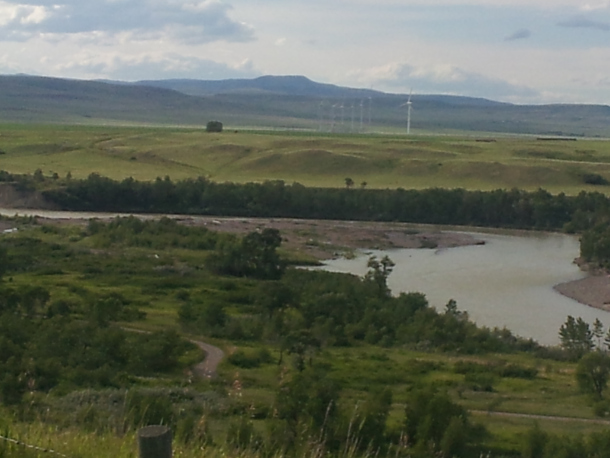
Several years ago, Kathy and I drove through the Crowsnest Pass to Spokane. I stopped at an overlook in Brocket. The Pikani Nation (Aapátohsipikáni, Piikáni, and Pekuni) people live there. The sight was awe-inspiring with a contrast between Nature and a wind power farm designed with precision suggesting humans control the environment. How different this idea is from farming in tradtional ways. Nature humbles me when I pause to understand and be grateful for my place and role in it, not as an outsider colonizing and domesticating.

Progress creates an illusion we control Nature. It humbles me when it reminds me that is not a true picture. It is humbling when I pause to understand what a small place I hold in its complete picture, a picture too large to be fully grasped by individuals and collectives.

It is times such as these, not limited to the pandemic, Nature holds the upper hand. It is a Creator, which can be understood in religious terms and in spiritual terms.

Acting as backdrop;

Mountains, sky, clouds,

Providing depth and breadth,

Contrasting our progress.

Human products,

Made by mortal hands,

Marching winged machines,

Small, almost indistinct on this canvas.

Without pattern, yet poetic

River meandering a perfect line,

Finding its way,

Unseen hands guiding,

Winding its way home.

Brocket 1

“Will you teach your children what we have taught our children? That the earth is our mother? What befalls the earth befalls all the sons of the earth. This we know: the earth does not belong to man, man belongs to the earth. All things are connected like the blood that unites us all. Man did not weave the web of life, he is merely a strand in it. Whatever he does to the web, he does to himself. One thing we know: our god is also your god. The earth is precious to him and to harm the earth is to heap contempt on its creator.” Chief Seattle