Tag Archives: Wendell Berry

Re-Imagining Teacher Education

The recent killing of the CEO of United Health Insurance reflected the violence (himsa) we find ourselves embedded in. I refuse to condone violence in any form. What flies under the radar is the daily violence humans are subjected to when they are denied healthcare, when it is delayed. Hannah Arendt introduced us to the term “the banality of evil”, which underscores both forms of violence, although the former is more obvious than the latter. Schools and teachers can play a vital role in educating children, youth, and adults in ways that help them unearth the roots of violence.

For the past 2-3 years, I focused on re-imagining teacher education as an andragogy of hope and nonviolence. A third pillar is dialogue and civil discourse. One objective is to have a manageable endeavor for teachers from the moment aspiring teachers enter schools of education to the end of their careers. The second is to move away from what Paulo Freire referred to as a banking model of education where information is deposited in students to a dialogic form with teachers and students engaging as teachers and learners. When I enter K-12 classrooms, I observe how little has changed in our schools and this conditions education students the banking model. It is embraced by those who decide how schools and teaching function.

Currently, teachers experience top-down mandates reflecting a neo-liberal , market-driven, top-down process set down by politicians, bureaucrats, technocrats, and autocrats. Those in ivory towers design schools where competing for marks, individual rankings, and accreditation are the focus as opposed to considering the collective good and forming of character. Fortunately, good teachers do grow to explore, navigate, and discover ways to overcome top-down and politically motivated mandates.

Schools limit the ability to think critically and discern what systemic issues exist that prevent real change from occurring. It is easier to allow unfounded, unwarranted conspiracy theories, instead of considering other potential causes that require this critical thinking and discernment. For example, global warming likely has more to do with increased illnesses and syndromes than vaccines. Global warming means we have to make committed and transform how we each live and living collectively. Conspiracy theories carry no such weight. Critical thinking gives way to accepting opinions largely based on opinions. Dialogue gives way to supposed free speech.

Anyone who undertakes a challenge of this magnitude faces inertia of immovable forces. Having said this, it reminds me that Margaret Mead said: “Never doubt that a small group of thoughtful, committed [humans] can change the world; indeed, it’s the only thing that ever has.” The change we seek calls for the volition and will to press forward, express one’s self in a human and humane way, and make those changes in the face of opposition and resistance. What we need to avoid is acts of violence as acceptable to achieve our goals. This lowers and debases those who seek humane ways forward to the level of those who excuse the systemic violence and oppression that permeates us.

The word humane is essential to this re-imagining as much of the violence is associated with inequity and oppression. Growing up in the 1960’s and 70’s, my mother, hardly a Marxist or social democrat, used to tell us “the rich get richer and the poor get poorer” and we should be grateful for what we had, as many others had less. It is also essential to speak out and advocate for a world where it is unacceptable to put material wealth before human life and the life of the planet.

Poverty and oppression are forms of violence that exist as a products of the banality of evil and the system that promotes it. Gustavo Gutiérrez argued “the poor are a by-product of the system in which we live and for which we are responsible. They are marginalized by our social and cultural world. They are the oppressed, exploited proletariat, robbed of the fruit of their labor and despoiled of their humanity. Hence the poverty of the poor is not a call to generous relief action, but a demand that we go and build a different social order.” Part of a different social order is educating teachers and, in turn, teachers educating themselves to create a humane, equitable social order.

This was a challenging post to write with many edits. It is different than other posts, however it is consistent with my recent presenting, writing, and publishing. When I received a PhD, I did not anticipate traveling this route, but one thing led to another and here I am. It is “the path less traveled” as Robert Frost suggests.

I leave with a Wendell Berry poem: Manifesto: The Mad Farmer Liberation Front

Love the quick profit, the annual raise,
vacation with pay. Want more
of everything ready-made. Be afraid
to know your neighbors and to die.
And you will have a window in your head.
Not even your future will be a mystery
any more. Your mind will be punched in a card
and shut away in a little drawer.
When they want you to buy something
they will call you. When they want you
to die for profit they will let you know.

So, friends, every day do something
that won’t compute. Love the Lord.
Love the world. Work for nothing.
Take all that you have and be poor.
Love someone who does not deserve it.
Denounce the government and embrace
the flag. Hope to live in that free
republic for which it stands.
Give your approval to all you cannot
understand. Praise ignorance, for what man
has not encountered he has not destroyed.

Ask the questions that have no answers.
Invest in the millenium. Plant sequoias.
Say that your main crop is the forest
that you did not plant,
that you will not live to harvest.
Say that the leaves are harvested
when they have rotted into the mold.
Call that profit. Prophesy such returns.

Put your faith in the two inches of humus
that will build under the trees
every thousand years.
Listen to carrion – put your ear
close, and hear the faint chattering
of the songs that are to come.
Expect the end of the world. Laugh.
Laughter is immeasurable. Be joyful
though you have considered all the facts.
So long as women do not go cheap
for power, please women more than men.
Ask yourself: Will this satisfy
a woman satisfied to bear a child?
Will this disturb the sleep
of a woman near to giving birth?

Go with your love to the fields.
Lie down in the shade. Rest your head
in her lap. Swear allegiance
to what is nighest your thoughts.
As soon as the generals and the politicos
can predict the motions of your mind,
lose it. Leave it as a sign
to mark the false trail, the way
you didn’t go. Be like the fox
who makes more tracks than necessary,
some in the wrong direction.
Practice resurrection.

And a Bob Dylan video, a song I forgot about until this morning. He reminds me conspiracy theories, and a need to address violence and its underlying causes have been with us for a long time.

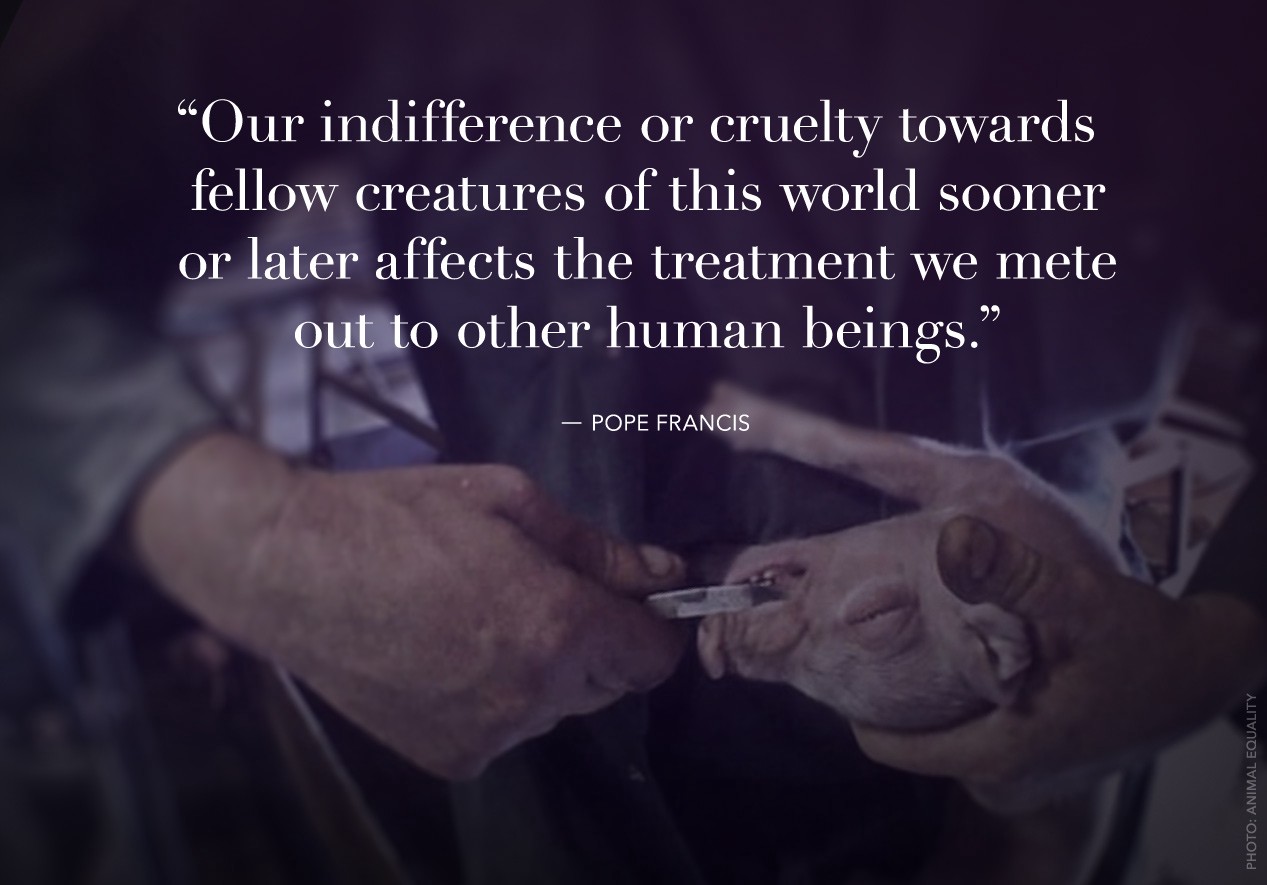
OUR ONLY WORLD

I came across this post by Bruce on Earth Day, but have been busy attending and presenting at two conferences and completing work with student teachers. My delay provided me with room to reflect on what Earth Day means, raising questions for me about its meaning. Quite often, we relegate one day a year to celebrate a particular event and, once done, we relegate it do a shelf for another year. I think Earth Day is treated that way.

What Bruce’s reminds me of is the daily wonders I experience when I consider Earth Day an ongoing event. In this particular post, he draws on Wendell Berry who is an elegant voice on the concept of caring for the nest we share with each other. In his writing, Wendell Berry reminds me ecology and economy come from the Greek oikos, meaning household. My mother used to say “Even pigs do not poop where they live, eat, and sleep?”

Humans are not separate from nature. We are an integral part of nature and how we treat nature, including one another, speaks to who we are as part of nature. Do we exploit nature for 364 days without any consideration for tomorrow? Or, do we conserve its beauty and while over its worth and common good? I think a word that is often overlooked is prudent. Do we live within our means? Do we care for our household with prudence and care?

I understand the political notions of conversativism and progressivism as a false dichotomy. What does it mean to converse? What do we want to conserve? When we progress, what do we throw out? Both sides, if it can understood as sides, do little to conserve. In fact, I contend that, if we solved our environmental issues, the people who stand on opposite sides would be unhappy. They would be left with nothing to argue about and unable to point accusatory fingers at one another.

The post concludes with: “Only the present good is good. It is the presence of good – good work, good thoughts, good acts, good places – by which we know that the present does not have to be a nightmare of the future. ‘The kingdom of God is at hand’ because, if not at hand, it is nowhere.” In a Judeo-Christian biblical narrative and despite what many claim, we were left to be stewards of nature, to care for it, and allow it to flourish so we might flourish. This is not unique to the Judeo-Christian traditions. There are teachings attributed to The Buddha that speak to how we should treat animals. This includes their habitat, food source, water source, etc. and is not simply the treatment of pets and livestock. As well, Indigenous people share an understanding of the interconnectedness of nature and the universe.

I leave with you three quotes and I found many others.

Religion is what binds us together. It is not a set a beliefs, but faith in a community to do what is proper and share with one another.
Indifference is the opposite of love.
Share words and acts of grattitude and love for Nature.

Spacious Sanctuary

Wendell Berry wrote a series of poems about Sabbath and taking time to let the spirit mend and heal. Wayne Muller wrote a book called Sabbath and provided a number of Sabbath practices from various traditions. After we read the book, we used practices and wrote reflections about how we each responded to them at a hospitality retreat.

How each find moments of peace and solace in a busy world is personal and reflects who we are as humans. For me, it is time spent walking, reading poetry, and writing. It is challenging as I need to adhere to a routine without being to rigid. What I observe, feel, hear, etc. needs to able to reach me in meaningful ways.

I wrote this poems as I entered a lengthy Sabbath period, taking time away from screens of various types.

Stepping aside–

Easing into spacious spaces;

Sensing stillness–

Unsquaring eyes,

Fidgeting less,

Being.

Resting–

Embracing wakefulness;

Emerging from frenetic hibernation–

Moving yet remaining still–

Enriching spirit,

Rediscovering lightness of being.

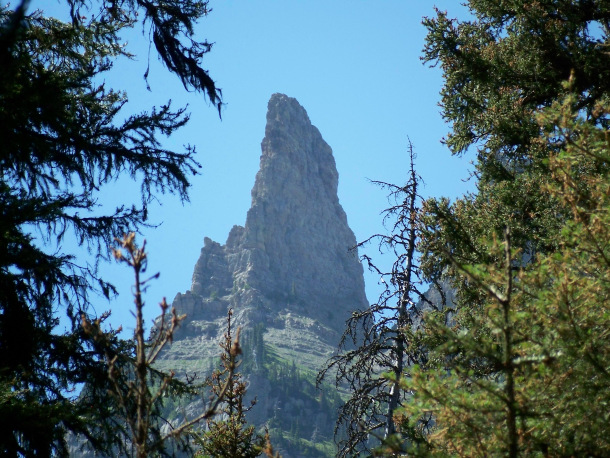
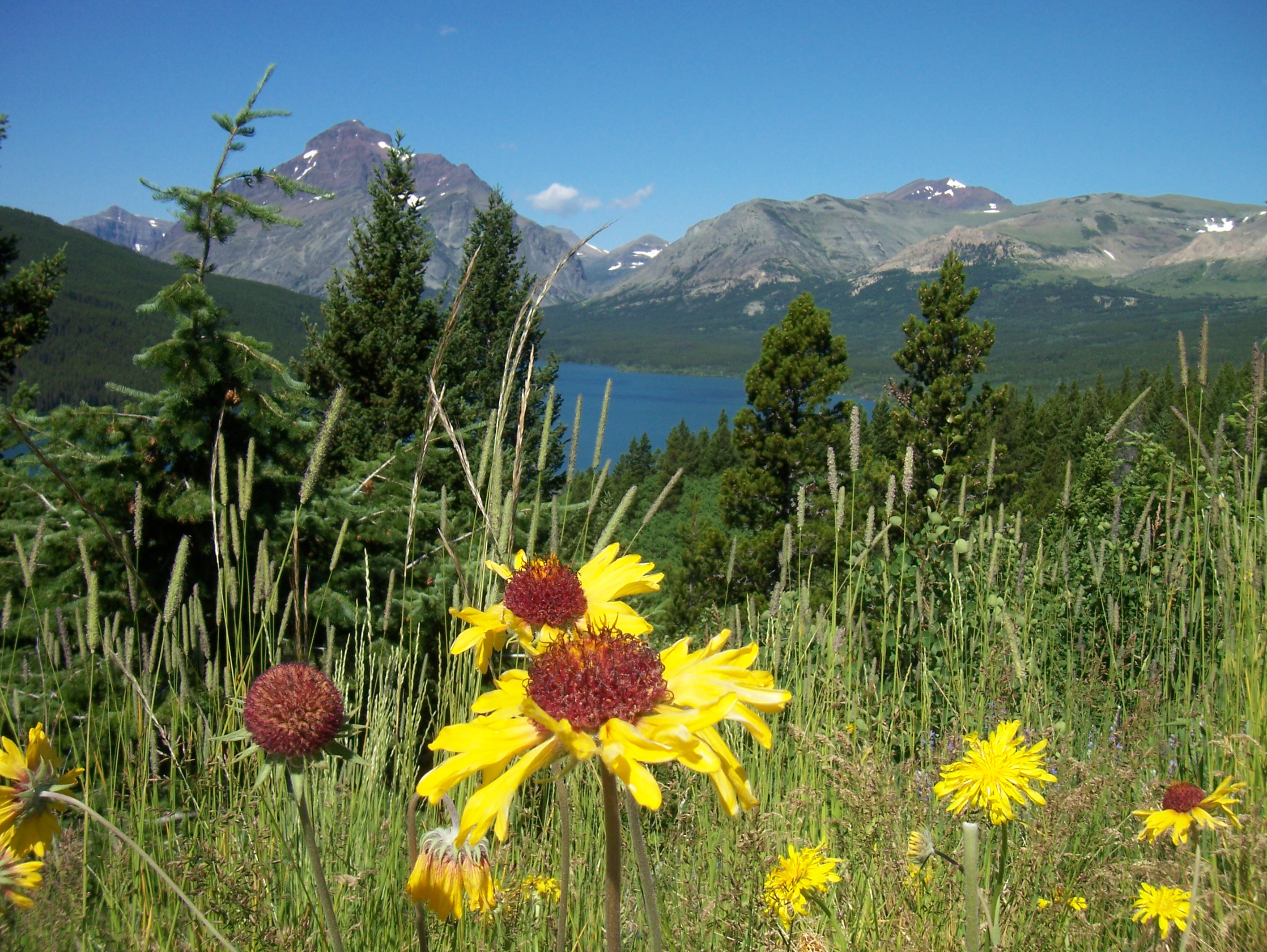
I took this picture on a hike in Glacier National Park. Nature just is. It exists for the sole purpose of existing. Humans need to do this more; just be in a given moment or time.

Sabbath – Making One’s Self More Human

It has been a while since I wrote about the concept of Sabbath where I disconnect to reconnect. I allude to it in The Greater Scheme. It is a practice I am trying to get back into on a regular basis. Wendell Berry writes poetry on the theme and Wayne Muller wrote Sabbath: Finding Rest, Renewal and Delight in Our Busy Lives. It is taking a pause.

Muller cuts across demoninations, traditions, faiths, and philosophies. I used it at a retreat several years ago. There were people who did not see themselves as religious or bound to a particular tradition. What we are often looking for is a spiritual space to heal, make whole. Heal and whole share an etymological root.

Too often, in a busy world, we forget to slow down. Hannah Arendt wrote the Ancient Greeks leaned towards contemplation (vita comtemplativa), while in modern society we remain forever in motion (vita activa). Neither is healthy; health shares the same etmology with whole and heal.

Parker Palmer, drawing on Thomas Merton, proposes we bring harmony between the two. It is a way of feeling at home, the core of who we each are and where we belong. The word hearth, which is the heart of our home, shares etymology with heal, whole, and health.

The poem and picture in the post The Greater Scheme was taken as part of a walking meditation activity, where the teacher asked us to look at the world as if through new eyes. It is, when I am in harmony with myself, I am most creative. At the same time, I was involved in a monthly conference call with critical friends and was interviewed about some work I did related to mindful servant-leadership as it applied to teaching. I think the peaceful feeling I felt emerged from the silence and solitude at the retreat, the critical exploring of my self, and the creative work I was engaged in at the time.

Spacious, silence, solitude…

Seeking refuge,

A peaceful room.

Lovingkindness discovers–

A heart breaks open,

The present its own reward.

Silently spirit revealing–

Speaking,

Softly, gently, tenderly,

Begging its quiet voice be heard.

Solace seeks me–

Unmarked path emerging,

A step at a time.

Sabbath–

Wisdom revealing itself,

Making more human.

I took this picture on a hike into Kootenai Lake in Glacier National Park earlier that summer. We saw a handful of people and the hike was peaceful, disconnecting us from the busyness of life for an entire day.

Why Do I Write Poetry

During a professinal development event, a presenter spoke about teaching poetry. To my knowledge, this person spent little time teaching, yet he was a supposed expert about all things teaching. In the course of his presentation, he expressed disdain for poetry. He claimed, without evidence, we teach poetry without explaining to students why we teach it.

In my teaching, I described reasons why I taught something, opening up learning to include what students considered important. This included questions about topics and content. Often, students began with a negative view of poetry. With time, we got over hurdles together. Without a collective effort, we do not overcome issues in life and learning. We end up with haiku written through rote formula:

Here are five syllables

And here I write seven more!

Are you happy now?

The presenter indicated, despite having written poetry, he was unsure why teachers taught poems written. I think there are good reasons, but I could be wrong.

Poetry calls me to choose words, paradoxically spare and spacious. Spareness is in the number of words; the fewer the better. The space allows the reader room to interpret. What did the poet mean? What senses are invoked through the word choice?

Instead of counting something, poetry asks me to explore life and understand quality is not evenly distributed. I have privileges, maleness, whiteness, education, that others do not have the eauitable access to.

Choosing words,

Caring about each–

Describing feelings,

Experiences never identical.

Revealing thickness in meaning,

Experiencing sameness different–

Bringing us together,

Bridging worlds.

I told students, who struggled with reading and writing, poetry was an alternative to express themselves. I used ee cummings, as a model, to overcome worries about grammar, spelling, and capitalization.

i dig ee cummings

no punctuation

no capitols

won’t worry about spellin either

no sweat

aint no problem

i write poetry

I enjoy poetry. I always have. I remember a poem, The Elevator, I memorized in Grade 4. I think it Walter de la Mare wrote it. My friend memorized a poem called Douglas Fir. His name was Douglas. When I enjoy who and what I teach, I bring enthusiasm to writing poetry.

Artists, including poets, are often at the forefront, addressing social issues. In our times this includes Maya Angelou, Thomas Merton, Wendell Berry, Adrienne Rich, Parker Palmer, Thich Nhat Hanh, etc. Sometimes, I do not think of these authors as poets. Each of them wrote/writes poetry helping to raise my awareness about issues.

Below are the wonderful and poetic words of Thich Nhat Hanh.

Peace in our heart

I close with a poem I wrote many years ago as a 15 year old in high school. I have never been a fan of what we call capitalism. What we have is predatory and is at the root of current political, economic, and social issues. Only a handful are admitted to the club.

Captains of Society

Captains of Society

Shallow, superficial, arrogant

Single ambition

Greatness in the eyes of others

Only those with resources can apply

The rest

Forgotten

Pay a high price, but…

It’s their fault

They own their misery.

A cheque to charity

Assuages my conscience

What about the despair?

Don’t care

I claim I do

Donations in badfaith,

It’s a tax receipt

I really claim, but…

Done on the backs of others

Get the staff to donate time

Not mine.

Increase taxes

Not mine!

No way!

It’s wrong!

Tax others!

What is work?

I create jobs

It’s a spectator sport

This work, which

I manage from afar.

Drive luxury wheels

Shout

Curse

What’s the hold up?

Who’s blocking my way?

The ‘75 Ford station wagon

Engine shot

Dead broke!

Is it their home?

 Throw a party

Drink

Eat

Be merry

No concern for homeless

A romantic notion this ‘hobo jungle’

Not my world

What’s wrong?

It’s not my fault

I gave at the office.

After all.

Throw money at problems

It might help

Don’t

Stop, see, care

If it really helps

Denying, refusing, unfeeling

I pay for a clear conscience

After all.

 The misery

In surround sound…

Is out of sight;

Out of mind

Collectively Eliminating Racisim

via Collectively Eliminating Racisim

This is a great post by Shobna. We each have a responsibility to our part, our small part. We can only change the world we are immediate with.

For me, Michelle Obama‘s quote points to Socrates: “An unexamined life is not worth living.” How often do I critically examine my actions, my words, my life? What privileges run below the surface and privilege me in my life? Where can I go without worry of being stopped and interrogated?

Martin Luther King Jr. and Thich Nhat Hanh remind me of the intertwined nature my life of as part of a larger garment of inter-being. What have I done to make the threads that link me to others stronger, healthier, and more whole?

Wendell Berry in his poem, Be Still in Haste, speaks to the need to pause. In each ensuing moment, I begin anew to set the world right. This moment is always the first.

How quietly I
begin again

from this moment
looking at the
clock, I start over

so much time has
passed, and is equaled
by whatever
split-second is present

from this
moment this moment
is the first.

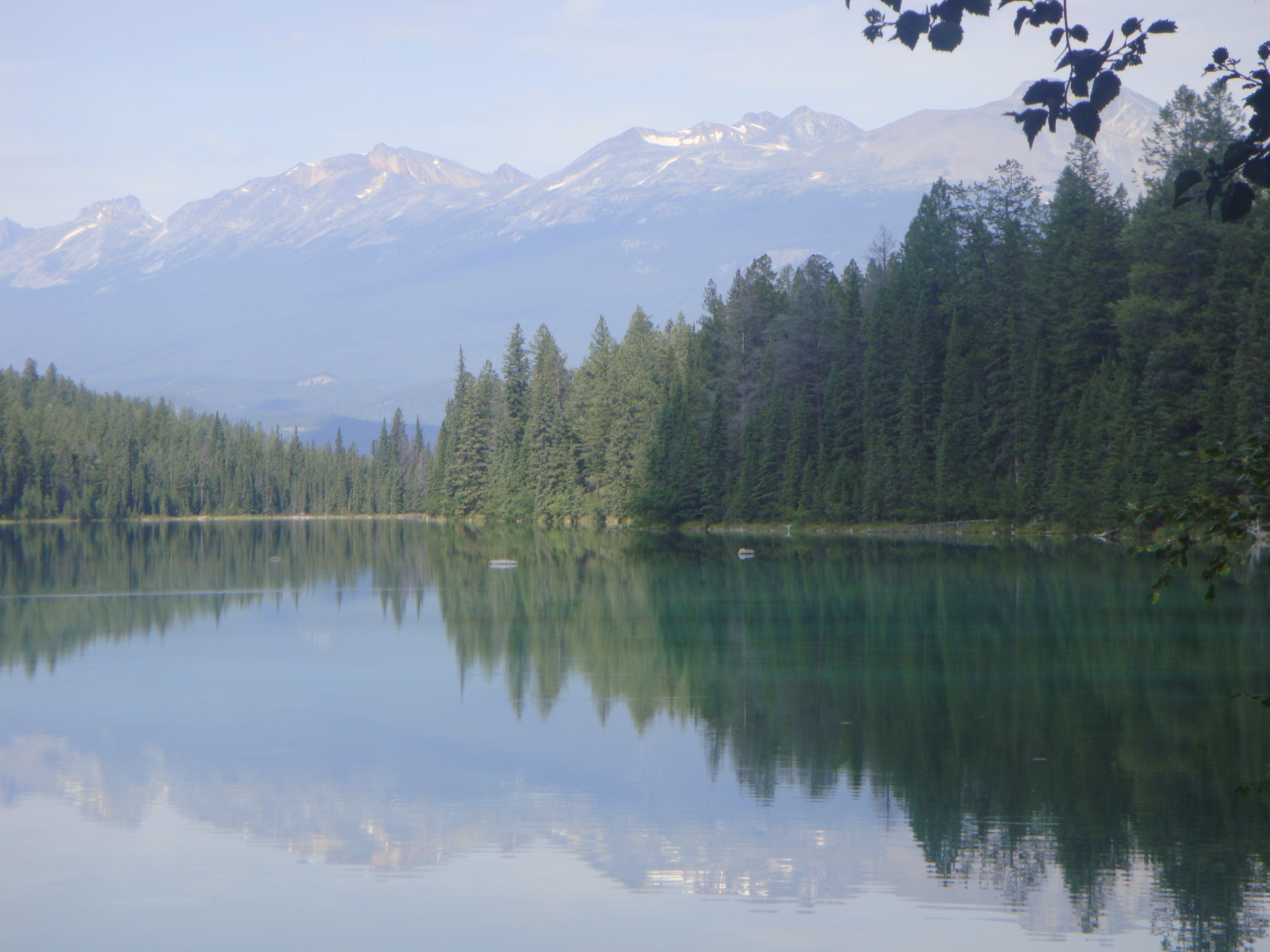
Find a place where you are comfortable and reflect on life. For me, it is a walk in nature. I took the following picture in Jasper National Park several years ago. I could sit on the edge of this lake, soaking in the majesty and reflecting on how I made life better in the next first moment.

DSC00379

On some mornings and evenings, I observe the sun rising/setting with the moon in the sky. Several years ago, early in the school year this occured. I began haiku class with poems describing phenomena we often take for granted. I emphasized poetry  often emerges from what is overlooked.

Great poets have a way of lifting extraordinary phenomena into fuller view for us. I modeled this with shared from Pablo Neruda, Mary Oliver, Wendell Berry, etc. I try to write poetry in a similar way.

Greeting and adieu

Sharing the sky together,

Guiding one’s journey.

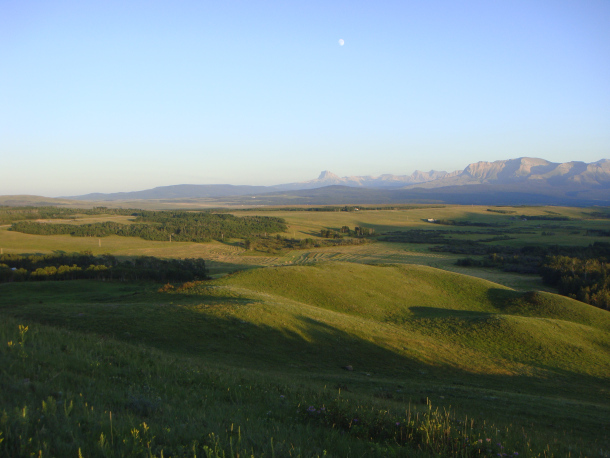
I took this picture as I approached Waterton Lakes National Park enroute to Spokane. It was a beautiful evening with just a wisp of cloud below the rising moon. It was as if Nature decided a needed two guides on my trip.

On many trips, I pass mountains, which, even when I stopped, I did not grasp their majesty. It is as if they have their own language and ways of being.

Clouds surrounding,

Momentarily crowning,

In regal splendour.

I take many pictures of Mount Robson as I drive from Edmonton to parts of British Columbia. Even with clouds, it has a majesty about it.


.


John Prine

This was not going to be my next post. Fate steps in and calls on me to share one of the wonderful performers we had a chance to see live. John Prine is as as close as I am to someone contracting Covid-19 and, sadly he passed away last night due to complications. He had underlying health issues as he was a cancer survivor and was 73. The beauty is he leaves a rich book of songs and videos. I share three with you.

The last time Kathy and I saw John Prine he sang this song . It is normally a duet he sang with Iris Dement. Last night, we watched Kevin Bacon and Krya Sedgwick do it on Facebook. The audience howled with laughter as Prine sang the female parts. As you listen, you will understand the humour of the moment. It is called In Spite of Ourselves and is about a couple whose love is unquestionable and they are each other’s big door prize.

These links will take you to many others John Prine did, if you are inclined. He wrote and performed for 40 years and tackled social issues and love in various forms with humour and fearlessness. He is likely entertaining someone in the great beyond.

I played Paradise for students and it has a strong environmental message that echoes mine and I think Wendell Berry about what is lost as faceless corporations tear up Earth, haul it away in big trucks, and label it the progress of man. In Alberta, regulatory processes include land reclamation leaving it as good as it originally was . It reminds me ecology and economy are from the Greek oikos, meaning household.

I leave you with the Missing Years of Jesus, which was the first song I heard of John Prine. It is a tongue-in-cheek look at what we think we know about Jesus, a person we actually know little about in a historical sense.

The Gift of Presence

via The Gift of Presence

Wendell Berry is one of my favourite poets. In her post, Shobna uses part of a poem, Our Real Work, to point a need to be present. Gary Snyder wrote a book called The Real Work devoted to similar subject matter.

In the rush of “normal” life, I often overlook what that means and what calls to me to step into a healing moment; to make me whole and pause to listen to what the “impeded stream” sings to me. For Shobna, gardening is a quiet moment to listen to the “impeded stream.”

Today, as I checked Facebook, Parker Palmer posted another Berry poem: The Peace of Wild Things. Here, we are called to, in times we do not have a frame of reference for, to turn to poets to help find paths forward. In various ways, they remind us to each look for what keeps us moving , especially in times of turmoil and despair. When I hike and find my path blocked, I pause, look, and listen. In life, I find ways to move ahead, embrace uncertainty, and recognize I am walking my own path, as Antonio Machado would remind me, but I am not alone.

As Shobna points out, I only have to look and I “see that kindness is more visible these days.” Health care workers, farmers, grocery store employees, and many others, often strangers, stand in the breach to help. If these are to recall Dickens, the best and worst of times, what makes them the best is to pause, when my path is blocked, to find what calls us and ask we each ask ourselves what calls us.

One of the things I take for granted is music. It is part of my love of poetry. In particular, lyrics pull me to them. I am fortunate to listen to a small community-based and funded radio station, CKUA, and have it on non-stop. To say it is eclectic is an understatement. They do play top-40, but it is often from years and decades ago.

In keeping with my love of music, I leave you with two videos. The first by Jimmy Buffet got me through tough times years ago. It reminds me who I am and live that way. I have always been a person who walked to the beat of my own drummer and am a bit of a pirate, regardless of age.


The second is one I used to listen to with my mother years ago. It is a gospel song written and performed by Gene McLellan, a Canadian, called Put Your Hand in the Hand of the Man Who Stills the Water. Now, my mother and I did not always agree on music, but we had some serious overlaps such as Gene McLellan, the Beatles, Elvis (if she did not have to watch), etc.


A spiritual reflection on the Centenary of Thomas Merton – Part 1

via A spiritual reflection on the Centenary of Thomas Merton – Part 1

Bruce posts wonderful text, accompanied by exceptional images. This post caught my eye as I looked through Bruce’s blog. It is about Thomas Merton and his enduring work as a pacifist, activist and support of inter-faith dialogue.

I read Merton and book about his writings frequently. I grew up in the shadow of Vatican II, which promoted inter-faith dialogue and Merton, Brother David Steindel-Rast, Karen Armstrong, Thich Nhat Hanh, etc. attract me to their work.

I find them to be prophetic and mystical, often signaling challenges we will face long before they are evident to most of us. For example, Bruce included a wonderful quote from a letter Merton wrote to Rachel Carson after reading Silent Spring. Both offered prophetic views, as mystics, of a world to come and challenges we faced in the 1950’s.

I leave you with this quote from Thomas Merton and wish each of you the best. However, we each celebrate we need to share our love for each other and the world we share with each other.

The beginning of love
is the will to let those we love
be perfectly themselves,
the resolution not to twist them
to fit our own image.”
~Thomas Merton

Daffodils, Lake, and Mountain in Glacier

I share this image often. Kathy took it in Glacier National Park. She shared it with me out of love and I share it with my love for the people who will see it and nature we are stewards of, echoing Wendell Berry when we say: We Do Not Inherit the Earth from Our Ancestors; We Borrow It from Our Children