Theologian and civil rights activist, Howard Thurman shared the following poem in a sermon reminding me Christmas is not a one day event. It is part of the daily ceremony and ritual I should undertake. It reminds me some usurp Christmas as a neo-liberal, market agenda that changes a deeply spiritual event into profiteering.
“Where refugees seek deliverance that never comes, And the heart consumes itself, if it would live, Where little children age before their time, And life wears down the edges of mind, Where the old person sits with mind grown cold, While bones and sinew, blood and cell, go slowly down to death, Where fear companions each day’s life, And Perfect Love seems long delayed. CHRISTMAS IS WAITING TO BE BORN; In you, in me, in all humankind.”
Jesus and his family were humble refugees from humble backgrounds. Regardless of material wealth, we each come from and return to humble backgrounds. In between, I can seek deliverance, age with grace, and retain a daily Christmas spirit. Without it, hearts harden, minds ossify, fear is a constant companion, and there is a lack courage (in French, coeur is part of the etymology of courage) to act and speak out against those who treat humans as chattel dealt with as objects. With a daily Christmas spirit, I engage in I-Thou relationships, without judging, qualifying, objectifying the other. Martin Buber proposed “the key to creating society that is nourishing, empowering and healing for everyone lies in how we relate to one another.”
It takes considerable effort to overcome the divisiveness we currently live with and listen, with open hearts, to others who share views of the world different than ours. In On the Brink of Everything, Parker Palmer describes how he felt anger towards others who voted differently than he did. By the time the book was published, he described how it was important to understand that people did so because they felt left behind in various ways.
Here is Healing Time by gospel and blues singer Ruthie Foster, which seems appropriate in today’s day and age. How do we heal and make whole?
Emily Dickinson wrote this poem and, although hope is fragile, it has the potential to always be with each of us. Even in the most difficult and inclement times, hope can keep us warm.
More than at any other time in my life, I try to find hope particularly in the small everyday things. I might call those things banal. I often use the opening lines of the poem in writing, publishing, and presenting, which is related to hopeful and nonviolent pedagogy and can be found at Academia.
When I look closely and am mindful of my words and actions, I find seeds of hope in my life that make a change for those closest to me and, in turn, hope they and I nurture those seeds. As bell hooks and Thomas Merton wrote, we enter into communion to take us beyond words and speech. It is an intimate and loving way of being together, sharing, and communicating.
Today, I read Carrie Newcomer‘s Substack essay and the lyrics to her song Sanctuary. What do we do in moments of despair. In a conversation with her friend and mine Parker Palmer, she received the following advice. There are times we march and speak out. Other times, we seek sanctuary, gathering with those we love and respect to share our stories and encourage each other. The word courage comes from the French coeur, meaning heart. What we do is heartfelt as we share the hurt we feel with each other in moments of compassion, the sharing of what we love and the suffering as we look at how it might be overturned. We are not alone. We need to lean on each other and take appropriate action and speak appropriate words even to those we disagree with. Take heart and retain hope in trying times by looking for those people and things that give us hope on a daily basis.
When I completed my PhD, I was uncertain where I would go next. I thought I would write and present about what becoming a teacher meant, after all that was the subject of my dissertation. As good luck would have it, I meandered in a different direction, teaching a philosophy of education course and supervising student-teachers. As well, I began to write and present, initially with colleagues and more on my own, about what we call an andragogy of hope. This morphed re-imagining education, including how we educate aspiring teachers and how they continue to educate themselves once in the profession. Now, I am combining hope, peace, and holistic education under one umbrella. They are interrelated and, in my mind, essential to the future of a world for our children, grandchildren, and future generations.
When I enter K-12 classrooms, and for that matter post-secondary ones, it strikes me how little has changed and what has changed is more a regression than a moving forward. Yes, we have different tools in our classroom, but students often sit in rows, teachers deliver from the front, and there is little true deep dives into curricular topics, exploring the contours of their topography. Teachers tells me they cannot touch certain topics as a small slice of their community will shout others down. Parker Palmer says classrooms should be spaces where tensions, holding our differences hospitably. In other words, they would be safe spaces where dialogue, deep listening, and civil discourse emerge.
Imagine, if teachers educated themselves to open up hospitable spaces, where listening to beloved others was essential. John Lennon wrote and sang “You may say I’m a dreamer/But I’m not the only one/I hope someday you’ll join us/And the world will be as one.” Peace begins as a dream, which suggests it is situational and contextually bound, without giving up its universal elements. Systems theory proposes each person, each classroom can be a node, reaching out to others in a the network. Furthermore, this is trans-disciplinary, which suggests soloed classrooms and teaching one subject at a time is passe.
I understand inertia of the status quo and wishes of ideologues, politicians, bureaucrats, technocrats, etc. in ivory towers act as barriers to transforming education at all levels. It is actually dangerous work, which means teachers at all levels need to be expert in ways they may not have imagined. Dangerous work means being creative:
“Perhaps there is no peace for an [teacher] other than the peace found in the heat of combat. But now the [teacher] is in the amphitheatre. Of necessity, [their] voice is not quite the same; it is not nearly so firm. To create today means to create dangerously” — Albert Camus
This song is from a collaboration between Maria Muldaur and Women’s Voices For Peace Choir.
It was a busy and eventful year. Retirement is thought of as a time to step back and slow down. I remain busy and choose to do so, as health permits. I had pieces published and presented at two conferences. If anyone wishes to read or browse the book chapter, two articles, and a draft, I uploaded them to Academia. A by-product of one presentation, Re imagining Teacher Education An Andragogy of Hope, was an interview with the Fig Tree Online Magazine, published in October.
The emerging themes are pedagogies and andragogies of hope and peace. Teachers are vital to opening spaces of hope and peace. For various reasons e.g. time, education, assignments, top-down authoritarian dictates, etc., teachers struggle to infuse pedagogies of hope and peace into their teaching. In a role as a field instructor for student-teachers, I observe teachers and student-teachers who lack the education, confidence, and support in these areas. Furthermore, there is interference from outside the classroom as to what can be taught and there is a risk someone complains if a teacher teaches something someone is unhappy with. In Alberta, the government changed rules about complaints going to school and district administration to a committee of largely non-educators and complaints increased noticeably .
In a world where civil discourse is at a premium and we often equate rhetoric to its colloquial meaning of bombast, we need faculties of education to educate and teachers to continue their education in ways that support pedagogies of hope and peace. Dialogue and the proper use of rhetoric, as eloquent speech and deep listening, are essential to make headway to deal with issues that polarize people into competing ideological camps.
Currently, I am preparing for a conference about teacher education as an andragogy of hope, peace, and non-violence. As well, I submitted a proposal to present at a holistic education conference where I hope to show how hope, peace, and non-violence tap into the spiritual domain often overlooked in teaching and learning. What is essential is to focus on what we can change and how we can each make a difference in our small corners of the world. Prudence can make small differences adding up to larger differences.
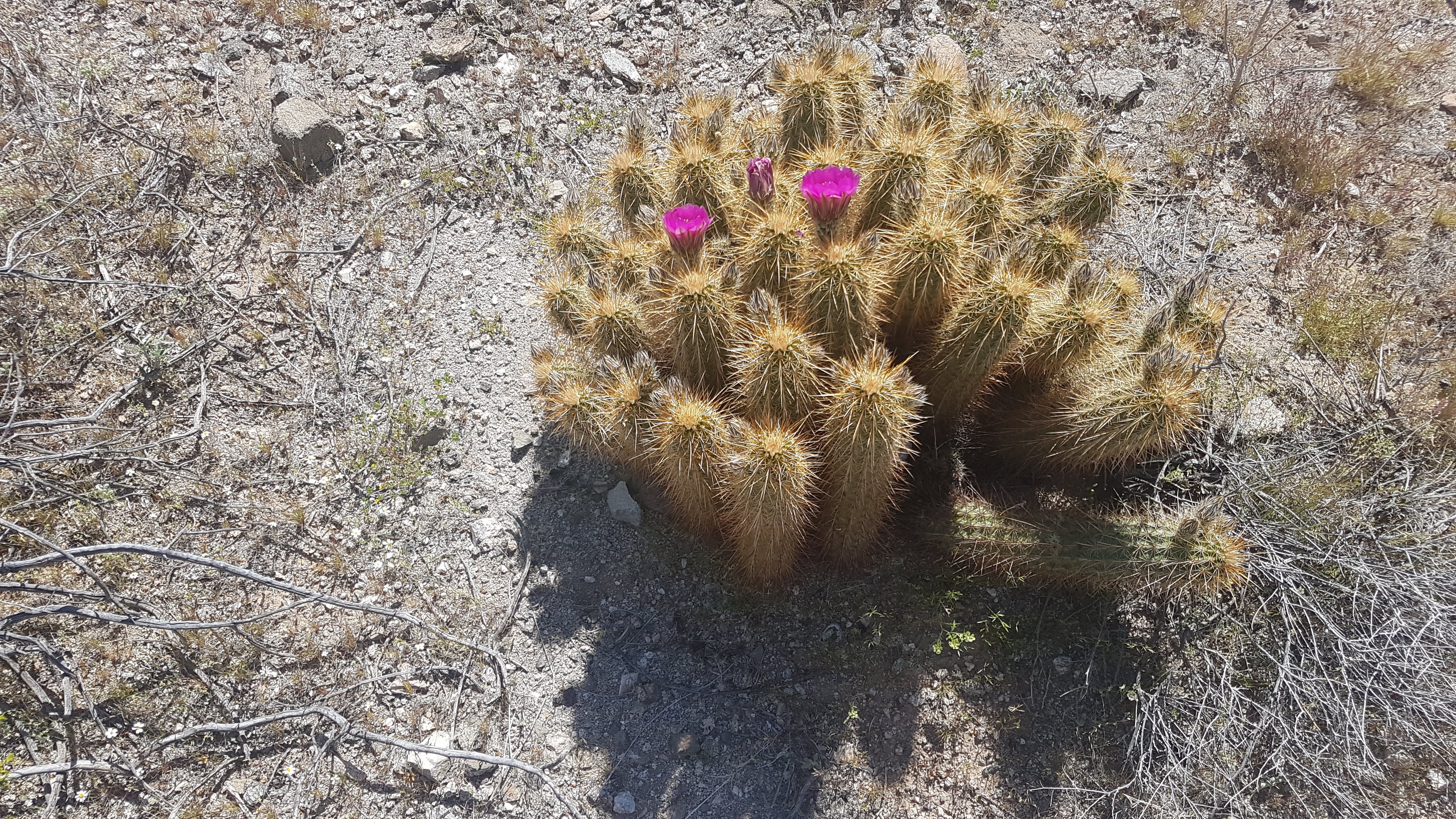
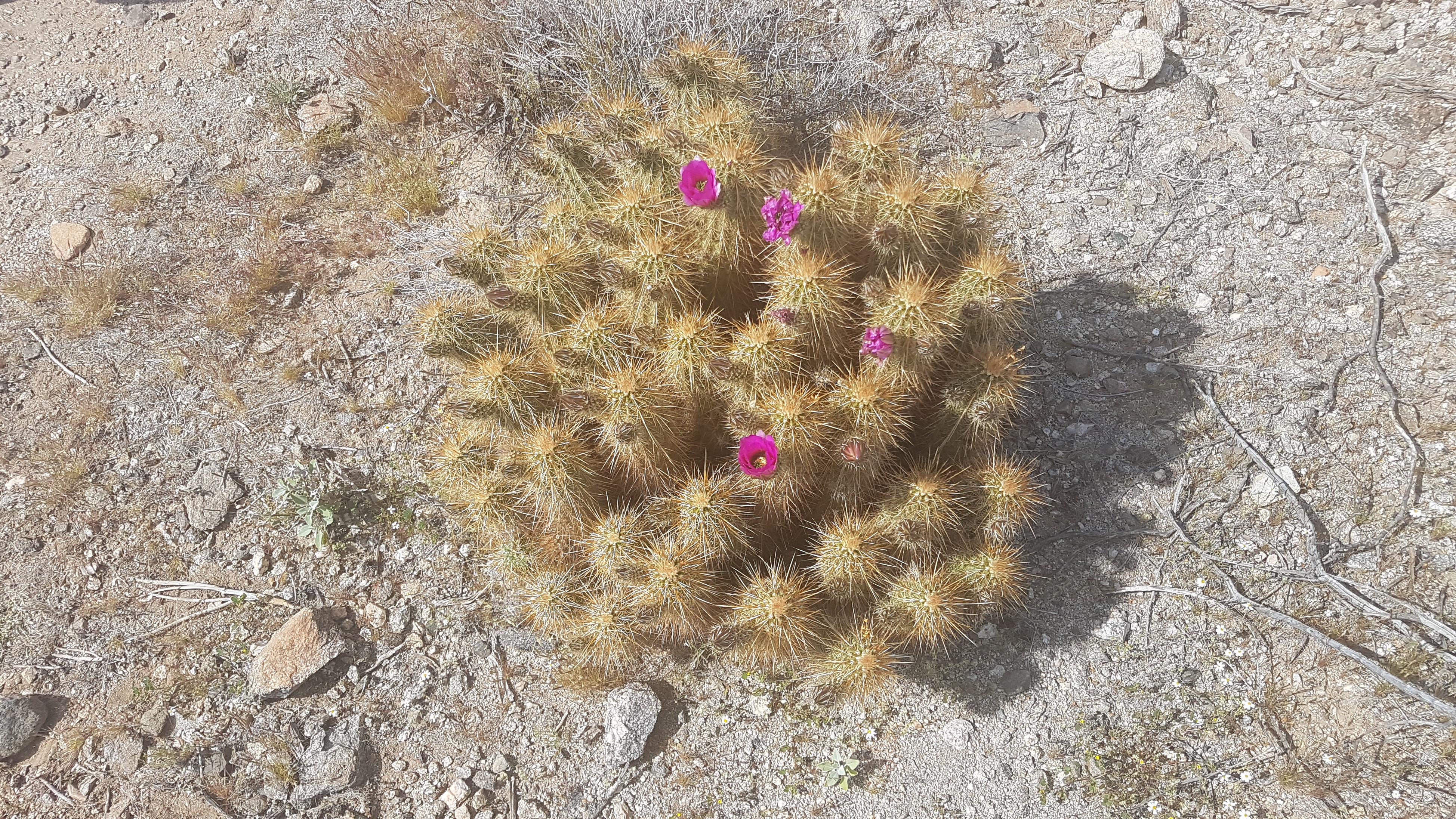
Several years ago, we were in Arizona and hiked in a regional park on an every other day basis. During our hikes, I took pictures of cacti that were blooming. Nature demonstrates hope even in challenging ecological settings. The contrast of the pink with a dull green and brown background serves as a beautiful reminder of hope in challenging times.
I share the Prayer of St. Francis as it has deep meaning in our family and it often referred to as the Peace Prayer. The word peace appears once and is the overarching message. Hope is an integral part of achieving peace.
Jonathan provides short, insightful quotes with complementary images. This particular post brings to mind Thich Nhat Hanh’s book No Mud, No Lotus.
Without the mud, there can be no lotus. Too often, we try to avoid the mud and challenges in life. The mud can help ground us in those moments as we take time to rest and reflect. Laozi offers this advice in to deal with life’s challenges: “Do you have the patience to wait/Till your mud settles and the water is clear?/Can you remain unmoving/Till the right action arises by itself?”
Too often, the busyness of life sweeps us away in the rush of its current instead of pausing in the midst of the storm to regain our footing and following the example of nature. There is a universal quality in remaining grounded in the present. Matthew 6:28 reminds us “Therefore do not be anxious about tomorrow, for tomorrow will be anxious for itself. Sufficient for the day is its own trouble.”
Even the most pressing issues of our time require us to think about what we can do in our little corner of the universe each day, each moment. We should each remember, if we do what we can in our corner of the universe, we are interconnected or, as Thich Nhat Hanh might say, inter-are with each other.
Apache man, 1903, by Edward S. Curtis Apache Blessing Prayer May the sun bring you new energy by day. May the moon softly restore you by night. May the rain wash away your worries. May the breeze blow new strength into your being. May you walk gently through the world and know its beauty all […]
Dawn provides many beautiful posts and I thought this was one that was appropriate as we change the calendar from 2021 to 2022. It reminds us of the how we are interconnected with each other and Mother Earth. Thich Nhat Hanh refers to this as inter-being and we are inter-are with all matter, living and non-living.
As we begin and end each day, we might think in terms of how nature provides energy, restores us, washes away our worries, and blows new strength into our very being and brings new life to our spirit. For this to occur, we need to walk through the world gently and be mindful of the beauty surrounding us.
As we move into the new calendar year, I leave you with a Maya Angelou quote to help guide you through each day of 2022:
This poem from Danna Faulds is a perfect reminder for what Summer offers. Photo by Pixabay on Pexels.com My wealth is wonder. True abundance is the delight I feel on summer nights as fireflies rise from the grass and Orion strides across the sky. I measure my wealth in birdseed and hummingbird feeders, in the […]
Val shares wonderful posts and often includes poems by Danna Faulds. This particular poem caught my eye with words wonder and abundance. Wonder is about being amazed by the world in unexpected ways. It is about experiencing the extraordinary in the ordinary. Wealth is not about material wealth. It is about feeling whole and well, It is about sharing with others what makes us feel a crumb of joy, as Mary Oliver would say.
In the ordinary moments that reveal their extraorindariness, we discover abundance. There are ineffeable, intangible qualities to abundance understood this way. Despite these qualities, abundance brings joy, which is not to be treated as a crumb per Mary Oliver.
I leave you with a Mary Oliver poem, Don’t Hesitate, which echoes the Danna Fauld poem about where I discover my riches and wealth.
If you suddenly and unexpectedly feel joy, don’t hesitate. Give in to it. There are plenty of lives and whole towns destroyed or about to be. We are not wise, and not very often kind. And much can never be redeemed. Still, life has some possibility left. Perhaps this is its way of fighting back, that sometimes something happens better than all the riches or power in the world. It could be anything, but very likely you notice it in the instant when love begins. Anyway, that’s often the case. Anyway, whatever it is, don’t be afraid of its plenty. Joy is not made to be a crumb.
The last time we were in Pheonix we walked the paths in a local park. We noticed this cactus beginning to bloom the first day and stopped each day to check on its progress. It provided joy and abundance just by sharing with us.
By the last day, it had several flowers. Nature worked its magic.
*This post inspired by Teacher As Transformer post I read today I needed passion, beauty, and ‘idling’ while I pretended to learn new things, today. I’ve spent too long on the ‘work I learned long ago how to do/improve upon’ in databases, websites, clean-up of outdated data…… compilation of reports, checklists, etc., to aide my […]
TamrahJo was kind and referenced that my post inspired her. When I looked at her post several days ago, I was inspired. I love her line of needing passion, beauty, and “idling.’ The word idling captures so much of what we need in our lives. We need the time to just be in each ensuing moment.
On top of the wonderful poetry and prose that reads like poetry, TamrahJo shared beautiful pictures of nature just being, in this case prairie scenes. Sometimes,beauty lies just outside our door and is right there for us to revel in on a daily basis. Many years ago on a beautiful day, Kathy and I were getting ready for church and as I stepped outside something move nearby. I looked up and a cow moose stood about 15 feet from me. I held my hand up to signal for quiet, as Kathy stepped out, and we stood and watched this beautiful animal eat shoots from a willow tree, watching us as we watched her. We stood there for a few moments and went quietly to the car. The moose continued to do what it was doing, being a moose. I turned to Kathy and said. “That might have been church today.” We still went, but the beauty and majesty of that moment remained with me over the years.
We lived in that small town for two years and our oldest son was born while we were there. Living in an isolated, rural setting in a mountain valley served to slow me down. Years later, I would find the same process happening at Gonzaga University in the summers. It took a week or two to bring myself back into the moment, to just be. The campus is a lovely setting and I walked in the river valley and on other trails on a daily basis.
Sometimes, things happen in serendipitous ways. We went to a concert and the main act was terrible, but the opening act, Corb Lund, was terrfic. We have seen him several times since and have a couple of CD’s. This song has become an anthem for opposing opening up coal mines in the southwest corner of Alberta where Corb lives. It has beauitful imagery in this particular version and speaks to the need to think about the actions of today and how they might impact the future. The song speaks to how often we overlook the extraordinary of everyday life and what is outside our doors.
I leave you with a Wendell Berry poem: Manifesto: The Mad Farmer Liberation Front
Love the quick profit, the annual raise, vacation with pay. Want more of everything ready-made. Be afraid to know your neighbors and to die. And you will have a window in your head. Not even your future will be a mystery any more. Your mind will be punched in a card and shut away in a little drawer. When they want you to buy something they will call you. When they want you to die for profit they will let you know.
So, friends, every day do something that won’t compute. Love the Lord. Love the world. Work for nothing. Take all that you have and be poor. Love someone who does not deserve it. Denounce the government and embrace the flag. Hope to live in that free republic for which it stands. Give your approval to all you cannot understand. Praise ignorance, for what man has not encountered he has not destroyed.
Ask the questions that have no answers. Invest in the millenium. Plant sequoias. Say that your main crop is the forest that you did not plant, that you will not live to harvest. Say that the leaves are harvested when they have rotted into the mold. Call that profit. Prophesy such returns.
Put your faith in the two inches of humus that will build under the trees every thousand years. Listen to carrion – put your ear close, and hear the faint chattering of the songs that are to come. Expect the end of the world. Laugh. Laughter is immeasurable. Be joyful though you have considered all the facts. So long as women do not go cheap for power, please women more than men. Ask yourself: Will this satisfy a woman satisfied to bear a child? Will this disturb the sleep of a woman near to giving birth?
Go with your love to the fields. Lie down in the shade. Rest your head in her lap. Swear allegiance to what is nighest your thoughts. As soon as the generals and the politicos can predict the motions of your mind, lose it. Leave it as a sign to mark the false trail, the way you didn’t go. Be like the fox who makes more tracks than necessary, some in the wrong direction. Practice resurrection.
With so much aggression and turmoil in this world, try and practice peace everyday in your world. If you can’t smooth that frown away and replace it with a smile, at least try and keep your anger down the best you can. Hard to do when you are not having a good day and feeling […]
I came across this post about a week ago, accidnently closed it, and could not remember where it was located. Michelle shares a post that points to what we need most in this world: love and peace. The third paragraph resonates with me. Nature depends on diversity and cooperation to succeed. Without those, it falls into disarray.
Thich Nhat Hanh writes beautifully about finding the extraordinary in the ordinary. We cannot have the extraordinary without the ordinary. We have to look deeper and understand there will always be mystery in what we are exploring.
I used phenomenology, specifically hermeneneutic phenomenology, in writing my disseration and it premised on mystery, making meaning, and a sense of wonder and awe as we explore particular phenomena. In many ways, each person is a phenomenologist as humans, by their nature, are meaning-making beings.
As a teacher, I used an activity called A Culture of Peace. In keeping with the Pema Chodron quote Michelle shared, I asked students for words and phrases to describe a culture of war and recorded answers on the board. It did not take long to exhaust the descriptions, usually no more than 10 minutes. I then asked them to desribe a culture of peace. The first time I used the activity, and it became a staple, I was left withy a sense of wonder how these junior high school students kept me moving for almost an hour filling up all the whiteboards. Even students who rarely shared, were excited. As we were borrowing someone’s classroom, we had to arbitrarily end the conversation and, as we walked back to our space, two young men commented they could have done that all day. The sense of wonder, joy, and fulfilment was palbable and extraordinary.
Several years ago, I used the same activity with an undergrad class of future teachers. It was surprised how unengaged and disinterested they were as a group. Perhaps, we become jaded in ways that are difficult to overcome, focused on end results and schedules rather than the joy of learning and sharing.
Below, is a picture of Mount Robson. We stop there on our trips to British Columbia and walk a bit. I am always left with a sense of wonder and, as we walk alongside the Robson River, I feel a sense of peace and gratitude for just being there.
I leave you with a quote from Gustavo Gutiérrez, a liberation theologist I am currently reading: “A gratuitous encounter is mysterious and draws us into itself.” Father Gutiérrez uses the word gratuitous to describe something we encounter, which is free and exists for it own sake for us to enjoy e.g., lilies of the field, a mountain, a loved one, etc. When I encounter the person, phenomena, event, etc. I am grateful for its existence.
“Don’t bend; don’t water it down; don’t try to make it logical; don’t edit your own soul according to the fashion. Rather, follow your most intense obsessions mercilessly.”― Franz Kafka How often have we told people what they want to hear, rather than speak our truth? During the process of writing my second book, there […]
Karen writes about how challenging it is to speak one’s truth. We often conflate truth with opinion. Truth is about how we each experience a particular phenomenon. It always stands in relationship to others and how they experience that phenomenon. Truth comes from the Germanic word tröth, which is taking a solemn pledge or undertaking. We enter into a relationship with someone and/or something e.g., marriage vows. Each peson comes to understand the meaning of the relationship and the pledge slightly differently.
We live in a world which is sometimes referred to as post-truth.. In my view, this just moral relativism dressed up differently and allows people to ignore the humanity of others who may disagree with them or are different than them. It becomes easy to say whatever we want to and claim we are being cancelled when someone disagrees. When used in this manner, truth becomes irrelevant and a buzz word.
Truth has taken on greater importance with the recent findings of unmarked graves at or close to residential schools for Indigenous children who were taken from their families and communities. Canada has a Truth and Reconciliation report related to the way Indienous peoples and communities were mistreated and that is a gentle word to describe the process. This includes the residential schools set up by the government and run by several christian demoninations. It is important to note truth comes before reconciliation. It is acknowledging the wrongs of the past, which is essential to reconciling, making whole and healing.
The reports logo is based on the 7 sacred teachings found in some form in North American Indigenous cultures: Truth, Humility, Honesty, Wisdom, Respect, Courage and Love. Although these teachings form the basis for North American Indigenous traditions and dialogue, one can find them, in some form, in other spiritiual teachings. They should form the ground on which we enter into relationships with others, the world, and what we hold sacred.
What draws me to Mary Oliver‘s poetry is the humility she invokes in questions she asks in certain poems. My favourite is The Summer Day where she concludes her questions with “what is you plan to do with your one wild and precious life?” Truth is preceded by humility and accepting their will always be questions we cannot answer. Truth needs the other sacred teachings as life opens up with questions we cannot answer and full grasp.
Who made the world?
Who made the swan, and the black bear?
Who made the grasshopper?
This grasshopper, I mean–
the one who has flung herself out of the grass,
the one who is eating sugar out of my hand,
who is moving her jaws back and forth instead of up and down —
who is gazing around with her enormous and complicated eyes.
Now she lifts her pale forearms and thoroughly washes her face.
Now she snaps her wings open, and floats away.
I don’t know exactly what a prayer is.
I do know how to pay attention, how to fall down
into the grass, how to kneel in the grass,
how to be idle and blessed, how to stroll through the fields