Tag Archives: mindfulness

Speak Your Truth — LIVING IN THIS MOMENT

“Don’t bend; don’t water it down; don’t try to make it logical; don’t edit your own soul according to the fashion. Rather, follow your most intense obsessions mercilessly.”― Franz Kafka How often have we told people what they want to hear, rather than speak our truth? During the process of writing my second book, there […]

Speak Your Truth — LIVING IN THIS MOMENT

Karen writes about how challenging it is to speak one’s truth. We often conflate truth with opinion. Truth is about how we each experience a particular phenomenon. It always stands in relationship to others and how they experience that phenomenon. Truth comes from the Germanic word tröth, which is taking a solemn pledge or undertaking. We enter into a relationship with someone and/or something e.g., marriage vows. Each peson comes to understand the meaning of the relationship and the pledge slightly differently.

We live in a world which is sometimes referred to as post-truth.. In my view, this just moral relativism dressed up differently and allows people to ignore the humanity of others who may disagree with them or are different than them. It becomes easy to say whatever we want to and claim we are being cancelled when someone disagrees. When used in this manner, truth becomes irrelevant and a buzz word.

Truth has taken on greater importance with the recent findings of unmarked graves at or close to residential schools for Indigenous children who were taken from their families and communities. Canada has a Truth and Reconciliation report related to the way Indienous peoples and communities were mistreated and that is a gentle word to describe the process. This includes the residential schools set up by the government and run by several christian demoninations. It is important to note truth comes before reconciliation. It is acknowledging the wrongs of the past, which is essential to reconciling, making whole and healing.

The reports logo is based on the 7 sacred teachings found in some form in North American Indigenous cultures: Truth, Humility, Honesty, Wisdom, Respect, Courage and Love. Although these teachings form the basis for North American Indigenous traditions and dialogue, one can find them, in some form, in other spiritiual teachings. They should form the ground on which we enter into relationships with others, the world, and what we hold sacred.

What draws me to Mary Oliver‘s poetry is the humility she invokes in questions she asks in certain poems. My favourite is The Summer Day where she concludes her questions with “what is you plan to do with your one wild and precious life?” Truth is preceded by humility and accepting their will always be questions we cannot answer. Truth needs the other sacred teachings as life opens up with questions we cannot answer and full grasp.

Who made the world?
Who made the swan, and the black bear?
Who made the grasshopper?
This grasshopper, I mean–
the one who has flung herself out of the grass,
the one who is eating sugar out of my hand,
who is moving her jaws back and forth instead of up and down —
who is gazing around with her enormous and complicated eyes.
Now she lifts her pale forearms and thoroughly washes her face.
Now she snaps her wings open, and floats away.
I don’t know exactly what a prayer is.
I do know how to pay attention, how to fall down
into the grass, how to kneel in the grass,
how to be idle and blessed, how to stroll through the fields
which is what I have been doing all day.
Tell me, what else should I have done?
Doesn’t everything die at last, and too soon?
Tell me, what is it you plan to do
With your one wild and precious life?

An Expression of Gratitude —

“Keeping your body healthy is an expression of gratitude to the whole cosmos- the trees, the clouds, everything.” – Thich Nhat Hanh

An Expression of Gratitude —

Espirational provides short posts that are often accompanied by lovely images. This quote from Thich Nhat Hanh relates to my post, Deep, the other day. It was Bela‘s post I shared and expanded on a bit.

If we think of Earth and Nature as living bodies, we can expand this quote about health as an expression of gratitude to encompass more than just each of us individuals and human bodies. In moments of gratitude, we should ask who benefits from pillaging the Earth and Nature? We can also ask who is most harmed?

Currently, I am reading a book by Gustavo Gutiérrez and Paul Farmer. Father Gutiérrez is a pioneers of Liberation Theology and Paul Farmer is a medical doctor and medical anthropologist who helped found Partners in Health. Part of the reading is to write about leadership, education, and how hope can inform each of us as we emerge from COVID-19, if we actually do.

I hoped a crisis of this magnitude, plus the social and racial justice reckonings, might be a time to (re)imagine and (trans)form leadership and education. I am unsure this is what will happen, as the agenda of the very wealthy does not seek a “preferential option for the poor” and those most in need, inlcuding Gaia and Mother Nature. Yes, there is talk, but most of that is empty words and political theatre, posturing and peformativity for one’s constituents. It takes peope filled with courage and hope to stand up and say we need something different.

My hope rests in the next generation, the young people who are already making a mark. I hope they do not become disenchanged and discouraged. In this vein, I leave you with the following quote, attributed to Tasunke Witko (Crazy Horse) days before he was killed.

Upon suffering beyond suffering:

The Red Nation shall rise again and it shall be a blessing for a sick world; a world filled with broken promises, selfishness and separations; a world longing for light again.

I see a time of Seven Generations when all the colors of mankind will gather under the Sacred Tree of Life and the whole Earth will become one circle again.

In that day, there will be those among the Lakota who will carry knowledge and understanding of unity among all living things and the young white ones will come to those of my people and ask for this wisdom.

I salute the light within your eyes where the whole Universe dwells. For when you are at that center within you and I am that place within me, we shall be one.

Deep

When I saw this post several weeks ago, Mary Oliver’s name got my attention. I have followed Bela for several years and her poetry reminds me of Mary Oliver and her poetry.

Nature surrounds us, engufls us, yet many humans act as if we are separate from Nature and have command over it. What the last few years should show us is we do not control Nature. As I watch the increase in catastrophic weather events and the pandemic we are in midst of, I better understand how taking care of nature takes care of the human family.

The line that stood out for me in Bela’s poem was “human encroachment into nesting areas, refusual to admit error in bulldozing sacred spaces for profit.” Not only did the poem remind me of Mary Oliver and her poetry, it reminded me of John Prine and his song Paradise.

As Mary Oliver says in the following poem and Bela signals in her poem, humans have a place in the family of things. To think otherwise is foolhardy.

You do not have to be good.
You do not have to walk on your knees
For a hundred miles through the desert, repenting.
You only have to let the soft animal of your body
love what it loves.
Tell me about your despair, yours, and I will tell you mine.
Meanwhile the world goes on.
Meanwhile the sun and the clear pebbles of the rain
are moving across the landscapes,
over the prairies and the deep trees,
the mountains and the rivers.
Meanwhile the wild geese, high in the clean blue air,
are heading home again.
Whoever you are, no matter how lonely,
the world offers itself to your imagination,
calls to you like the wild geese, harsh and exciting —
over and over announcing your place
in the family of things.

I leave you with John Prine’s words about bulldozing mountain tops to find those last seams of coal, all for profit.

A Prayer for our Times

Val shared a wonderful poem by Danna Faulds and I could not resist sharing it. Although the title suggests a prayer for our times might be specific to these times, this poem has a timeless quality to it.

What COVID-19 revealed was the challenges we face in our times. The inequities and injustices have existed for some time. The depth of those inequities and injustices were what were and are revealed.

I liken the market system as a multi-level sales scheme with most of us running around trying to make ends meet and many people simply left behind. A handful of people benefit and many simply continue to run on the spot with little chance of gaining ground.

What the neo-liberal and neo-conservative policy makers. politicians, and corporate chieftains count on is we are remain driven by self-interests, as opposed to what others may need. Who has benefited most from these times?

I could not find this poem on a video, but Danna Faulds’ poetry contains qualities of common weal, pluralism, reconciliation, love for one another, and healing to make us whole in complex times. I chose this poem as it speaks to the human condition we all live through and our need for one another.

Unpretentious Intimacy

I wrote this while sitting, feeling tired, waiting for a connector flight home in Vancouver International Airport. Despite being tired, I was grateful and able to reflect.

At the time, I was experiencing dis-ease. What got me through was people who reached out to me, sensing my unhappiness.

At the retreat I attended, forming relationships with people I had not met before was essential. In the midst of this, I was able to be vulnerable and drop a shield of invincibility. In the space provided. we were able express a sense of caring for each other and bring one another into the fold.

This type of experience raises questions, often without easy answers. What makes each of us who we are? It is scary, but rewarding. It is in the slow cooking of a crock pot in which intimacy can be born. In the slow brewing, we explore identity and masks of personae we wear, gazing into relational mirrors. But, it often sneaks up on us without us being aware the mirror is there.

In wondrous spaces–

Dropping one’s guard,

Sharing secrets;

Hoping to fulfill hopes.

Informing new forms–

Shedding carnival mirror images,

Revealing being vulnerable;

Experiencing a new love.

Allowing intimacy to bloom–

Glimpsing who I am,

As if for the first time–

Revealing one’s self in an other’s presence.

I listen to the blues a lot. The blues have a quality of life about them that reminds me there is more than me in the world. Willie Dixon said “the blues is the roots and other musics is the fruits.” This resonates with me.

Shemikia Copeland is a superb singer/songwriter who reminds me of the plight of others and how much hope they have in the face of systemic injustices. This song is from her most recent album.

How Do I Listen?

Several year ago, I watched a PBS show about a branch of neuroscience called Contemplative Mindfulness. Rudolph Tanzi is central in this work which grew out of research by Richard Davidson, Ellen Langer, and Jon Kabat-Zinn.

Mindful practices have been with us for centuries and informed Jesus’, the Buddha’s and Mohammed’s teachings. Mindful listening begins with me listening to the other, moves outward, and is eloquently described by Hafiz, a Sufi poet. Mindful listening requires humility those teachers emulated in lived practice as the servant as leader.

In a world that seems filled with ego and narcissim, listening to the other is essential to healing the world and each human. I am re-reading Ivan Illich and authors who use his work. His best known book is Deschooling Society, which was originally titled The Dawn of Epimethean Man and Other Essays. The title was changed by the publisher, something Illich regretted later.

Illich was a priest and his writing, including about education, was informed by The Parable of the Good Samaritan. His understanding was we do not get to choose who are neighbours are. Instead, others we encounter depend on us to listen and demonstrate compassion, dropping our ego in the process. It also fits with Epimetheus who was more comfortable with uncertainty than his more famous sibling, Prometheus.

Encountering the stranger as neighbour comes both with reward and risk. The words hospitality and hostile are linked etymologically.

How

Do I

Listen to others?

As if everyone were my Master

Speaking to me

His

Cherished

Last

Words.

Here is a Mary Oliver reading I Happened To Be Standing and an inteview with her. You have to wait until the end to get to the listening aspect. Being mindful weaves its way through the poem.

Gettin’ My Mojo Back

I looked at this poem a month ago and decided not to post it. As I listened to music today, a song came on called Getting My Mojo Back and felt it was time to post it.

I wrote this during a retreat on Bainsbridge Island based on the work of Parker Palmer. It was at a time I was wrestling with staying in teaching due to the politics. I felt I was not giving it my all and lacked confidence in my teaching.

During the retreat, I reflected and had candid conversations with others and concluded it was time to control what I could control. Interestingly, it was in the conversations with others that I had to choose to be all in really came to the forefront. I went back to my classroom, spent another 5 years teaching, and giving it my all.

I think, when we lose confidence, we do not realize it. It sneaks up on us, rather than being a cataclysmic shift. Recovering confidence is similar. It is done in small steps and realizing we are not alone in the moment.

I had to realize anger was born out of fear and loss. Once I acknowledged this, I was at ease with letting go and moving forward.

It just happens–

Letting go;

Speaking without anger–

Embracing one’s sadness;

For what is lost.

Staring into an abyss–

Sitting with unformed questions;

Terrifying darkness–

Sensing incompleteness,

Feeling uncertainty.

Taking stock–

Looking inwards;

Accepting extended hands–

Discarding baggage

Moving towards a place of light.

Mojo gaining momentum–

Emerging at its pace;

Creating healing space–

Living one’s own truth;

Living in each moment’s question.

I attended a John Lee Hooker concert in 1972 or 1973. I grew up listening to jazz, gospel, folk, and blues with traditional country, early rock and roll. I took it for granted that I attended a John Lee concert until an American, who shared a love for the blues, told me he never did. African-American performers toured in Canada on a regular basis at a time they did not have that same ease of movement in their own country.

When I used Langston Hughes’ poetry in my teaching, I remembered he wrote from a different understanding of what America was. This was an outgrowth of an awareness of my privilege as a white Canadian male.

Canadian Thanksgiving

It is Canadian Thanksgiving today. Instead of Thanksgiving being a once a year day with underlying commercial interests, it raised questions about being full of thanks for each ensuing moment. What if I were grateful and thankful each day-each moment? This is impossible. What I need to do is hold the thought at the forefront and perhaps it elevates the thankfulness I experience.

We began with a dinner last night with our oldest son and his partner. He headed out to an out-of-town job today. Tonight, we celebrate with our youngest. He worked last night, so was unavailable.

Gratitude and thankfulness–

Turning to beloved;

Embracing one another;

Celebrating what held sacred.

In each moment–

Experiencing the extraordinary;

Revealing itself in the ordinary;

Sensing it is there.

Harvesting bounties–

Sharing common weal;

Valuing de-monetized wealth;

Feeling blessed.

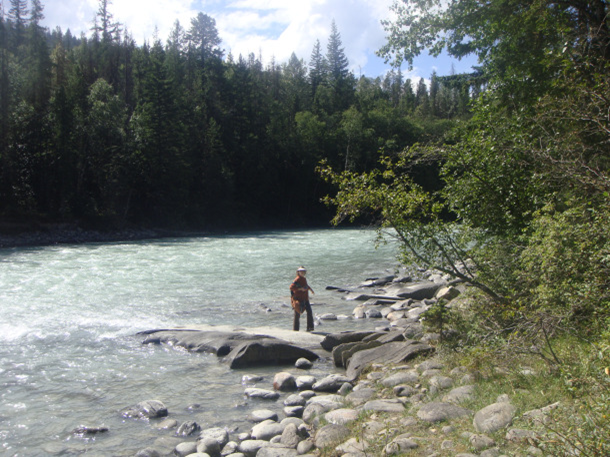
I took this of Kathy standing on a rock above Rearguard Falls on the Fraser River in Mount Robson Provincial Park. I am thankful for the time we spend together and Nature.

Spacious Sanctuary

Wendell Berry wrote a series of poems about Sabbath and taking time to let the spirit mend and heal. Wayne Muller wrote a book called Sabbath and provided a number of Sabbath practices from various traditions. After we read the book, we used practices and wrote reflections about how we each responded to them at a hospitality retreat.

How each find moments of peace and solace in a busy world is personal and reflects who we are as humans. For me, it is time spent walking, reading poetry, and writing. It is challenging as I need to adhere to a routine without being to rigid. What I observe, feel, hear, etc. needs to able to reach me in meaningful ways.

I wrote this poems as I entered a lengthy Sabbath period, taking time away from screens of various types.

Stepping aside–

Easing into spacious spaces;

Sensing stillness–

Unsquaring eyes,

Fidgeting less,

Being.

Resting–

Embracing wakefulness;

Emerging from frenetic hibernation–

Moving yet remaining still–

Enriching spirit,

Rediscovering lightness of being.

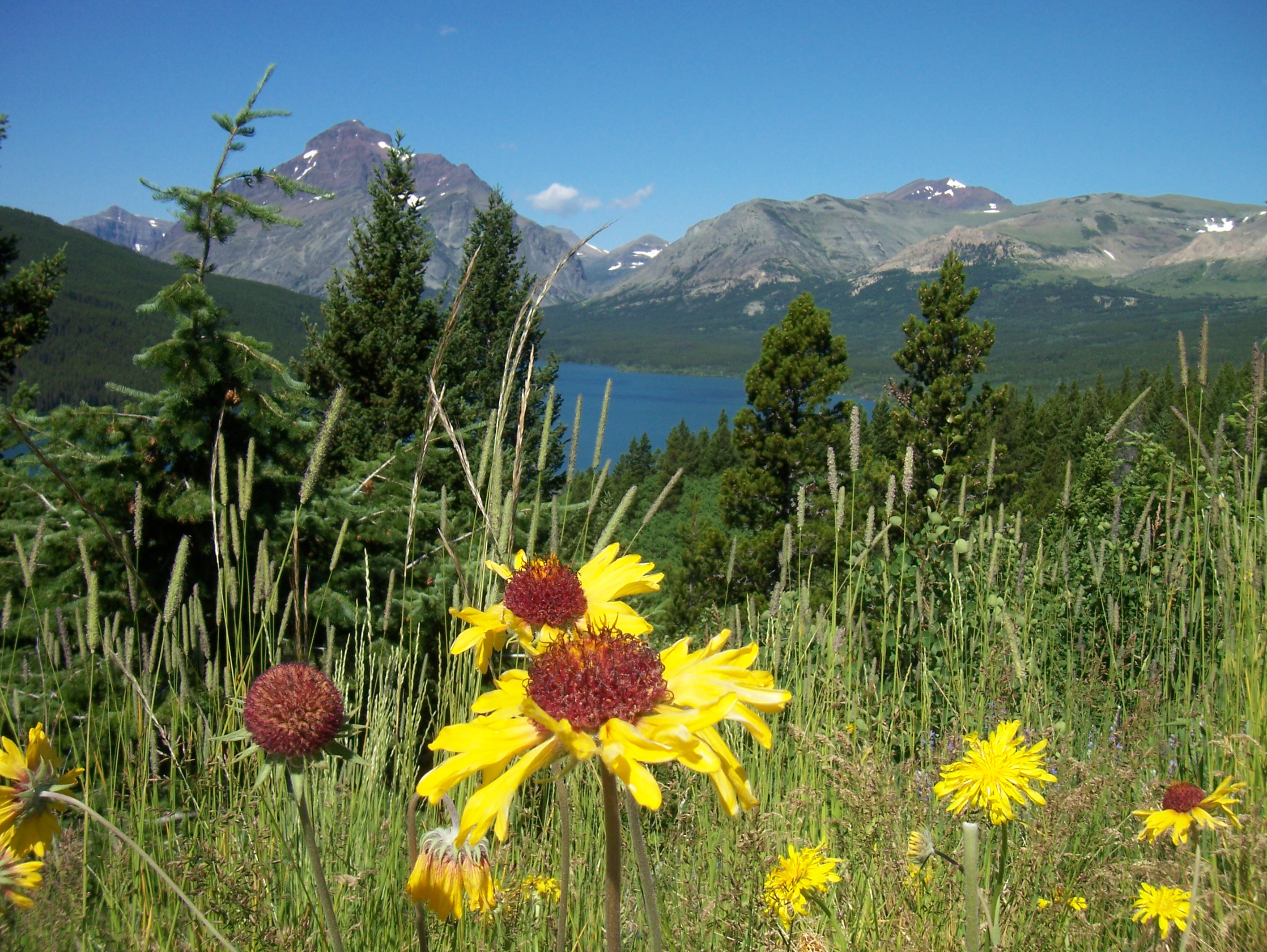
I took this picture on a hike in Glacier National Park. Nature just is. It exists for the sole purpose of existing. Humans need to do this more; just be in a given moment or time.

From the Margins

When I traveled to attend events based on the writings of Parker Palmer, two gifts emerged. First, the settings chosen were beautiful and peaceful, with considerable access to being able to walk. Second, along with the time outside, there was considerable time to reflect in solitude and with those gathered. Part of the reflection, was to listen as one spoke and hear, as if for the first time, what one was/is saying.

I wrote the following poem after time reflecting on my pedagogic practices. I taught in a setting that required me to be present and I was falling short and, as a result, letting students, families, and myself down.

Over time and without realizing it, I had fallen into habits of just doing things the way I had before. I experienced a false sense of security in my teaching. This was something I promised I would not do when I entered teaching.

To teach, I felt I had be on the margins and be awake to each student and their particular needs, listening to what they and their families told me about them. The margins are what surround us. Too often, I wanted to be in the centre of things, where I was comfortable and the centre of things. I don’t learn much there.

sensing false security,

being the centre,

yet, margins surrounding–

paradox of one’s being.

standing out,

revealing blemishes,

making them obvious–

reveling in them.

finding comfort on the margins,

not hiding in the crowd,

reflecting one’s character–

stepping out and away with pride.

composing one’s humanness;

in deep concert with others,

sharing perfect imperfections–

enriching human moments.

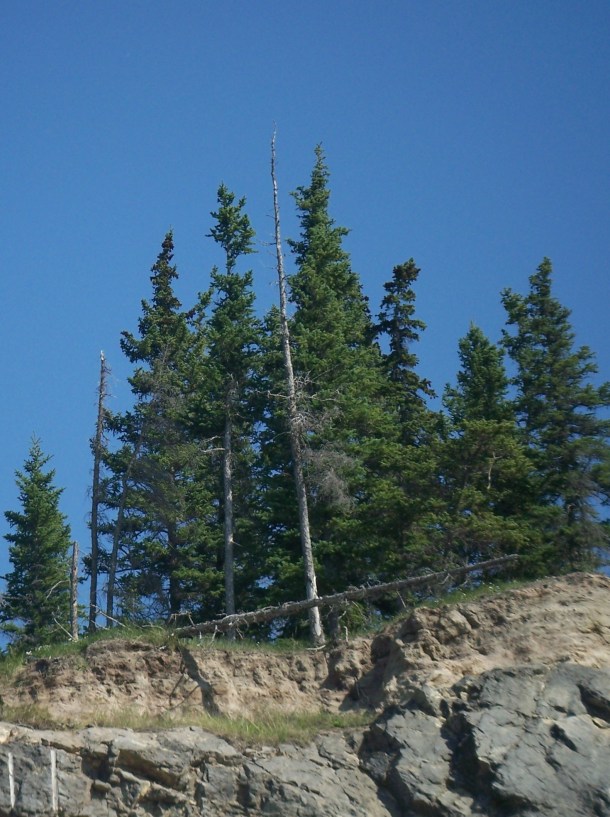
This took some doing to edit the final poem, but here it is. I chose the picture, as it is a reminder that nature does not provide perfection. It provides perfection in imperfect patterns that emerge.

In nature, trees like the ones in the picture find a way to survive. Despite their lack of size, these trees are at least 100 years old and have survived, one might say thrived, living on the margins. They have a wonderful view from a precarious vantage point.