Tag Archives: teacher as transformer

Be the Peace in Your World — Life as a Garden

With so much aggression and turmoil in this world, try and practice peace everyday in your world.  If you can’t smooth that frown away and replace it with a smile, at least try and keep your anger down the best you can. Hard to do when you are not having a good day and feeling […]

Be the Peace in Your World — Life as a Garden

I came across this post about a week ago, accidnently closed it, and could not remember where it was located. Michelle shares a post that points to what we need most in this world: love and peace. The third paragraph resonates with me. Nature depends on diversity and cooperation to succeed. Without those, it falls into disarray.

Thich Nhat Hanh writes beautifully about finding the extraordinary in the ordinary. We cannot have the extraordinary without the ordinary. We have to look deeper and understand there will always be mystery in what we are exploring.

I used phenomenology, specifically hermeneneutic phenomenology, in writing my disseration and it premised on mystery, making meaning, and a sense of wonder and awe as we explore particular phenomena. In many ways, each person is a phenomenologist as humans, by their nature, are meaning-making beings.

As a teacher, I used an activity called A Culture of Peace. In keeping with the Pema Chodron quote Michelle shared, I asked students for words and phrases to describe a culture of war and recorded answers on the board. It did not take long to exhaust the descriptions, usually no more than 10 minutes. I then asked them to desribe a culture of peace. The first time I used the activity, and it became a staple, I was left withy a sense of wonder how these junior high school students kept me moving for almost an hour filling up all the whiteboards. Even students who rarely shared, were excited. As we were borrowing someone’s classroom, we had to arbitrarily end the conversation and, as we walked back to our space, two young men commented they could have done that all day. The sense of wonder, joy, and fulfilment was palbable and extraordinary.

Several years ago, I used the same activity with an undergrad class of future teachers. It was surprised how unengaged and disinterested they were as a group. Perhaps, we become jaded in ways that are difficult to overcome, focused on end results and schedules rather than the joy of learning and sharing.

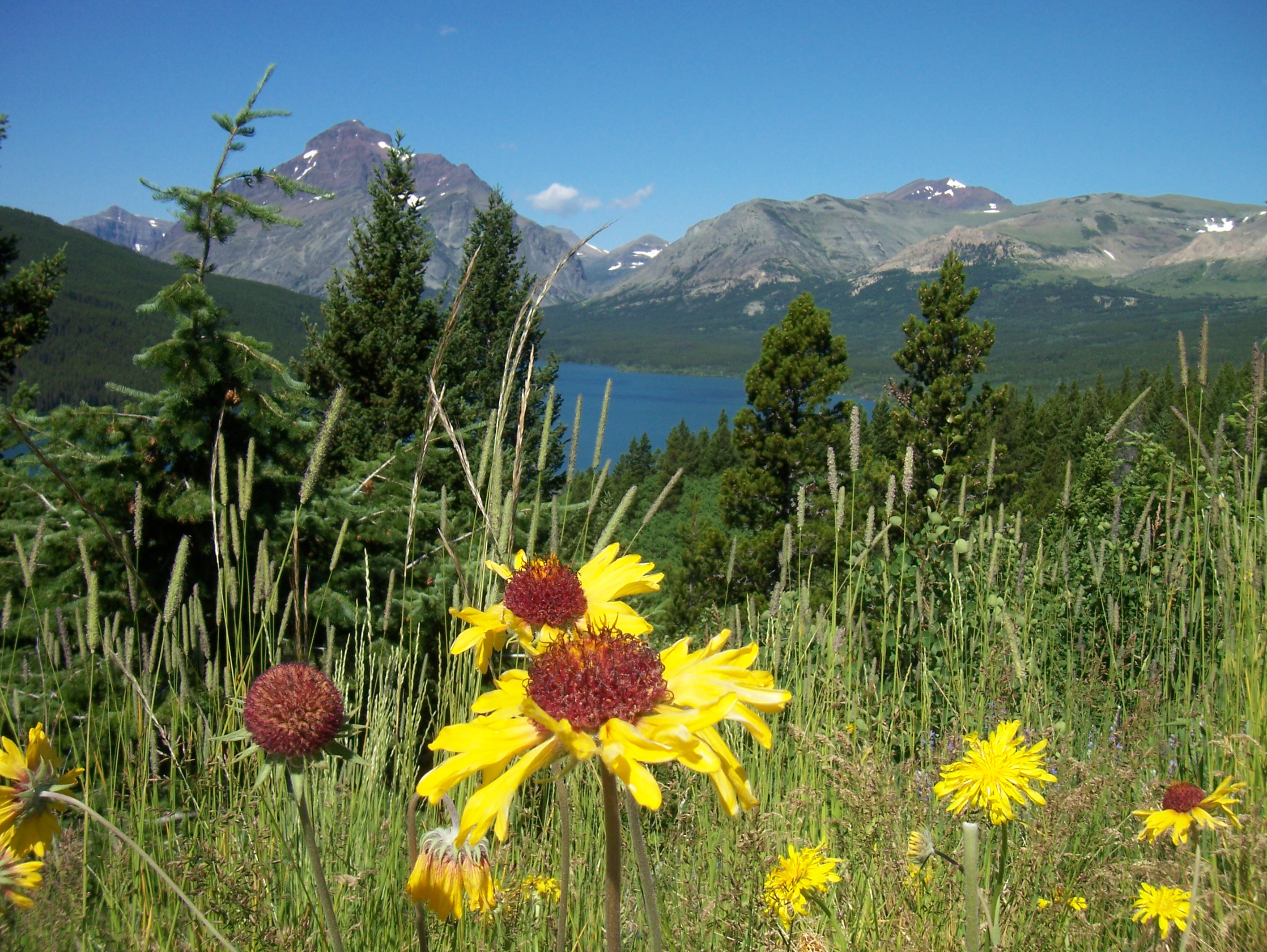
Below, is a picture of Mount Robson. We stop there on our trips to British Columbia and walk a bit. I am always left with a sense of wonder and, as we walk alongside the Robson River, I feel a sense of peace and gratitude for just being there.

I leave you with a quote from Gustavo Gutiérrez, a liberation theologist I am currently reading: “A gratuitous encounter is mysterious and draws us into itself.” Father Gutiérrez uses the word gratuitous to describe something we encounter, which is free and exists for it own sake for us to enjoy e.g., lilies of the field, a mountain, a loved one, etc. When I encounter the person, phenomena, event, etc. I am grateful for its existence.

Speak Your Truth — LIVING IN THIS MOMENT

“Don’t bend; don’t water it down; don’t try to make it logical; don’t edit your own soul according to the fashion. Rather, follow your most intense obsessions mercilessly.”― Franz Kafka How often have we told people what they want to hear, rather than speak our truth? During the process of writing my second book, there […]

Speak Your Truth — LIVING IN THIS MOMENT

Karen writes about how challenging it is to speak one’s truth. We often conflate truth with opinion. Truth is about how we each experience a particular phenomenon. It always stands in relationship to others and how they experience that phenomenon. Truth comes from the Germanic word tröth, which is taking a solemn pledge or undertaking. We enter into a relationship with someone and/or something e.g., marriage vows. Each peson comes to understand the meaning of the relationship and the pledge slightly differently.

We live in a world which is sometimes referred to as post-truth.. In my view, this just moral relativism dressed up differently and allows people to ignore the humanity of others who may disagree with them or are different than them. It becomes easy to say whatever we want to and claim we are being cancelled when someone disagrees. When used in this manner, truth becomes irrelevant and a buzz word.

Truth has taken on greater importance with the recent findings of unmarked graves at or close to residential schools for Indigenous children who were taken from their families and communities. Canada has a Truth and Reconciliation report related to the way Indienous peoples and communities were mistreated and that is a gentle word to describe the process. This includes the residential schools set up by the government and run by several christian demoninations. It is important to note truth comes before reconciliation. It is acknowledging the wrongs of the past, which is essential to reconciling, making whole and healing.

The reports logo is based on the 7 sacred teachings found in some form in North American Indigenous cultures: Truth, Humility, Honesty, Wisdom, Respect, Courage and Love. Although these teachings form the basis for North American Indigenous traditions and dialogue, one can find them, in some form, in other spiritiual teachings. They should form the ground on which we enter into relationships with others, the world, and what we hold sacred.

What draws me to Mary Oliver‘s poetry is the humility she invokes in questions she asks in certain poems. My favourite is The Summer Day where she concludes her questions with “what is you plan to do with your one wild and precious life?” Truth is preceded by humility and accepting their will always be questions we cannot answer. Truth needs the other sacred teachings as life opens up with questions we cannot answer and full grasp.

Who made the world?
Who made the swan, and the black bear?
Who made the grasshopper?
This grasshopper, I mean–
the one who has flung herself out of the grass,
the one who is eating sugar out of my hand,
who is moving her jaws back and forth instead of up and down —
who is gazing around with her enormous and complicated eyes.
Now she lifts her pale forearms and thoroughly washes her face.
Now she snaps her wings open, and floats away.
I don’t know exactly what a prayer is.
I do know how to pay attention, how to fall down
into the grass, how to kneel in the grass,
how to be idle and blessed, how to stroll through the fields
which is what I have been doing all day.
Tell me, what else should I have done?
Doesn’t everything die at last, and too soon?
Tell me, what is it you plan to do
With your one wild and precious life?

An Expression of Gratitude —

“Keeping your body healthy is an expression of gratitude to the whole cosmos- the trees, the clouds, everything.” – Thich Nhat Hanh

An Expression of Gratitude —

Espirational provides short posts that are often accompanied by lovely images. This quote from Thich Nhat Hanh relates to my post, Deep, the other day. It was Bela‘s post I shared and expanded on a bit.

If we think of Earth and Nature as living bodies, we can expand this quote about health as an expression of gratitude to encompass more than just each of us individuals and human bodies. In moments of gratitude, we should ask who benefits from pillaging the Earth and Nature? We can also ask who is most harmed?

Currently, I am reading a book by Gustavo Gutiérrez and Paul Farmer. Father Gutiérrez is a pioneers of Liberation Theology and Paul Farmer is a medical doctor and medical anthropologist who helped found Partners in Health. Part of the reading is to write about leadership, education, and how hope can inform each of us as we emerge from COVID-19, if we actually do.

I hoped a crisis of this magnitude, plus the social and racial justice reckonings, might be a time to (re)imagine and (trans)form leadership and education. I am unsure this is what will happen, as the agenda of the very wealthy does not seek a “preferential option for the poor” and those most in need, inlcuding Gaia and Mother Nature. Yes, there is talk, but most of that is empty words and political theatre, posturing and peformativity for one’s constituents. It takes peope filled with courage and hope to stand up and say we need something different.

My hope rests in the next generation, the young people who are already making a mark. I hope they do not become disenchanged and discouraged. In this vein, I leave you with the following quote, attributed to Tasunke Witko (Crazy Horse) days before he was killed.

Upon suffering beyond suffering:

The Red Nation shall rise again and it shall be a blessing for a sick world; a world filled with broken promises, selfishness and separations; a world longing for light again.

I see a time of Seven Generations when all the colors of mankind will gather under the Sacred Tree of Life and the whole Earth will become one circle again.

In that day, there will be those among the Lakota who will carry knowledge and understanding of unity among all living things and the young white ones will come to those of my people and ask for this wisdom.

I salute the light within your eyes where the whole Universe dwells. For when you are at that center within you and I am that place within me, we shall be one.

Deep

When I saw this post several weeks ago, Mary Oliver’s name got my attention. I have followed Bela for several years and her poetry reminds me of Mary Oliver and her poetry.

Nature surrounds us, engufls us, yet many humans act as if we are separate from Nature and have command over it. What the last few years should show us is we do not control Nature. As I watch the increase in catastrophic weather events and the pandemic we are in midst of, I better understand how taking care of nature takes care of the human family.

The line that stood out for me in Bela’s poem was “human encroachment into nesting areas, refusual to admit error in bulldozing sacred spaces for profit.” Not only did the poem remind me of Mary Oliver and her poetry, it reminded me of John Prine and his song Paradise.

As Mary Oliver says in the following poem and Bela signals in her poem, humans have a place in the family of things. To think otherwise is foolhardy.

You do not have to be good.
You do not have to walk on your knees
For a hundred miles through the desert, repenting.
You only have to let the soft animal of your body
love what it loves.
Tell me about your despair, yours, and I will tell you mine.
Meanwhile the world goes on.
Meanwhile the sun and the clear pebbles of the rain
are moving across the landscapes,
over the prairies and the deep trees,
the mountains and the rivers.
Meanwhile the wild geese, high in the clean blue air,
are heading home again.
Whoever you are, no matter how lonely,
the world offers itself to your imagination,
calls to you like the wild geese, harsh and exciting —
over and over announcing your place
in the family of things.

I leave you with John Prine’s words about bulldozing mountain tops to find those last seams of coal, all for profit.

Sensory Explosion

This is a new poem. I started working with another, which I will post later and this emerged.

What happens is contemplative exercises allow me to become mindful as I move back into my daily life. These activities can be meditation/prayer, time to walk, reading poetry, etc. What I experience moments remains with me.

I embed activities into my daily routine. For example, I try to get out and walk each day. I note what and who I see, hear, smell, and feel. The other day, I observed autumn’s musty smell had arrived, as trees shed their leaves. We have had little rain the last few weeks, but some drizzles may have hastened the smell of decomposing materials.

When we travel, we spend time walking and hiking in and out. I love waterfalls and mountains, so they speak to me and linger with me, forever changing me.

Walking away,

Richness lingering–

Thunder booming,

Spray hovering,

Power reverberating,

Water smelling–

Life-giving.

Hearing, feeling, seeing, sensing–

Walking away,

Lingering,

In my ears,

On my skin,

In spirit,

Re-entering quieter world–

Life-giving.

October’s Song

I originally wrote this on a rainy, warm day several years ago. It was a hard rain, but still 18 Cin Edmonton. Despite the warmth, we had a forecast of wet snow and coolling temperatures for that evening. In Alberta at this time of year, things can change weather-wise quite suddenly.

The forecast is for above-average temperatures for another week. Even then, it is not cooling appreciably. Instead, we will have rain as a possibility.  Most trees still have an abundance of leaves, although they are turning colours.

In Canada, we celebrate Thanksgiving as crops are harvested and stored by mid-October. It is not a sure thing, but that is the premise. The agrarian roots of Canada are deep, so the tradition of an October Thanksgiving remains.

Nature singing,

Whispering–

Painting the world anew.

Harvest gathering.,

Storing bounty–

Hearth calling.

Gathering,

Joining hands;

Bowing heads.

October arriving,

Thanking, sharing, celebrating–

Readying for winter’s respite.


I took this picture in Fairmount Hot Springs a couple of years ago. It was Thanksgiving weekend and it snowed on our way back. You can see the colours have changed in the distance and the mist over Columbia Lake.

Listening

I began to write this poem after a long and tiring week. Sometimes, when I step back from the visceral nature of my emotions, postive and negative, I find a kernel to prompt writing, thinking, and acting.

Too often, I find myself talking when I should be listening. This includes listening to me, and, more importantly, listening to those whose stories are silenced in unjust ways. I think those two forms of listening go hand-in-hand. Not listening to others is often a product of being so busy with the noise of my own life. When I listen from the heart, I hear words anew.

Rich stories silenced–

Seeking just spaces,

Sharing and healing;

To speak freely.

Listening deeply–

Sadly, stories unheard,

Of being oppressed;

Shunted to the margins.

Listening with heart–

Leaning into stories,

With grace and humility,

Hearing for the first time.

Am I ready to act?

Listening, hearing–

But, without doing;

(In)justice remains.

I listen to the blues, gospel, and jazz most of my life. When it comes to the blues, gospel, and jazz music I am aware of the privilege I experience and do not take it for granted.  As a Canadian, I attended concerts, because African-American performers came to Canada. They had access to venues I could attend here that they did not have in their own country.

Today, I heard Mavis Staples (on her latest album) singing and it resonated. For real and just change to emerge, I must be willing to listen and change the things I can.  When I listen to the blues and gospel music, particularlyperformed by African-American women, there is an undercurrent for meaningful and just change in the world.

Ongoing Quest

I wrote this during my last year teaching. It had been a particularly challenging day in the classroom and beyond. The students were full of energy and it was not always healthy. I grew frustrated and visibly annoyed part way through the afternoon. Part of it was a lack of a healthy relationship with the administration, which seeped into my teaching at times. It was challenging to set those frustrations aside, particularly with little support and how it impacted my teaching.

Having said thi, I chose to teach anothere year and wanted to teach those particular students. On myway home, I realized I need to establish a different, encouraging tone. In a sense, my ability to influence is my ability to recognize my reality and walk into the fire, the crucible, so to speak.In his teaching, Thich Nhat Hanh reminds me even weeds of a tough day serve a purpose. They fertilize and increase the yield of a crop: children’s learning and this could be lost on on me. For the remainder of the school year, some 7-8 months, I used this as my touchstone.

Sometimes, I allow myself to assume what is out there makes me who I am. If I let it, I succumb to those forces. On the other hand and stepping back from the brink, I reclaim my view and my callings in life. I do not let others and circumstances dictate who I am. I can choose how to respond. This is no mean feat as, in the heat of  the battle, it is hard to not be reactionary. The best I can do is be the best I can be in a moment, reflect later, and grow anew with fertilizer provided by tough moments.

transforming–

ongoing quest,

seeking vision,

unearthing a better, truer self–

digging deep,

resting in my heart.

transforming–

polishing the gems of self,

righting speech! righting action!

influencing others properly–

reclaiming my voice,

bringing forth my best.

Much to my mother’s chagrin, I got The Freewheelin’ Bob Dylan when I was in high school. I still have it and still spin the vinyl after all these years. Although it is now almost 60 years old, A Hard Rain’s A-Gonna Fall still rings true for me today. Dylan wrote this in the midst of the Cold War with nuclear threats all around. Today, we are in the midst of multiple crises: health, wealth distribution, inequities, etc. The question I should ask in difficult times, small and large, is how can I be the difference I want to see in the world to paraphrase Mahatma Gandhi? Even if it is difficult, it is noble, virtuous, and hopeful, in the face of great obstacles, to speak truth to power, (re)calling I can only make the difference I can make.

Medicine Wheel

I am unsure the title fits the poem , but I left it as is. This was a hard poem to write as I delved into something I am not 100% confident with and that is quantum spirituality. As a quantum physicist writing from a feminist perspective, Karen Barad writes about entanglement. In short, we are entangled with one another, with non-sentient beings, and the inanimate of the Universe. This involves moral responsiblities in relating to those other beings and things, without even knowing what it is and how we are related to each of them.

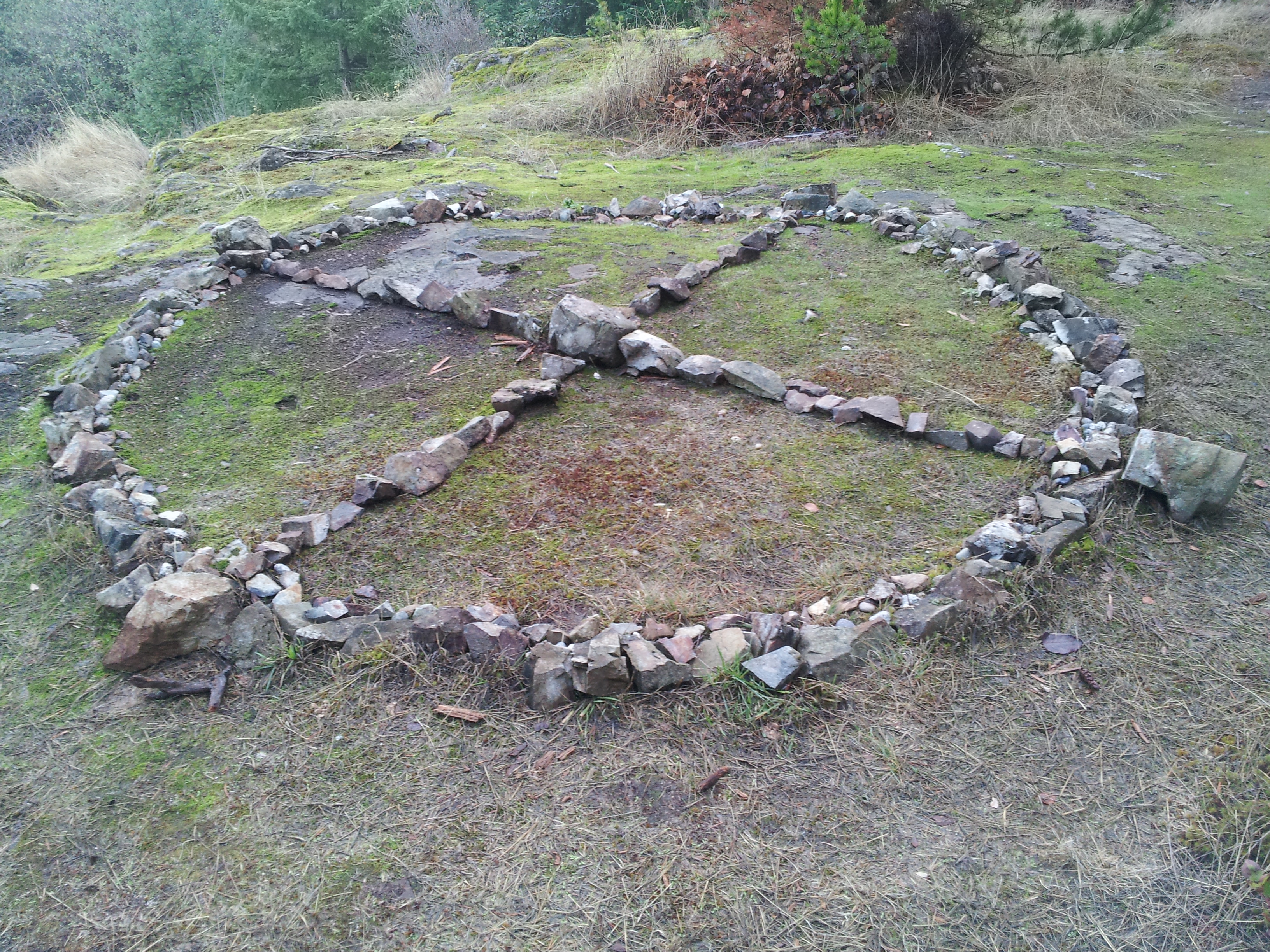
Medicine wheels are part of many First Nations’ cultures. They connect people to Nature and reflect our interdependence with Nature and each other. They signal the need for harmony in lives and ground us with and in our world. In my understanding, they have quantum aspects to them as we are entangled in ways that suggest we are always seeking harmony in hopeful ways. What a medicine wheel asks us is to acknowledge interdependence, something those who wield levers are woefully reluctant to do. Instead, humans become resources and chattel in making profits in a zero sum game.

After my post In Seeming Chaos, Hope, I wondered about the current state of world affairs e.g. political crises, health crisis, economic crisis, etc. They are entangled with each other. I cannot simply wish one away and the others remain. Moreover, they existed before COVID-19. We did not see them easily. A lack of access to health care was in place for many people before the pandemic. We warehoused elderly people (the not-so nice term is aging people) as has become our custom in the advanced world e.g. schools.

I began to look for a spiritual connection with quantum physics and entanglement and found it. What was interesting was I have been reading about the connections for years in the writings of The Dalai Lama and Fritoj Capra. (The link is to an article where both are referenced.) What Karen Barad does is presents a detailed case for it from a scientific and feminist perspective. I think the feminine perspective is essential, as I consider bell hooks, Mary Belenky, Riane Eisler, etc. to understand how we move away from what Eisler termed a dominator, patriarchal world based on binaries and assigning a number to one that incorporates a participatory, matriarchal world. In this world, Belenky refers to intuitive, feminine, and I would argue, indigenous ways of knowing and wisdom based on the quality of living we each experience. These are impossible to quantify. However, we can describe them in poetic language. What if we had leaders like Jacinda Ardern and Angela Merkel instead of people who pass themselves off as leaders and fall far short of leading?

Basking in Brother Sun’s warmth–

Healing (in)spiriting waters–

(In)haling sweet air–

Replenishing.

Here,

Feeling welcomed–

Homing in on what’s proper,

Resting in one’s responsibilities.

In relating to the Universe–

While standing in Nature–

When Supporting other beings–

Discovering hope(ful) ways.

Intuiting as quantum beings–

Accepting unfelt entanglement–

Hearing unheard voices–

“Crossing love’s hearth.”

Enriching alchemy–

Inspiring magic.

Seeking peace,

Speaking truth to power.

I took the picture on Bowen Island and began to write the poem.

In Seeming Chaos, Hope

I gave a lot of thought today about hope and its lack of it. I do not confuse hope with positivity and positive mindset. Instead, I understand hope as grounded in reality. Emily Dickinson described it as “the thing with feathers,” suggesting we cannot fully describe it. Its ineffeable nature creates a metaphoric meaning for each of us. Without dreams and hope, Langston Hughes cautions “life is a broken-winged bird/that cannot fly.” With hope and dreams of previous enslaved generations, Maya Angelou repeats the title of her poem “I Rise” as a prayer and refrain against hopelessness.

Too often, people want to pigeon-hole others in binary and dichotomous ways e.g. conservative or progressive. It appears easier and less ambiguous if we can label someone, somehow providing a sense of stability about who this or that person is. What we mis-understand is “and” means something. It acknowledges how complex each human is. We are not usually one thing or the other. Instead, we are mingling of things, experiences informing how we live, and the context within which we live. I want to conserve things e.g. Nature and, at the same time, progress e.g. equity regardless of gender, race, sexual orientation, etc. Neither is premised on political or, in our case, reality TV, sloganeering.

Paulo Freire and bell hooks write about hope, unconditional love, and dialogue in educating children, youth, and adults. I think the critical theory is incorrect. What they propose is critical pedagogy/andragogy where I ground dialogue in listening with lovingkindness to those with different lived-experiences. In mindful, non-judgemental listening, I seek to open up space where the Other shares their reality and wisdom. In acknowledgeing the humanity of the Other and greeting them in dignified silence, I might offer the fragile hope so needed in today’s world. Imagine a world where we greeted one another with dignity, rather than making up slick political mottos and creating disparaging nicknames that assault others?

I wrote this poem after a long, hard day. I thumbed through some right-brain scribbles and this was the result.

Even in chaos, hope–

Faith springing forth,

Beloved Other sharing wisdom:

What do we hold in common.

Communal rhythm,

Symphonic voices arising–

Loving harmonies;

Binding and healing.

Listening,

Giving dignity–

Acknowledging shared ground.

Holding each Other gently,

Unsure together–

Breaking bread

Being safe in this space.

This was the first secular song I heard in church. It was the late 1960’s. Today, I think we do need mountains we have bulldozed, meadows we have paved over, and water we have contaminated. Having said this, we need love and hope equal measure to make those things happen.