Monthly Archives: July 2012

Haiku Haven

I had some thoughts come to me while sitting quietly and wanted to share them in the form of a haiku.

ebbing and flowing

each moment’s uniqueness

a tended garden.

Melody Lowes inspired the second poem. She is a wonderful poet, photographer, and gardener. She posted a poem called Baby Steps.

 slow is freedom’s flight

a question to live into

gifts of poetry.

In Those Years by Adrienne Rich

As I posted the last two or three blogs, I realized sometimes how little we think of we and we individually think of I. I am often guilty of this. Life experienced is a relational enterprise. I think it does start with the I, but moves out to embrace the Thou in the way writers such as Martin Buber meant. We experience life through relational experiences of I and Thou.

Adrienne Rich provided us with poetry as a daily reminder of “no man being an island.”

In those years, people will say, we lost track

of the meaning of we, of you

we found ourselves

reduced to I

and the whole thing became

silly, ironic, terrible:

we were trying to live a personal life

and, yes, that was the only life we could bear witness to

But the dark birds of history screamed and plunged

into our personal weather

They were headed somewhere else but their beaks and pinions drove

along the shore, through the rags of fog

where we stood, saying I

Take care with those who you are we with and enjoy them today. Have a good 7th of July.

Larry Cuban is a leading writer and researcher in school reform or I think a better way to phrase it is a lack of true reform. He points out several key points in this excellent article. His first paragraph about teachers working together daily is not prophetic as you will see in the article. It has been part of the educational reform lexicon for a several years, perhaps decades is a better word. Why do the ‘reforms’ with all their pat answers and revolving, recycled fads secret this away in the closet? I think they are afraid.


First, top down measures are not the order of the day. Second, schooling and learning (my added word) at all ages are complex systems and forged out of relationship not transactional activities. This nature does not invite top-down. It encourages community and collaboration. The leading thinkers he refers to part way through the article are a short but impressive list. I would add others who contribute in many ways i.e. Deb Meier, James Comer, and Nel Noddings come to mind. Finally, real communities actually are dysfunctional. It is what we do in those moments that leads us to collaboration. Joining hands around the camp fire is nice, but only superficially functional. Agree to disagree is sometimes the path.


I read another blog today and my conclusion is slow is sometimes the way forward.


We in Canada who think we are doing something better are wrong. We all need the same wake up calls, a new conversation, and a reimagining of schooling and learning. Note I did not say school. That is the brick and mortar that in some cases is passé.

larrycuban's avatarLarry Cuban on School Reform and Classroom Practice

Want to give a “no excuses” reformer a stroke? Suggest that teachers working together on a daily basis have a better shot at improving teaching and learning than the highly marketed structural changes of standards-based testing and accountability, Common Core standards, more charter schools, and evaluating educator performance through student scores.

Too many reform-driven policymakers high on the rhetoric of these current reforms ignore how much improvement in teaching and learning can occur when  teachers work collectively in their classrooms and schools to improve their content knowledge and teaching skills aimed at common district goals.

For many years, teachers, administrators, researchers, and a sprinkling of policymakers have concentrated on both traditional and innovative professional development and learning communities to build teachers’ capacities in knowledge of subject and teaching skills to improve instruction in schools and districts. Such school-based efforts converge on the teacher simply because within the complex system of…

View original post 1,209 more words

Trying to Learn by Lydia Davis

Today, I read part of Experiments in Ethics by Kwame Appiah, a professor at Princeton. It is an interesting book and I doubt I can do it justice in a blog posting, but, as the title suggests, it is about ethics and their complex nature due to human complexity.

He provided a very short story by Lydia Davis. I might compare it to Heraclitus’ quote: “No man ever steps in the same river twice, for it’s not the same river and he’s not the same man.” No person steps twice in the same river, because the river is constantly changing. I also think the complexity nature of our human being is such that we change as we move into each ensuing moment. I cannot be the same person in the next moment. Living an ethical life is challenging as I am not the same person at each moment. In French, the word for experiment is experience. I think a life fully lived is one that is an experiment. I constantly learn from this fully lived life if I am mindful and use my beginner’s mind.

 
“I am trying to learn that this playful man who teases me is the same as that serious man talking money so seriously he does not eve see me anymore and that patient man offering me advice in times of trouble and that angry man as he leaves the home. I have often wanted the playful man to be more serious, and the serious man to be less serious, and the patient man to be more playful. As for the angry man, he is a stranger to me and I do not feel it is wrong to hate him. Now I am learning that if I say bitter words to the angry man as he leaves the house, I am at the same time wounding the others, the others I do not want to wound, the playful man teasing, the serious man talking money, and the patient man offering advice. Yet I look at the patient man, for instance, whom I would want above all to protect from such bitter words as mine, and though I tell myself he is the same man as the others, I believe I said those words, not to him, but to another, my enemy, who deserved all my anger.”

What other ways can we learn to live a life fully, ethically, and in an experiential manner?

Cartoon Time along with an Ivon Rant

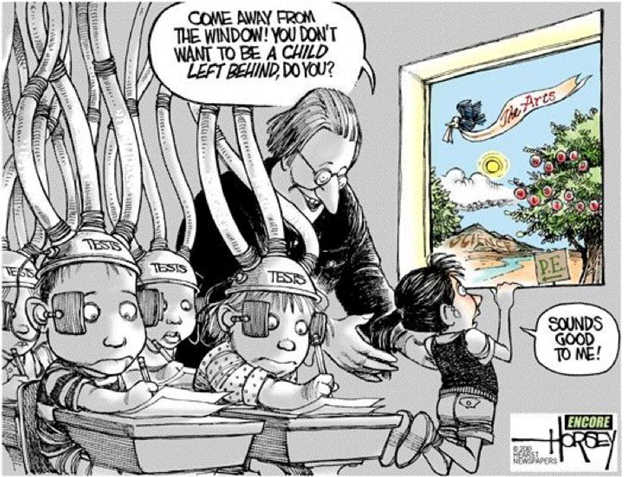
Another Alberta-based educator at The Love of Learning posted this. It reminded me of a Ken Robinson video The Educational Revolution…Why? Because Schools Kill Creativity posted by Gen Y Girl. The video is worth watching several times. The first time I watched the video several years ago an administrator informed me the message was a need to add layers of technology on top of what we are doing.

I am not a neo-Luddite. The original Luddites were not opposed to technology. They opposed potentially catastrophic outcomes blind, thoughtless implementation of technology might have on British society of the time. A message I gleaned was a positive correlation between ADHD/ADD diagnosis and an increase in various forms of imposed, standardized, high stakes testing.

The second message is statistical evidence the highest levels of creativity in school are at the kindergarten levels. After that, it is all down hill.

These are not technology issues, but simply change for the sake of change.

Technology is the artful use of the tools available to us.

Questions: What changes would you suggest for education to make it more child-friendly and child-focused? What can we do to increase the creativity for children in classrooms?

A bit of an American slant to it, but where do Canadian educational systems take their lead from? Is this what we want?

Spokane Falls

Kathy and I went for a walk last night. We walked from the Gonzaga campus to the base of the lower falls. It is about a 5 mile round trip (8 km for us Canadians). There are times you forget you are in a metropolitan area, with over 600, 000 inhabitants in greater Spokane, as you walk the paths. Part of the walk goes through Riverfront Park which was where Expo ’74 was held. I traveled with friends from Nelson BC in September 1974 to visit Spokane. We listened to the second Soviet-Canadian Super Series between the World Hockey Association team with Bobby Hull and Gordie Howe on the way back to Nelson. Spokane is a refuge for me bringing back some great memories.

Spokane is home to the Spokane First Nation a member of the Salish people. Later, when Europeans began to settle the area, it was a Hudson’s Bay Trading Post. The American government bought much of what is now Washington from the Hudson’s Bay Company.

In Salish, the falls are Aλxetk meaning fast or swift water.

These flood gates are above the upper falls. The river is running high with run off from the mountains and recent heavy rain.

We only walked a little ways from the flood gates and the water was beginning to run faster and we arrived at the top of the upper falls.
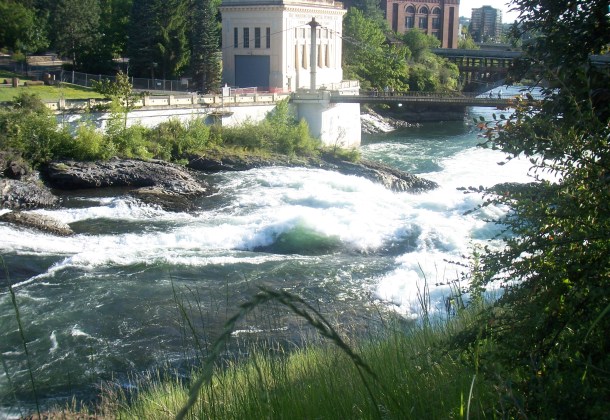
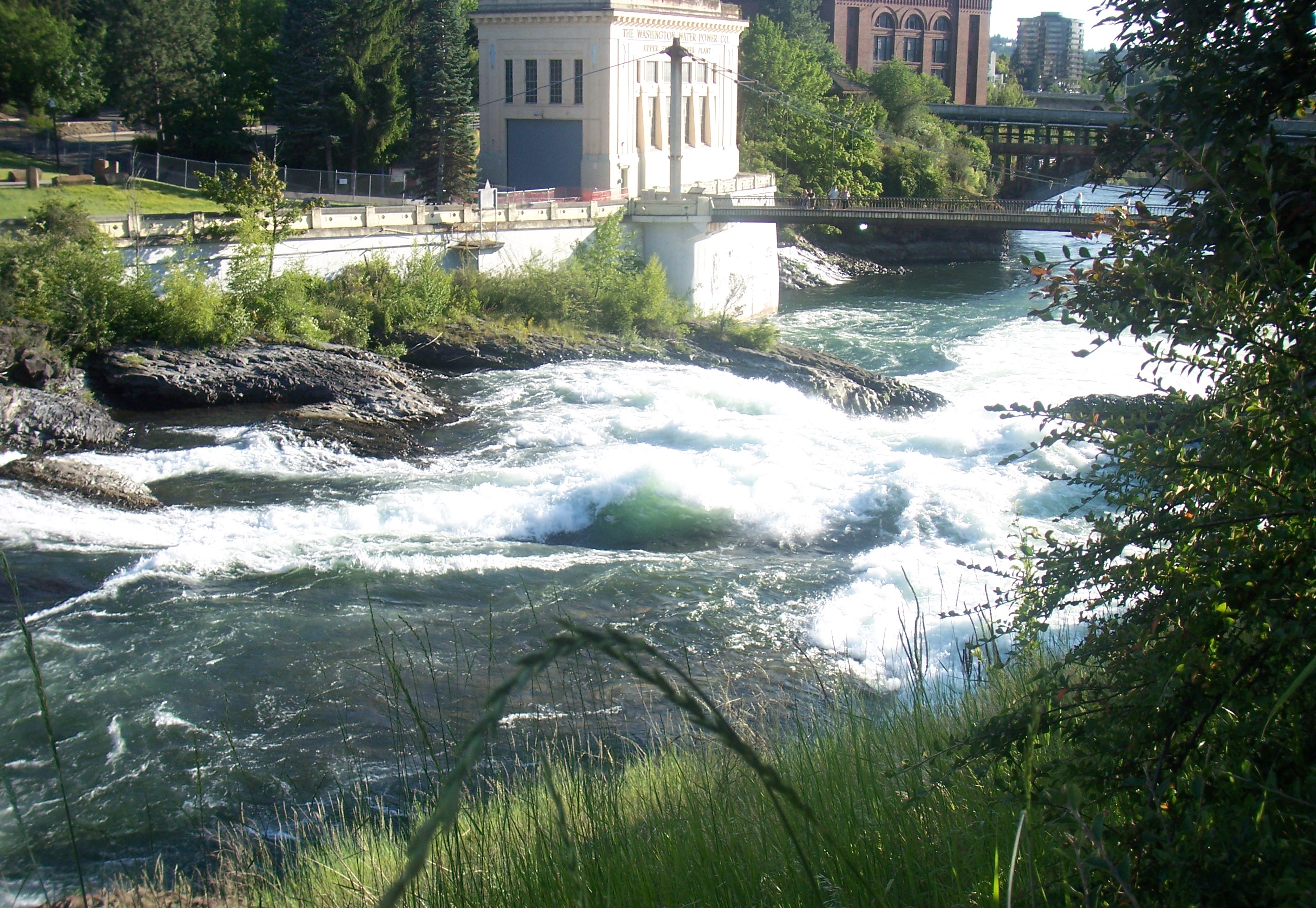
These are the upper falls. You can see one of the older buildings owned by the Washington Water Power Company and two bridges that crosses the river at various places. Some bridges are limited to pedestrian and bike traffic while others carry vehicles as well.

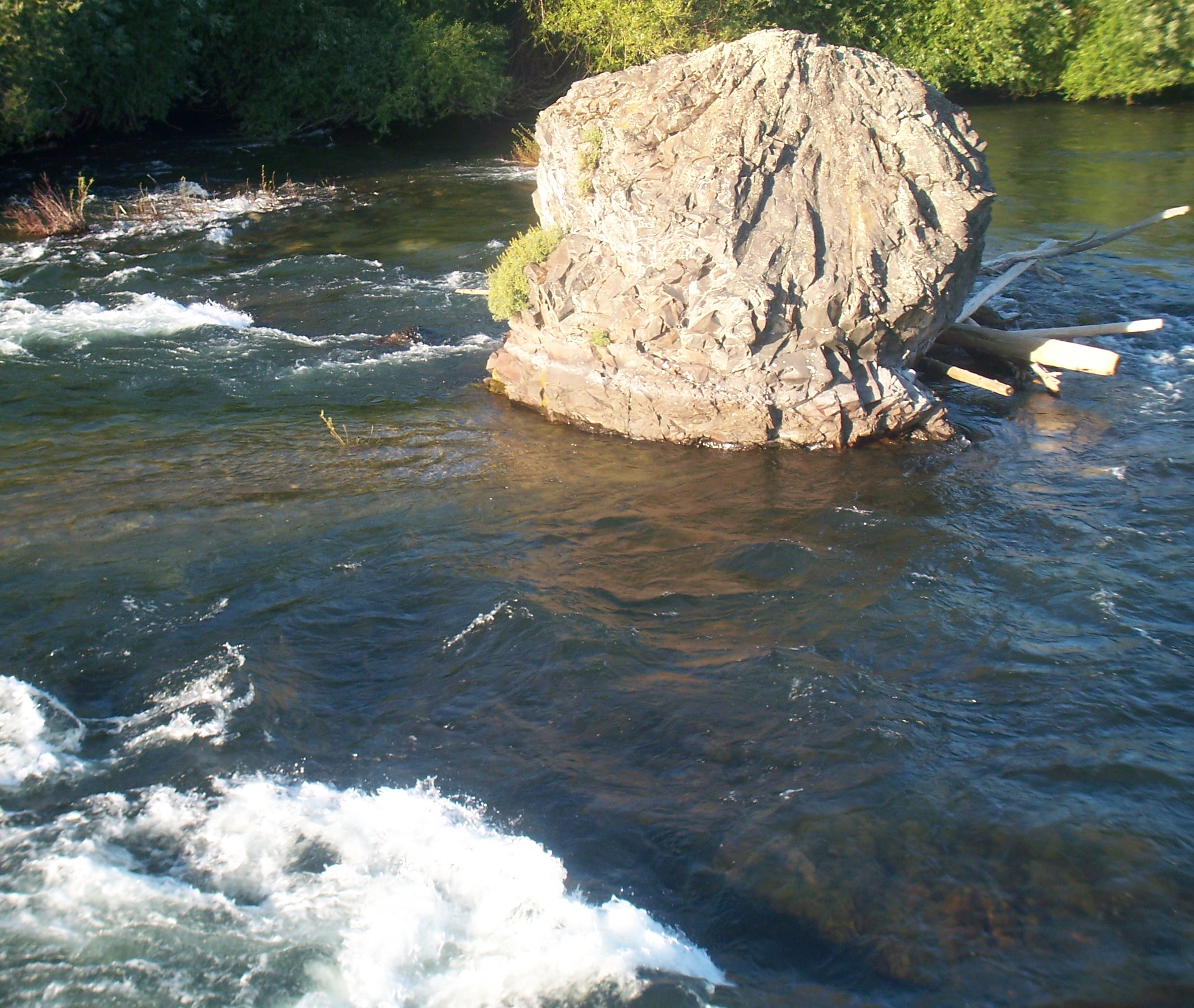
The power of the river was demonstrated with the log wedged solidly into place between two rocks at the base of the plummeting water.

Kathy captured this moment of colour as the water swirled around rocks and back on itself in the form of a green wave. You can see some of the fury of the water and a calmer look in the water.

Here is a view from below the upper falls. The upper falls split and go around an island of sorts, come back together, and form the lower falls.
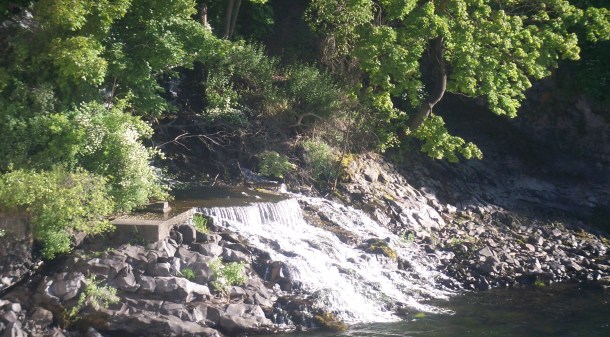
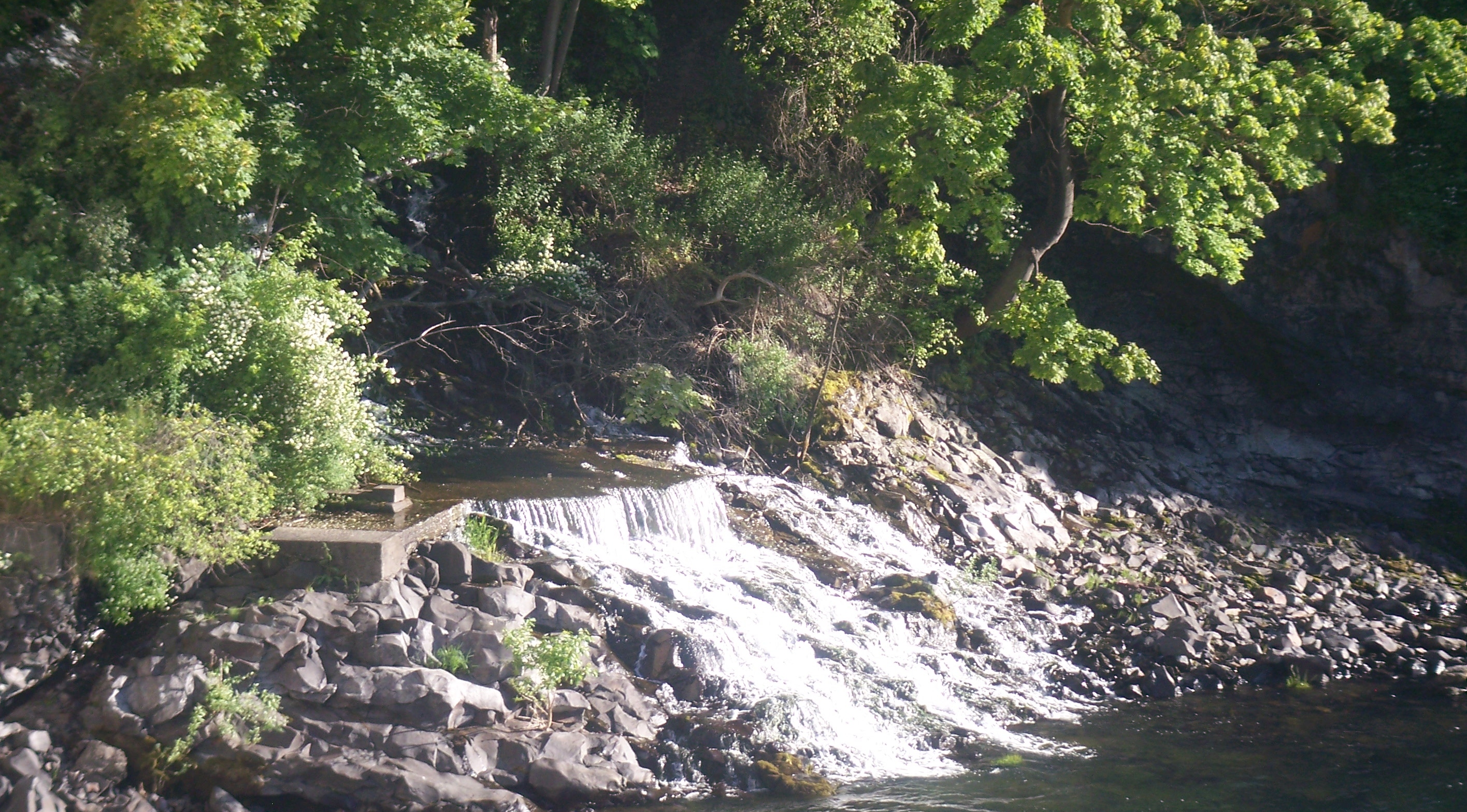
In the midst of the power and fury of nature, is a sense of calmness. This is the base of a small stream that runs through Riverfront Park and a Zen garden in the park. It adds a sense of contrast to the walk. On one side, nature with its sound, might, and power and on the other side, the quiet of Zen influences.
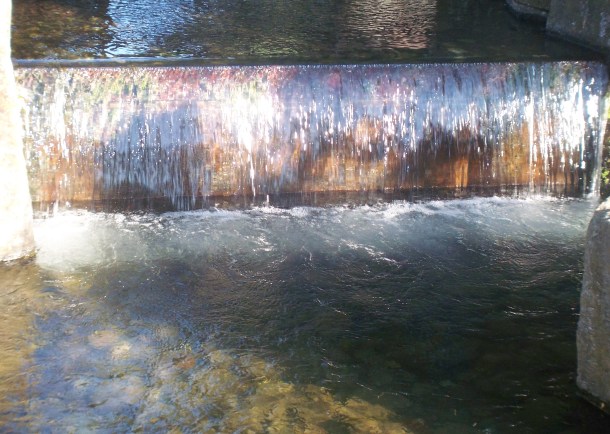
This is one of the upper steps of the Zen stream in the park which stands in sharp contrast to…

to the falls. This is the other side of the island I mentioned above.

And finally, we reached the lower falls. It is hard to do them justice. This only captures a small element of their power.
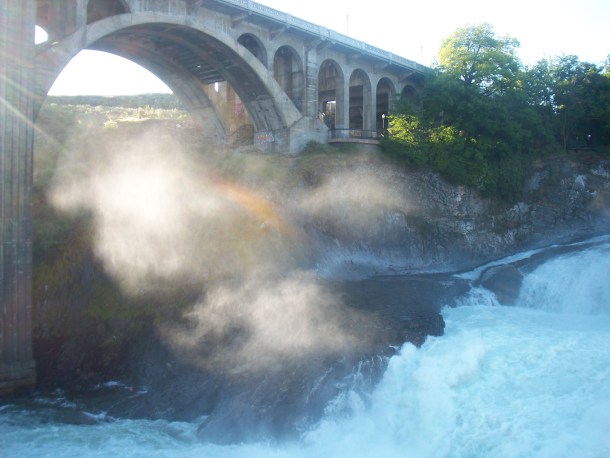
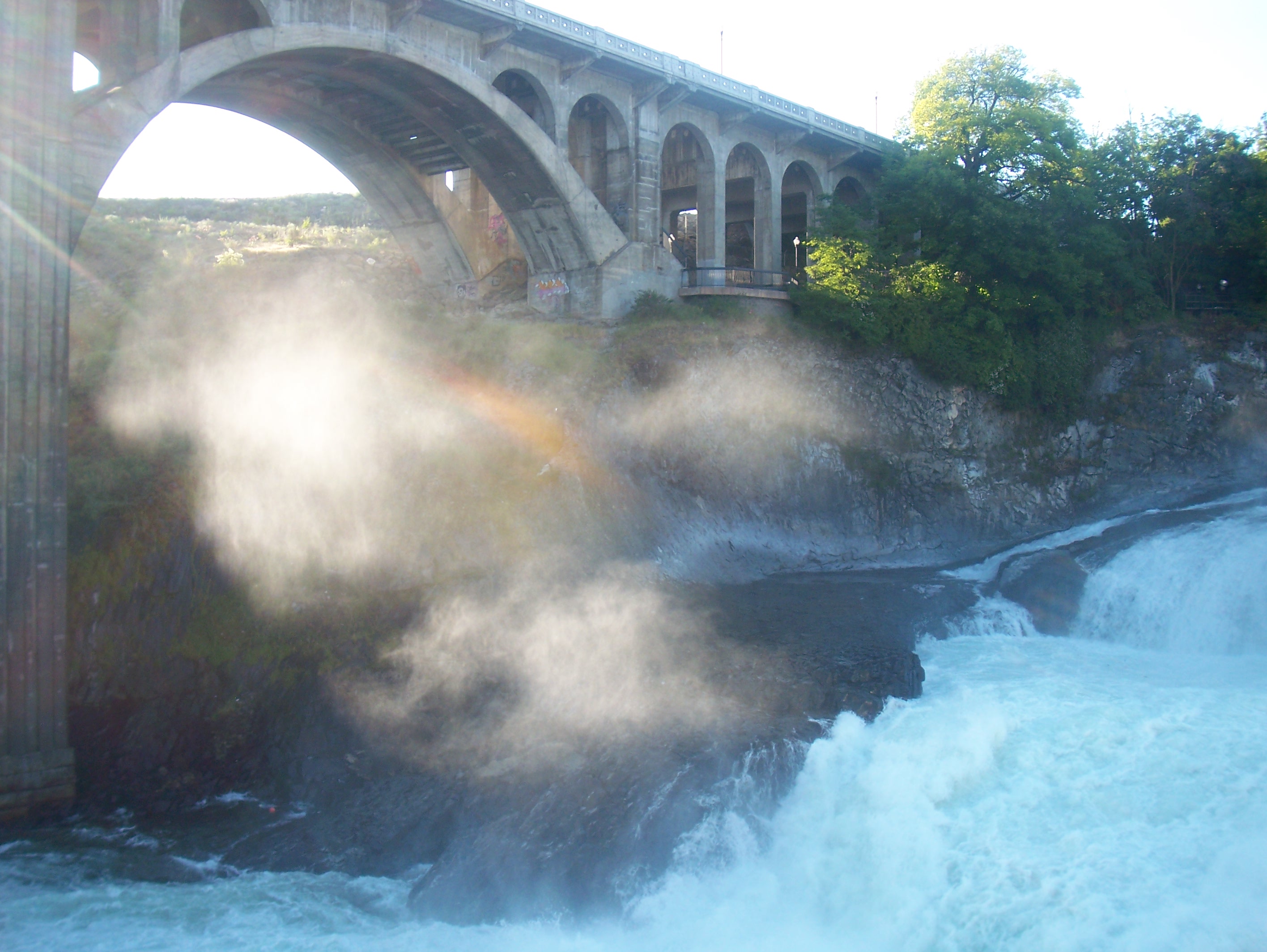
Here is a mixture of light, shadows, the falls, and the mist rising up from them under the bridge and revealing a small rainbow.
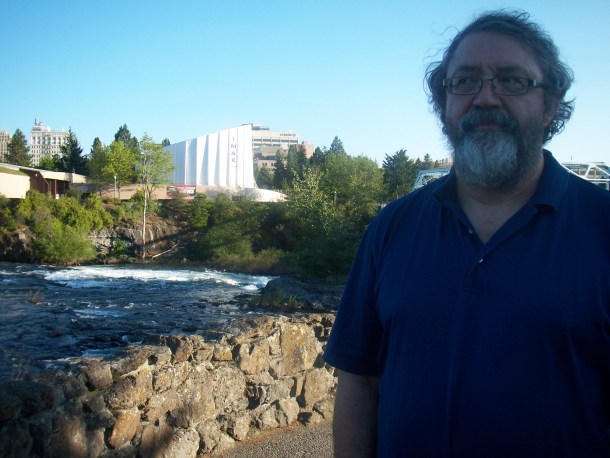
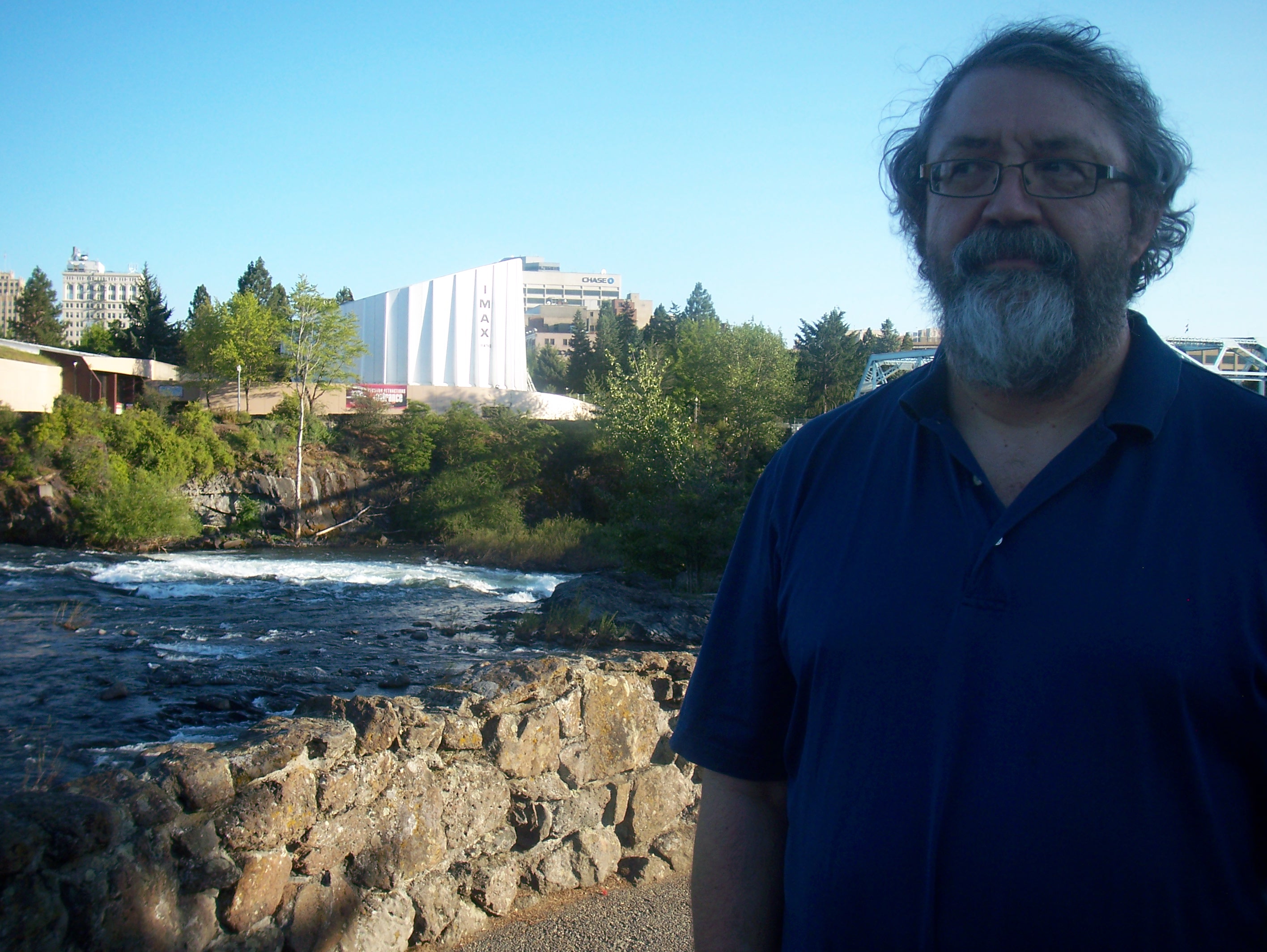
Here I am striking a pirate’s pose and looking over at Willie Willy’s Rock which I want to attack. I have allies and he is pondering with me.

You cannot be serious man? You want me to risk life and limb for that? I think a mutiny is at hand. I think it is worthy and pirate-like to seek this reward…

There it is: Willy Willie’s Rock. Any pirate would want that! Right?

We met the ground squirrel on our way back. He was very cooperative and posed for pictures.
Two Wolves Inside Me Movie – Which Values Will You Feed?

A colleague passed this link on to me and asked I share it. It resonated as I recently posted Naming Values which is similar in theme.

I’m sure you’ve heard it before, but I couldn’t agree more; Life is merely a series of choices. Where you are now can all be linked back to every choice that you’ve made in your life to date. Every day we all make countless choices and each one counts. This is what this short movie is all about via Two Wolves Inside Me Movie.

Enjoy and share.

Are You Okay, God?

I read Seven Lessons of Chaos by John Briggs and David Peat last summer. They used a koan about a ‘hole in the whole’ describing what we do when we analyze things and lose the mystery of the wholeness in life. We break life and its events down, analyze them, and forget to put all the pieces back and lose something vital in the connectedness to the world, leaving a “hole in the whole.” Humans attempt to explain the mystery of life and not embrace it and the richness of our existence. Mystery and spirituality work together. We cannot intellectually explain the fullness and mystery of life. Thomas Merton and Shunryu Suzuki spoke of this attempt as human arrogance.

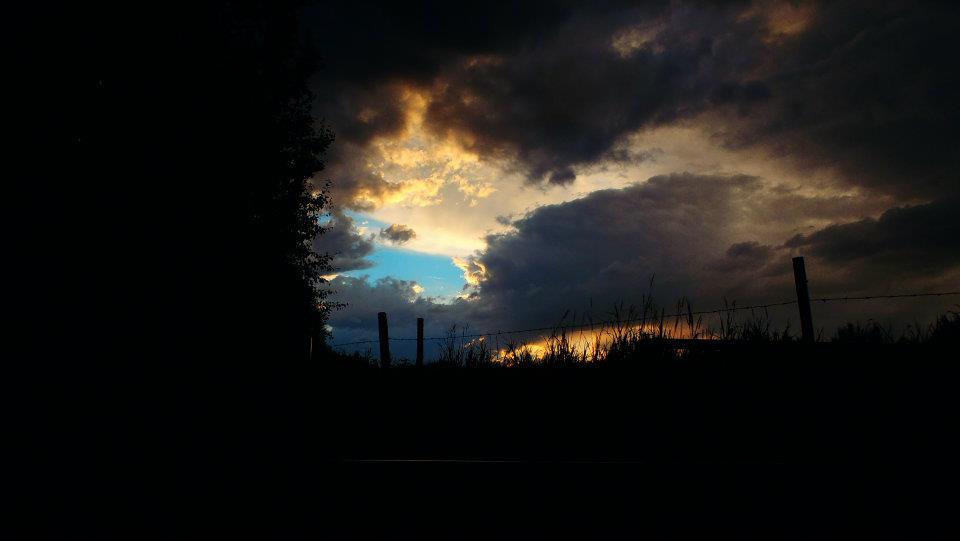
A former student took this picture, again with pretty straightforward phone technology, and the beauty, the richness, and the wholeness it conveyed is powerful. It reminded me of the song we learned as children There is a Hole in My Bucket. The hole in the clouds or bucket could be there for a reason we do not understand. Despite the potential arrogance, I wrote a short poem that might explain the hole.

Sprinting, scrambling, scurrying

Hoping, praying

Feeling hard, cold raindrops

Burning through my clothes

Smelling rain and fear.

Suddenly, blue and gold in the blackness

A light shone

A candle gently flickering.

I whispered, “Thank God!”

I am startled by a voice

“Are you OK, Ivon?”

“I think so.”

“Is that you God?”

“Is the hole to find my way?”

“By the way, thanks for asking. Are you OK?”

A pause

I thought a heard a smile

A sigh for sure, before

“I am now.”

Silence returned

Not falling, just silent

Embracing, reassuring, supporting,

Opening my eyes,

I looked up

I was home

A light shone through the window,

A second haven

Warm, well-lit, welcoming

With voices asking, “Are you OK?”

Saying, “We were worried.”

I wonder if we ever wonder if God is OK?

We should ask every now, and

Listen quietly in the storm for an answer,

It is there.

The 4th of July – An Outsider’s Perspective

Kathy and I spend part of our summers in Spokane and other places south of the US-Canada border. The first time we experienced the Fourth of July, the celebration, camaraderie, and heart-felt patriotism readily evident amazed me.Whatever differences Americans have with each other, are set aside for this day and more. The 4th begins several days before and lasts several days after the 4th. I use the code. One doesn’t say the phrase; saying the 4th is enough. Have a Good 4th means something more than just have a good day.

One summer, in Portland, celebrations continued for several days after the 4th with fireworks displays in the river valley. Another year, we met a family in Yellowstone who had just left Mount Rushmore where about 250, 000 people gathered for the 4th. In Canada, that requires every member of some provinces or territory gather and, sometimes, more invitations need to be sent out to reach that number.

I glanced through Parker Palmer’s latest book, Healing the Heart of Democracy, and found a passage from Leonard Cohen’s song, Democracy. I have listened to this song many times, but re-seeing the words made rethink their meaning, with a beginner’s mind. I often wondered if Cohen portrayed American democracy in a negative light, but seeing the words again I saw something different. It is a hopeful message acknowledging the messiness and awkwardness of democracy at work and that America is a place where the democratic experiment is still happening. America is a place where family exists in the broadest sense and the heart is full and open to democracy.

Imagine if you could make the 4th an every day event, engage everyone, and export the message of hopefulness, patriotism, and democracy well and fully lived, based on the model of the 4th? What a world we would live in!

It’s coming to America first,

the cradle of the best and the worst.

It’s here they got the range

and the machinery for change

and it’s here they got the spiritual thirst.

It’s here the family’s broken

and it’s here the lonely say

that the heart has got to open

in a fundamental way:

Democracy is coming to the U.S.A

This is a picture of some early fireworks we took on the 3rd, 2012.

Have a great 4th

I wonder what this will look like in Canada without places like Santa Barbara to turn to? We are so intertwined with the American economy is this far behind for some of us older middle class people? Who is singled out in restructuring, but the older employee? Consider what they can offer your company besides a cheer leading squad? They bring wisdom, compassion, and, I believe, a willingness to learn.